Difference Between Lemonade and Lemon Juice: Key Differences Explained
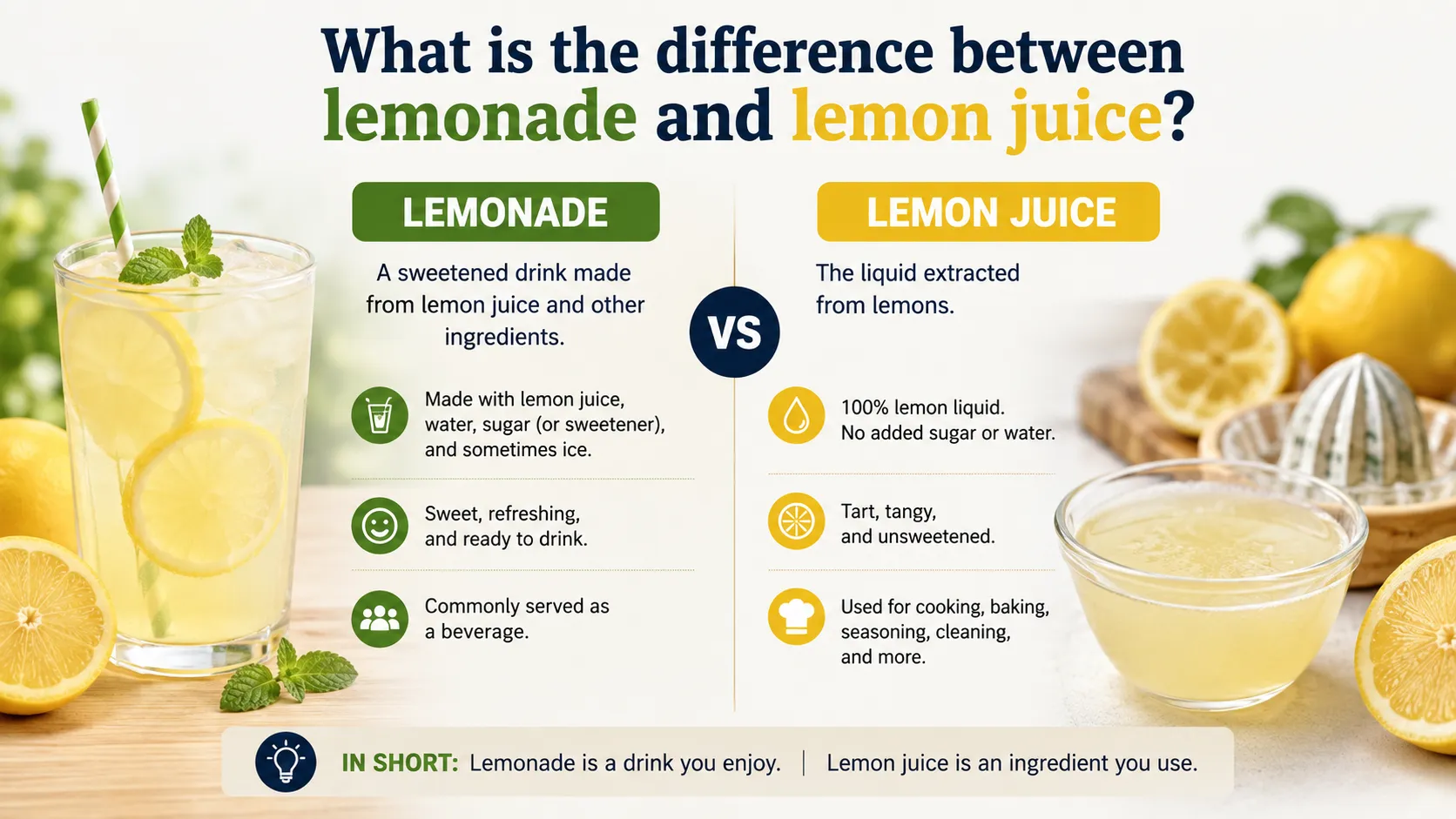
Have you ever wondered about the difference between lemonade and lemon juice? Although both come from lemons and have a refreshing citrus flavor, they are not the same thing. Lemon juice is the liquid extracted from fresh lemons, while lemonade is a prepared beverage that usually combines lemon juice with water and a sweetener.
Understanding the difference is useful when choosing ingredients for cooking, making drinks, or simply deciding what you want to enjoy.
What Is Lemon Juice?
Lemon juice is the natural liquid obtained by squeezing lemons. It has a strong sour and tangy taste because lemons naturally contain citric acid. Fresh lemon juice can be used directly or strained to remove seeds and pulp.
Unlike lemonade, pure lemon juice generally does not contain added sugar or water. It is commonly used as an ingredient rather than consumed as a standalone drink. Lemon juice can add acidity and flavor to salad dressings, sauces, marinades, desserts, baked foods, and many other recipes.
Lemon juice also contains naturally occurring nutrients, including vitamin C. However, its nutritional content can vary depending on the lemons used and how the juice is processed.
What Is Lemonade?
Lemonade is a drink prepared using lemon juice, water, and a sweetener such as sugar. A simple homemade lemonade can be made by mixing fresh lemon juice with water and sugar until the desired balance of sweet and sour flavors is achieved. The U.S. Department of Agriculture gives a simple example using lemon, water, and sugar.
Lemonade is intended to be enjoyed as a beverage. It is generally much milder than undiluted lemon juice because the lemon juice is mixed with water. The sweetener also reduces the sharp sourness of the lemon, creating a sweeter and more refreshing flavor.
Recipes can vary considerably. Some lemonade is made with fresh lemons, while commercial products may use lemon concentrate, flavorings, sweeteners, or other ingredients.
Key Differences Between Lemonade and Lemon Juice
The simplest way to understand the difference between lemonade and lemon juice is to look at their ingredients and purpose.
1. Ingredients:
Lemon juice is primarily the liquid extracted from lemons. Lemonade usually contains lemon juice, water, and a sweetener.
2. Taste:
Pure lemon juice is strongly sour and acidic. Lemonade is usually sweeter and less intense because it is diluted with water and balanced with a sweetener.
3. Purpose:
Lemon juice is widely used as a cooking and baking ingredient. Lemonade is primarily prepared as a drink.
4. Preparation:
Making lemon juice simply involves extracting liquid from lemons. Making lemonade requires an additional preparation step: mixing the juice with water and sweetener.
5. Concentration:
Because lemonade contains added water, its lemon flavor and acidity are generally less concentrated than those of pure lemon juice.
Can You Substitute Lemonade for Lemon Juice?
Usually, lemonade and lemon juice should not be treated as direct substitutes. If a recipe specifically calls for lemon juice, adding lemonade may introduce extra water and sugar and change the final taste and texture.
For example, lemon juice is useful when a recipe needs a sharp citrus flavor or acidity. Lemonade, on the other hand, is already a finished beverage designed to have a balanced sweet-and-sour taste.
Similarly, simply drinking lemon juice is very different from drinking lemonade. Lemon juice is much more concentrated and sour, while lemonade is formulated to be a more palatable beverage.
What About Different Types of Lemonade?
The meaning of "lemonade" can also vary by country. In the United States, lemonade commonly refers to a still drink made with lemon juice, water, and sweetener. In the United Kingdom, the word can also refer to a carbonated lemon-flavored soft drink.
This difference in terminology can sometimes cause confusion when people compare pictures, recipes, or products from different countries.
Final Thoughts
The difference between lemonade and lemon juice is straightforward: lemon juice is the liquid extracted from lemons, while lemonade is a prepared drink made by combining lemon juice with water and usually a sweetener.
Lemon juice is especially useful as a versatile ingredient in cooking and baking, while lemonade is designed to be enjoyed as a refreshing beverage. Although both have a lemony flavor, their ingredients, concentration, taste, and uses make them distinct.
So, the next time you see lemon juice and lemonade, remember: lemon juice is the ingredient, while lemonade is the drink made from it.