How Sustainable Concrete Practices Can Support Greener Construction
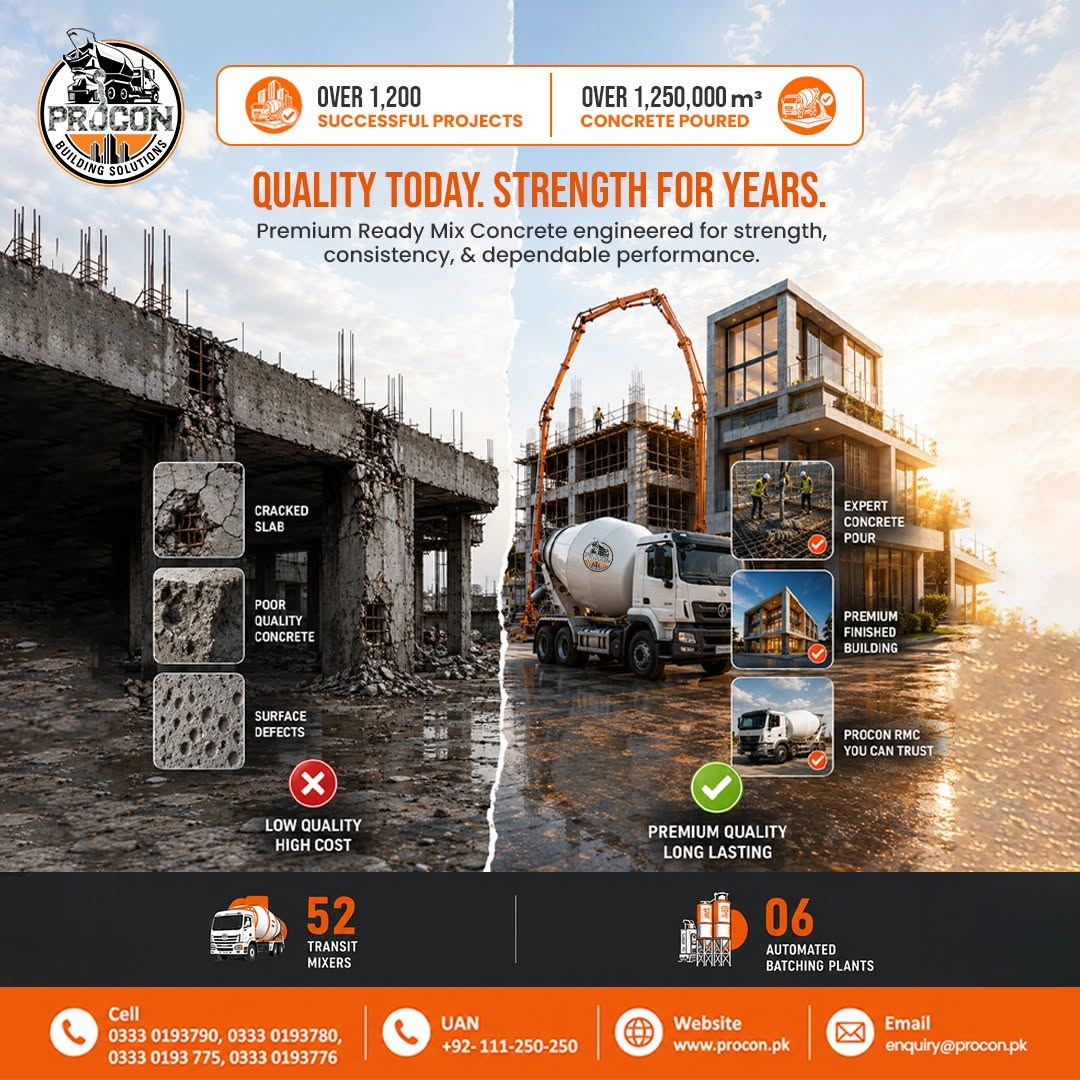
As global urbanization accelerates and environmental regulations tighten, the construction industry faces mounting pressure to reinvent its practices. Concrete is the most consumed man-made material on earth, and its traditional production methods—particularly cement manufacturing and manual site mixing—have historically carried a heavy environmental footprint. Adopting sustainable building methodologies is no longer optional for forward-thinking developers. By integrating eco-friendly mix formulations, computerized batching efficiency, and advanced mechanical placement services like concrete pump Karachi, modern contractors can significantly reduce resource waste and carbon emissions without sacrificing structural integrity.
1. Reducing Carbon Footprints Through Supplementary Cementitious Materials
Traditional Ordinary Portland Cement (OPC) manufacturing is energy-intensive and releases significant carbon dioxide emissions. Sustainable concrete production mitigates this environmental impact by partially replacing clinker with supplementary cementitious materials (SCMs) such as industrial byproducts like fly ash, ground granulated blast-furnace slag, and silica fume.
- Lower Clinker Demand: Utilizing SCMs reduces the overall volume of virgin cement required, directly cutting greenhouse gas emissions.
- Enhanced Chemical Durability: These mineral admixtures react with calcium hydroxide to form secondary calcium silicate hydrate, resulting in a denser matrix that resists chemical attack.
- Optimized Thermal Performance: Eco-friendly mixes often exhibit lower heat of hydration, reducing the risk of thermal cracking in massive structural elements.
2. Eliminating Material Wastage Through Computerized Batching
Traditional site mixing relies on primitive volumetric measuring and manual labor, which inevitably leads to over-ordering, raw material spillage, and weather-induced degradation of exposed sand and cement piles. This excess material frequently ends up as heavy construction debris destined for landfills.
Automated batching plants revolutionize material conservation by utilizing precise electronic load cells to measure every component. By producing only the exact volume required for a specific pour, factory-engineered supply chains keep raw material waste near zero, conserving natural resources and minimizing site cleanup overhead.
3. Water Conservation and Closed-Water Systems
Water is a critical component in concrete production, yet traditional manual mixing often involves uncalibrated hoses and excessive runoff that erodes soil and contaminates local drainage systems. Modern, professional batching facilities utilize advanced computerized water-metering technologies and closed-loop recycling systems. These setups reclaim washout water and aggregate residues, ensuring that water consumption is carefully controlled and resource conservation is maximized across every batch produced.
4. Energy Efficiency and Clean Mechanical Placement
Efficiency on the job-site directly translates to energy conservation. Traditional material transport relies on continuous heavy machinery idling, manual bucketing, and uncoordinated crane operations that consume excessive fuel. Utilizing high-pressure mechanical pumps, static line networks, and hydraulic placing booms streamlines placement. Rapid deployment minimizes equipment operating hours, reduces site congestion, and lowers the carbon emissions associated with long equipment run times.
Conclusion
The shift toward sustainable construction is essential for balancing urban expansion with environmental preservation. By embracing supplementary cementitious materials, computerized batching precision, and responsible resource management, the construction sector can drastically reduce its ecological impact. Leveraging professional, eco-conscious industrial networks for concrete pump Karachi empowers developers to build durable, high-performance structures while safeguarding the environment for future generations.
Survey No. 423, Ibrahim Hydri, behind Bol head quarter, Korangi creek road, Karachi-74900
info@procon.pk
+92 21 111 250 250