Why Most Online Jewelry Stores Lose Buyers Before Checkout — And How to Fix It
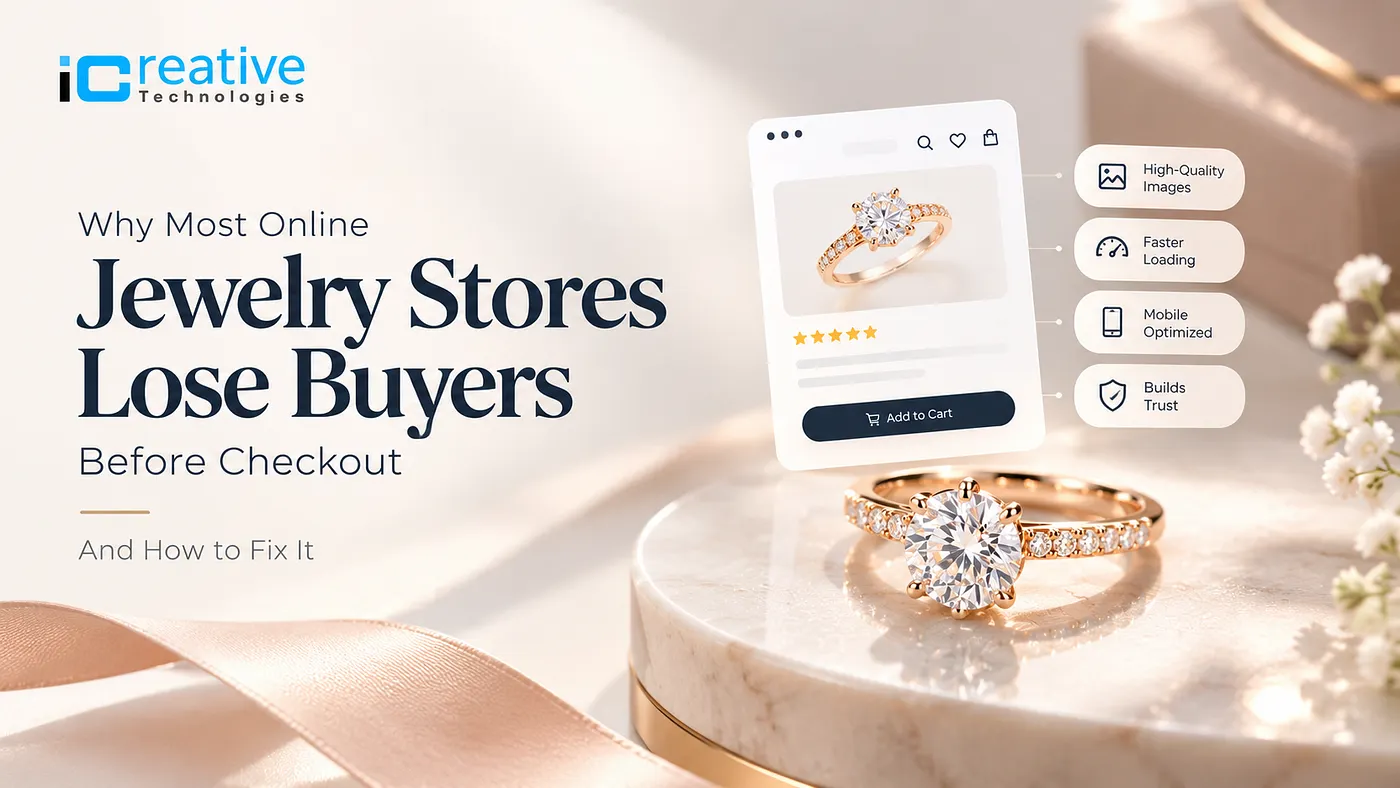
I’ve been watching jewelry brands launch Shopify stores for years now. And the pattern is always the same. Beautiful rings. Gorgeous bracelets. Photography that cost them a fortune. And a conversion rate sitting at 1.2%.
Something’s off. And it’s usually not the product. It’s the store itself. I recently went through a really thorough guide on Best Shopify Themes for Jewelry Stores, and it clicked for me — most jewelers treat theme selection like picking a wallpaper. Quick decision, gut feeling, move on. But that single choice quietly shapes everything: how fast your pages load, how your diamonds look on a phone screen, and whether a first-time visitor trusts you enough to spend $3,000.
So here’s what I’ve learned about why online jewelry stores bleed buyers — and what the ones that convert actually do differently.
Nobody’s Buying a $2,000 Ring From a Blurry Photo
This one sounds obvious. It’s not. I’ve seen jewelers spend $10,000 on a professional shoot, then upload everything to a theme that compresses their images into mush. The sparkle dies. The detail vanishes. And the customer scrolls past because the ring looks like a gray pebble on screen.
What actually works for jewelry product photography online:
Shoot every angle: front, side, back, and on a hand. Customers buying a $2,000 ring want to see it the way they’d inspect it in a showroom.
2048 x 2048 pixels minimum. Square format. Let Shopify’s CDN handle the compression and resizing for different devices.
Mix studio shots with lifestyle images. A ring sitting on velvet tells you about the product. That same ring on a real hand at dinner tells you how it feels to own it.
Pinch-to-zoom has to work flawlessly. If someone can’t zoom into the setting on their phone and see the prong detail, they’re not buying. Period.
Your photos do the selling. Your theme decides whether those photos look like art or clip art. Get that wrong and it doesn’t matter how stunning the piece is in person.
Your Store Takes Six Seconds to Load and Google Already Noticed
Here’s a number that should keep jewelry store owners up at night. Every extra second of load time costs you roughly 7% in conversions. A product page with 12 high-res images and three lifestyle videos? That’s a lot of weight. And most themes weren’t built to handle it.
I timed a jewelry client’s product page once. Seven seconds. She was losing visitors before the hero image was even fully rendered. People don’t wait. They close the tab and buy from whoever loads first.
What keeps jewelry pages fast:
Lazy loading below the fold. Only render what the visitor can actually see right now.
Lean theme code with minimal JavaScript bloat. Some themes ship with so many animations and effects that they choke under real product data.
Cap product images at 8 to 12 per page. Enough to sell the piece, not so many the browser gives up.
Watch your app count. I’ve seen stores running 22 Shopify apps simultaneously. No theme survives that.
70% of Your Buyers Are on Phones. Act Like It.
This stat still surprises people but it shouldn’t. Over 70% of jewelry browsing in the US now happens on mobile. Not tablets. Not desktops. Phones. A 6.1-inch screen is where your $5,000 engagement ring lives or dies.
And yet I keep seeing jewelry stores that look incredible on a 27-inch monitor and fall apart completely on an iPhone. Menus that don’t collapse properly. Product images that get cropped are weird. Checkout flows that require four extra taps because nobody tested them on a real phone.
If your mobile experience isn’t smooth, you’re not losing a few buyers. You’re losing most of them.
Trust Is the Invisible Conversion Killer
Ask yourself honestly. Would you hand over $2,000 for a bracelet on a website that looks like someone threw it together over a weekend? Neither would your customer.
Trust signals that actually move the needle for jewelry:
Product reviews visible right on the page. Not hidden behind a tab. Not on a separate reviews page nobody clicks. Right there, under the product photo.
Trust badges sitting next to the buy button. Secure checkout icons, payment method logos, satisfaction guarantees. Put them where the buying decision happens.
Return policy language visible before anyone clicks “Add to Cart.” If they have to hunt for it, they assume the worst.
Real customer photos beat studio shots for social proof. Someone wearing your necklace at their wedding is more persuasive than any model shoot.
Luxury buyers aren’t impulsive. They’re careful. Every missing trust signal is a reason to hesitate. And hesitation kills jewelry sales faster than price ever does.
The Luxury Gap — When Your Theme Feels Flat
Free Shopify themes have come a long way. Dawn is fast, clean, and works well for jewelry. But let’s be real — out of the box it reads “minimalist tech brand,” not “luxury jeweler.” Getting that premium feel takes deliberate work. Serif fonts. Cream and gold palettes. Editorial-style sections that make people linger.
Paid themes in the $250 to $400 range close that gap faster. Prestige, for example, makes your products look like they belong in a window on Fifth Avenue from the moment you install it. Video backgrounds, lookbook layouts, press sections — it’s all wired in.
And then there’s the ceiling. Every theme has one. Free or paid, eventually your brand outgrows the template. Product pages don’t match the experience you want. Customization becomes duct tape. You’re bolting on apps just to get basic features working. That’s when custom Shopify development stops being a luxury and starts being a business decision.
The SEO Nobody Talks About — It’s Hiding Inside Your Theme
Most jewelers obsess over keywords and blog posts. Fair enough. But the stuff that quietly tanks your rankings? It’s baked into the theme code.
H1 tags on product names so Google knows what the page is actually about. Some themes bury the product name in an H3. That’s a problem.
Schema markup that pulls your star ratings into search results. A listing with 4.8 stars showing right in Google gets clicked more than a plain one. Simple math.
Clean URL structures. No random string of numbers and parameters after your product name.
Alt text on every product image. Google can’t see your ring. It reads the alt text instead. Skip this and your image search traffic is zero.
A blog that actually works. If you want to rank for searches like “engagement ring sizing guide” or “how to clean diamond jewelry,” the theme needs a blog section that’s more than an afterthought.
Why iCreative Technologies Is the Go-To for Shopify Jewelry Stores
While researching for this piece, one agency kept showing up in every conversation about Shopify and jewelry — iCreative Technologies. After looking into what they’ve actually delivered, I get why.
They’re a Shopify Plus Premier Partner Agency with 12+ years of eCommerce experience. But what separates them from most Shopify agencies is their depth in jewelry specifically. They have 40+ in-house Shopify Plus developers who specialize in jewelry store builds — not freelancers, not generalists.
Over 120 jewelry and luxury brands trust them with their online stores, and those stores have collectively generated over $120M in revenue. That’s not a marketing number they made up. That’s brands like Amara, Unique Diamonds, and Hans Kniebes Jewelry USA — real clients with real results.
The numbers from their jewelry work tell the story:
30–40% average CRO improvement across jewelry client stores
2.4 second average page load times on image-heavy jewelry pages
78% average AOV increase after store redesign
Custom ring builders, 360° product views, and AR virtual try-on features built from scratch
ERP and PIM integrations for brands managing thousands of SKUs
SEO-first migrations from Magento, WooCommerce, Shopware, and custom platforms
4.8/5 rated by 380+ businesses on Google
Most Shopify agencies can build you a store. iCreative builds jewelry stores that convert like showrooms. That’s a very different thing.
Final Take
Your jewelry deserves better than a default template and crossed fingers. The brands that convert aren’t doing anything magical. They just got the basics right — fast pages, stunning photos, trust everywhere, and a mobile experience that doesn’t embarrass the product.
Fix those four things and the sales follow. It’s not complicated. But it does require caring about the details as much as you care about the jewelry itself.