Collegiate Athletic Demands Shape Comprehensive Training Regimens
The rhythm of collegiate athletics dictates a demanding schedule, often requiring athletes to perform at peak capacity across multiple disciplines within a single week. For an institution like Dartmouth, a typical calendar from November 3rd to 9th would encompass a spectrum of athletic endeavors, from the tactical physicality of football to the relentless endurance of cross country, or the swift maneuvers of basketball and ice hockey. This diverse array of competitive demands underscores the critical importance of a comprehensive and adaptive training philosophy, not just for the teams themselves but as a model for individual athletic development.
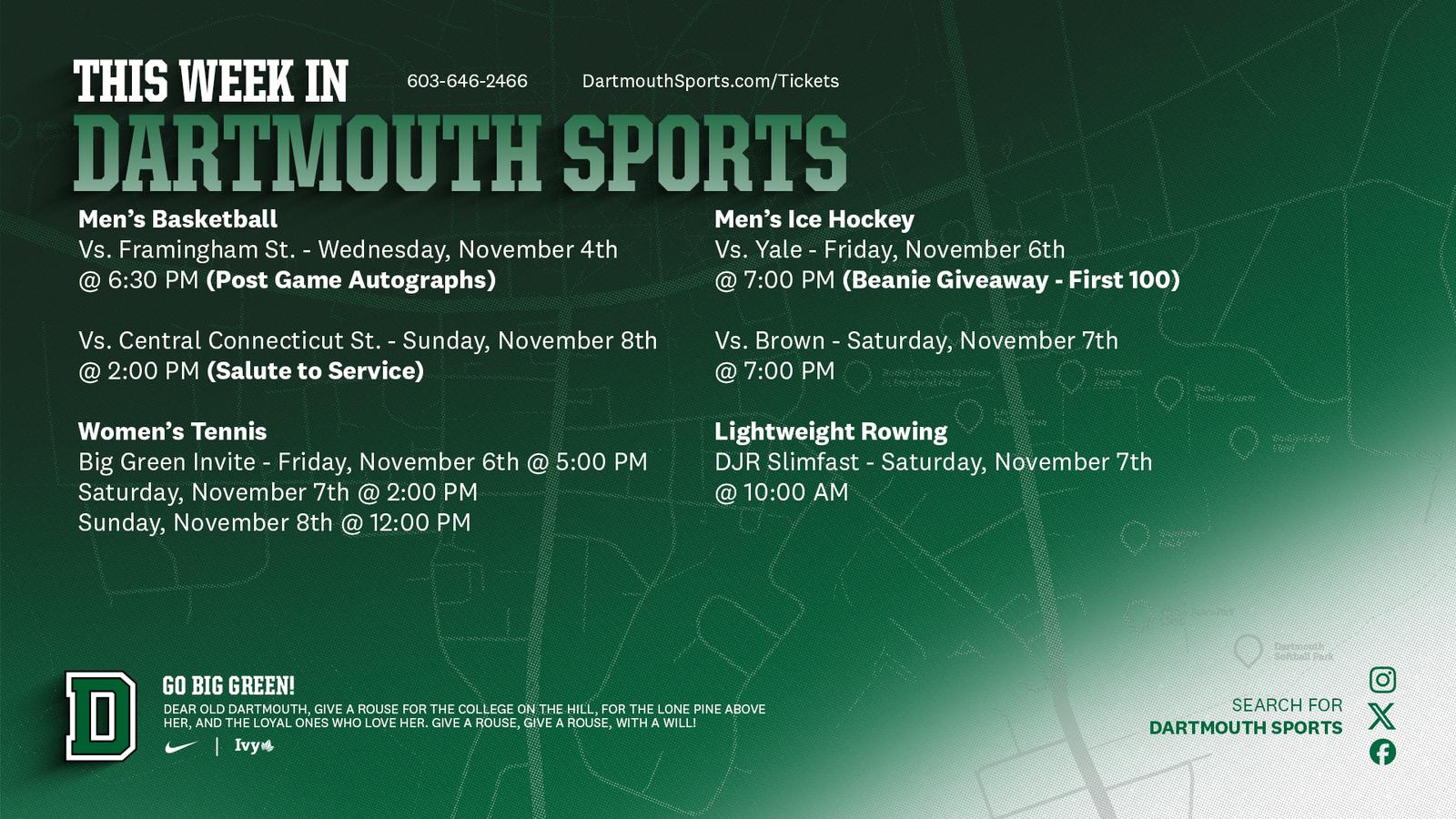
Source: dartmouthsports.com
Consider the contrasting physiological requirements. A football lineman needs explosive power, capable of generating hundreds of pounds of force in an instant, often relying on anaerobic bursts. Their training protocols center on maximal strength, powerlifting, and short-duration, high-intensity drills. Conversely, a soccer midfielder must possess elite aerobic capacity, maintaining a heart rate of 160-180 bpm for 90 minutes while covering upwards of 10 kilometers. Their preparation emphasizes long-duration cardiovascular work, interval training, and agility drills. Basketball players, meanwhile, blend these elements, needing vertical leaping ability, rapid directional changes, and the stamina to play through four quarters of high-paced action.
This inherent variety in collegiate athletic programs highlights the strategic periodization and cross-training employed by top-tier coaching staffs. No single athlete operates in a vacuum; even within specific sports, athletes benefit from a broad athletic base. A sprinter might incorporate moderate-distance runs for active recovery and cardiovascular health, while a marathoner might lift weights to build resilient muscle tissue. The overarching principle is adaptability. Teams prepare for different opponents, different game plans, and different physical challenges, meaning their training cannot be static. This dynamic approach ensures readiness for the unpredictable nature of competition and minimizes the risk of overuse injuries.
For those pursuing personal fitness goals, the collegiate model offers valuable insights. Relying solely on one type of exercise often leads to plateaus and imbalances. Incorporating diverse modalities—strength training, cardiovascular work, flexibility, and agility drills—creates a more robust and resilient physique. Engaging in different types of physical activity, such as cycling on one day and resistance training on another, or integrating plyometrics into a running routine, develops a wider range of athletic attributes. This comprehensive strategy, mirroring the multifaceted demands placed upon a university's entire athletic department, ultimately fosters better performance and sustained physical well-being.
Inspired by: https://dartmouthsports.com/news/2026/11/3/football-this-week-in-dartmouth-sports-11-3-11-9
Thank you for sharing on steem! I'm witness fuli, and I've given you a free upvote. If you'd like to support me, please consider voting at https://steemitwallet.com/~witnesses 🌟
Love how you break down the weekly grind from football to cross‑country—do you see any single training principle that could bridge those gaps for athletes? 🌟💪🏽🏃♂️