UAE-Based Fintech Platform Entterprice Explores Stablecoin Infrastructure for Faster China Business Payments
Dubai, UAE A new development in the UAE's B2B fintech landscape is putting greater attention on how businesses can make cross-border payments to China more efficiently.
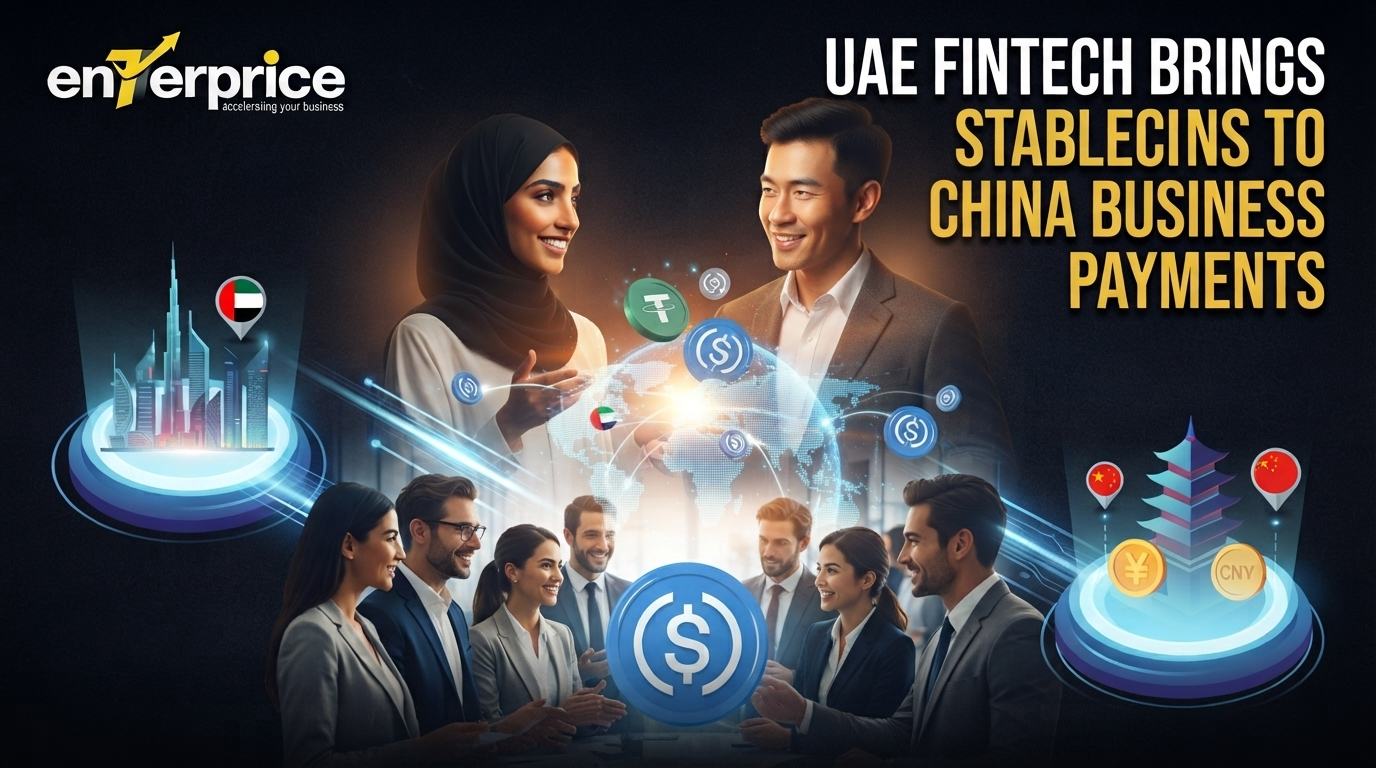
Entterprice, an emerging UAE-based B2B fintech platform, is introducing stablecoin-enabled payment infrastructure as part of its approach to UAE–China business payments, targeting companies that regularly pay suppliers and business partners in China.
The development comes as UAE businesses continue to expand their commercial relationships with Chinese manufacturers and suppliers, creating demand for payment infrastructure that can provide greater speed, transparency and flexibility.
Stablecoins Enter the UAE–China Payment Conversation
For UAE importers and trading companies, paying Chinese suppliers can involve currency conversion, intermediary banks and multiple stages before funds reach the recipient.
Entterprice's approach explores how stablecoins can be incorporated into the payment workflow to potentially reduce some of the friction associated with traditional cross-border settlement.
Rather than positioning stablecoins as a replacement for banking infrastructure, the platform is looking at how digital settlement technology can work alongside existing financial systems.
The model is particularly relevant for businesses that need to manage recurring international supplier payments, corporate FX and multiple currencies.
Why Hong Kong Could Play a Role
An important element of the emerging UAE–China payment corridor is Hong Kong.
As an international financial centre connecting global markets with mainland China, Hong Kong can provide an important bridge within cross-border financial infrastructure.
For a UAE business paying a supplier in China, a potential payment structure could involve the UAE as the starting point, Hong Kong as part of the financial and settlement infrastructure, and mainland China as the final destination.
This creates a potential:
UAE → Hong Kong → China
payment corridor in which digital assets, FX infrastructure and traditional financial networks can work together.
Hong Kong has also been developing a regulatory framework for stablecoins, increasing institutional attention around their potential role in financial and payment infrastructure.
What Entterprice Is Bringing to Businesses
Entterprice is positioning its platform around the broader needs of companies engaged in international trade.
Its B2B fintech infrastructure includes areas such as:
Cross-border payments
Payments to Chinese suppliers
Corporate FX
Multicurrency accounts
International business payments
Payment visibility
Stablecoin-enabled payment workflows
For UAE businesses importing from China, the objective is to make the payment process more connected and easier to manage.
A Changing Payment Landscape
The development reflects a broader shift taking place across financial markets.
Traditional bank transfers remain an important part of international commerce, but fintech companies are increasingly experimenting with digital settlement technologies to address challenges around speed, transparency and cross-border connectivity.
Stablecoins are becoming part of this conversation because they can potentially provide a digital settlement layer between different financial ecosystems.
For UAE businesses trading with China, this could become particularly relevant as the UAE, Hong Kong and mainland China continue developing their digital-payment and financial infrastructure.
From UAE Trade to Digital Settlement
Entterprice's emergence comes at a time when the UAE is strengthening its position as a hub for fintech, international trade and financial innovation.
By combining B2B cross-border payments, corporate FX, multicurrency capabilities and stablecoin-enabled infrastructure, the platform is targeting a specific challenge faced by international businesses: moving money efficiently across major trade corridors.
The UAE–China corridor could be an important market for this approach, particularly as more businesses look for alternatives and enhancements to conventional international payment workflows.
For importers and trading companies, the development signals a broader change in how B2B payments could evolve — with traditional banking networks increasingly operating alongside regulated digital payment and settlement technologies.