Finding the Right Startup Investors in Malaysia
How to Find Investors and Raise Venture Capital in Malaysia
Finding the right investor is not about building the longest possible contact list. A successful fundraising process starts with understanding which investors genuinely fit your company’s sector, stage, funding requirement, and regional plans.
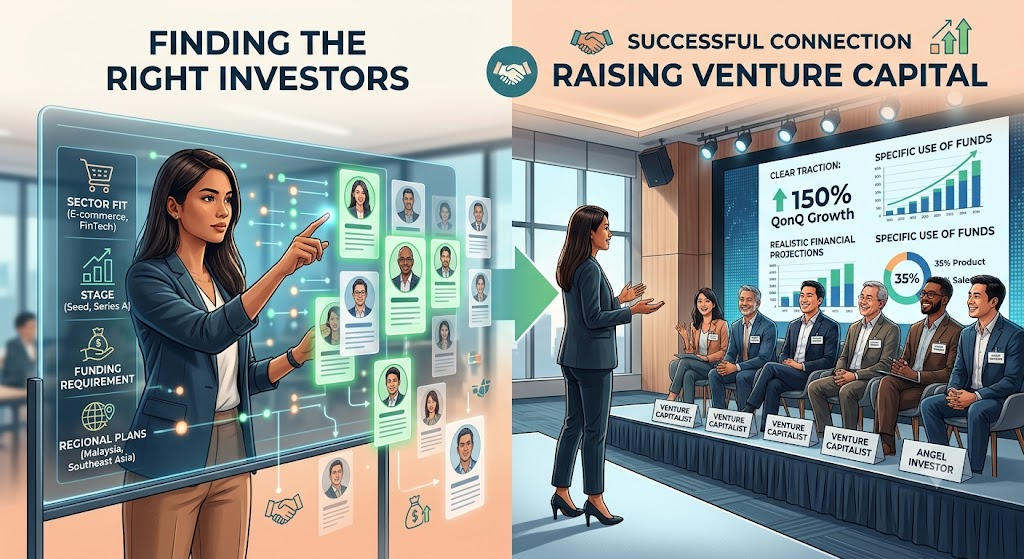
Founders also need strong business evidence before starting outreach. Investors will expect clear traction, realistic financial projections, accurate ownership records, and a specific explanation of how new capital will be used.
How Can Founders Connect With the Right Investors?
Founders need a focused pitch, evidence of market demand, realistic financial projections, and a clear funding request before approaching potential backers. Learning how to find investors for a startup starts with identifying people and firms whose preferred industry, company stage, investment size, and geographic focus match the business.
A long list of investor names is not automatically useful.
Before contacting someone, research:
- Previous investments
- Preferred sectors
- Typical cheque size
- Geographic focus
- Portfolio companies
- Funding stage
- Follow-on investment activity
- Level of involvement after investing
For example, an early-stage software company may be better suited to angel investors, accelerators, and seed funds that already understand technology businesses.
A company with established revenue and regional expansion plans may be ready to approach larger institutional investors.
Where Can Founders Meet Investors?
Relevant connections can come from:
- Startup accelerators
- Industry conferences
- Founder communities
- Existing advisers
- Lawyers and accountants
- Angel investor networks
- Portfolio company founders
- Professional networking platforms
- Fundraising platforms
Warm introductions can be valuable because they provide context and an initial level of trust.
Cold outreach can also work, but the message should be personalised. Investors should immediately understand why you are contacting them specifically.
A strong introduction should explain:
- What your company does
- Which market you serve
- What traction you have achieved
- How much capital you are raising
- What the funding will support
- Why the investor is a relevant fit
Avoid sending a lengthy business plan in the first message. A concise introduction and a clear pitch deck are usually better for securing an initial meeting.
How Does Venture Funding Work in Malaysia?
Institutional investors usually provide capital in exchange for equity and expect the company to achieve meaningful growth over time. When exploring venture capital malaysia opportunities, founders should focus on firms that understand their sector, funding stage, regional plans, and expected capital requirements instead of approaching every available fund.
Venture capital is generally suitable for companies with a scalable business model and the potential to grow significantly faster than a traditional small business.
Funding may be used for:
- Product development
- Hiring
- Technology investment
- Customer acquisition
- Geographic expansion
- Sales growth
- Operational improvements
- Strategic partnerships
The fundraising process normally involves several stages.
Typical Venture Capital Process
- Investor research
- Initial outreach
- Introductory meeting
- Pitch presentation
- Financial and commercial review
- Management interviews
- Due diligence
- Valuation discussions
- Term-sheet negotiation
- Legal documentation
- Investment completion
This process can take several months.
Founders should therefore begin preparing before the company urgently needs cash. Rushed fundraising can weaken negotiating power and force founders to accept terms that may not support their long-term objectives.
What Do Investors Expect From a Startup?
Investors expect credible evidence that a company can grow. A strong idea is useful, but investors will also examine whether the team can execute the business plan.
Important areas usually include:
- Founder experience
- Customer demand
- Revenue growth
- Customer retention
- Gross margins
- Sales pipeline
- Market size
- Competitive positioning
- Intellectual property
- Regulatory risks
- Cash runway
- Ownership structure
Financial forecasts should be ambitious but defensible.
Founders should be prepared to explain assumptions related to:
- Pricing
- Customer acquisition
- Hiring
- Marketing costs
- Operating expenses
- Revenue growth
- Profit margins
- Future fundraising
Unsupported projections can reduce investor confidence even when the underlying business opportunity is attractive.
What Should Be Included in an Investor Pitch Deck?
A strong pitch deck should answer the questions investors are most likely to ask.
Include:
- The customer problem
- Your solution
- Target audience
- Market opportunity
- Revenue model
- Competitive advantage
- Current traction
- Founder and team experience
- Financial projections
- Funding requirement
- Planned use of capital
- Expected milestones
Traction can take several forms.
Examples include:
- Paying customers
- Monthly recurring revenue
- Active users
- Successful pilot programmes
- Signed contracts
- Strong retention rates
- Strategic partnerships
- Growing sales pipeline
The goal is to show that the company is moving beyond an idea and building evidence of market demand.
What Documents Should Be Ready Before Fundraising?
Founders should organise financial, legal, ownership, and commercial documents before serious investor conversations begin.
A basic data room may include:
- Company registration documents
- Current capitalisation table
- Shareholder agreements
- Historical financial statements
- Financial projections
- Customer contracts
- Supplier agreements
- Employment agreements
- Intellectual property records
- Previous investment documents
- Product information
- Market research
Your capitalisation table is particularly important.
It should accurately show:
- Founders
- Existing investors
- Employee options
- Convertible instruments
- Outstanding securities
- Remaining option pool
Errors in ownership records can delay negotiations and create concerns about future dilution.
How Should Founders Explain the Use of Funds?
Avoid saying that the investment will simply be used for "growth."
Give investors a specific allocation.
For example:
- 35% for product development
- 25% for sales and marketing
- 20% for hiring
- 10% for regional expansion
- 10% for operations and working capital
The actual percentages will vary by business, but the principle is the same.
Investors want to understand what their money will help the company achieve.
Connect spending to measurable milestones such as:
- Reaching a revenue target
- Launching a new product
- Entering a new market
- Hiring key employees
- Increasing customer numbers
- Completing regulatory approvals
How Can Founders Choose the Best Investor?
The right investor can provide much more than money.
Founders should evaluate:
- Sector knowledge
- Reputation
- Regional connections
- Portfolio experience
- Follow-on funding capability
- Communication style
- Strategic support
- Governance expectations
Before accepting an investment, ask:
- Has the investor backed similar companies?
- Can they support regional expansion?
- Do they participate in later funding rounds?
- What reporting do they expect?
- How involved are they in business decisions?
- Can portfolio founders provide references?
- Does their investment timeline match your needs?
A poor investor relationship can create long-term challenges even when the financial terms initially appear attractive.
Fundraising works best when both sides understand the expectations, objectives, and potential risks from the beginning.
Final Thoughts
Successful fundraising depends on preparation, investor targeting, business evidence, and consistent follow-up.
Founders should understand their numbers, maintain accurate ownership records, prepare due diligence documents early, and approach investors who genuinely fit the company.
The strongest investor relationship is not always the one offering the largest cheque. It is often the one that combines suitable capital with relevant experience, useful connections, and long-term strategic alignment.
Frequently Asked Questions
When Should a Startup Begin Looking for Investors?
Start preparing several months before the company needs funding. Investor research, meetings, due diligence, negotiations, and legal completion can take significant time.
What Should Founders Include in an Investor Pitch?
Include the customer problem, solution, market opportunity, business model, traction, competition, team, financial projections, funding request, and planned use of capital.
Are Angel Investors and Venture Capital Firms the Same?
No. Angel investors usually invest their own money and often support earlier-stage startups. Venture capital firms invest managed funds and generally follow a more structured investment process.