Story: The Flower Girl at the Signal
I once held out a twenty-rupee note to a child at a traffic signal and told her to keep the flowers. She pushed the note back through my car window and said she was not a beggar. I was thirty-four years old, and a ten-year-old had just taught me the difference.
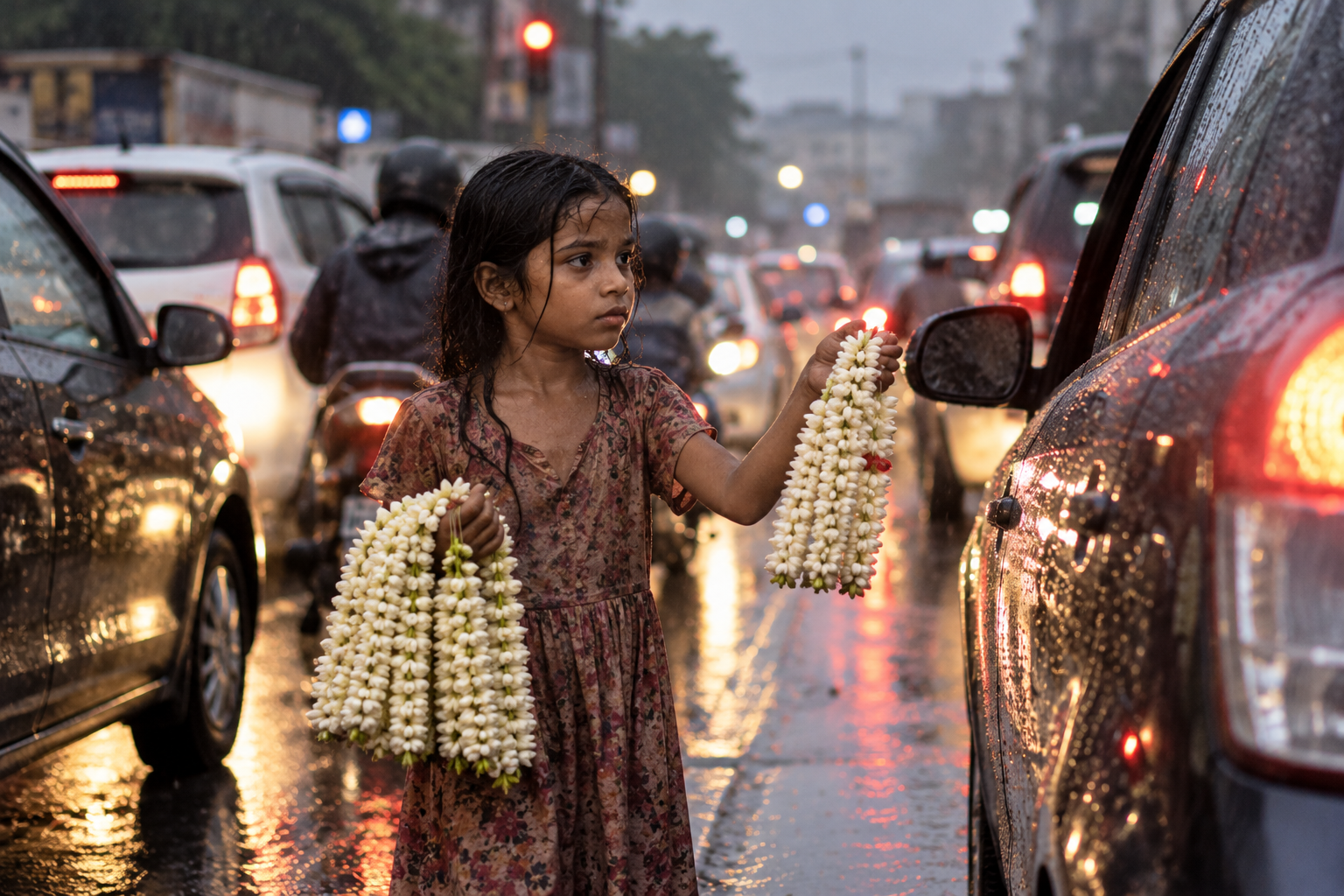
Image generated with AI
This was in the year I joined the insurance office in Pune. My route home passed a signal near the flyover where the same children worked every evening. Some sold pens. Some sold car dusters and small flags. One girl sold gajra, those strings of white jasmine that women wear in their hair.
It had been raining for three days that week. The kind of rain that does not stop, just changes its mind about how hard to fall. She was standing in it with her flowers wrapped in a plastic sheet, and she looked so thin that I did the thing which makes a person feel good about themselves in four seconds. I pulled out a twenty-rupee note and waved it at her and said she should keep the flowers and go home.
She looked at the note. Then she looked at me, and she was annoyed. She said, in Marathi, that she was not a beggar and that the gajra was for ten rupees.
The signal turned green. Somebody behind me pressed the horn. I bought two gajras, paid twenty rupees, and drove off with my ears burning.
After that, I bought one every evening. Not out of pity, because she had made pity impossible. It became a transaction between two people who respected each other, which is a very different thing.
Her name was Lakshmi. Over the next few months, at thirty seconds a day, I learned the rest. Her mother had tuberculosis and could not stand for long. Her younger brother was six. The flowers came from the wholesale market at four in the morning and had to be sold before they browned.
One day I offered to pay her school fees. I had the whole speech ready in my head on the way to the signal.
She said she already went to school. A retired postmaster taught eleven of them under the flyover, from eight to ten at night, free of cost, and he beat them with a rolled newspaper if they came without finishing their homework. She said this proudly, as if describing a very expensive private institution.
I asked whether she needed books. She said she needed customers.
So I did the only thing she had left me to do. I started buying four gajras instead of one, and giving three to the women in my office. They thought I had become religious.
Eight months later I was transferred to Nashik. I would like to tell you that I kept in touch, that I did something meaningful, that I was the hero of this story. I did not. I packed my flat, I drove away, and within a year I could not have told you her name without thinking hard about it.
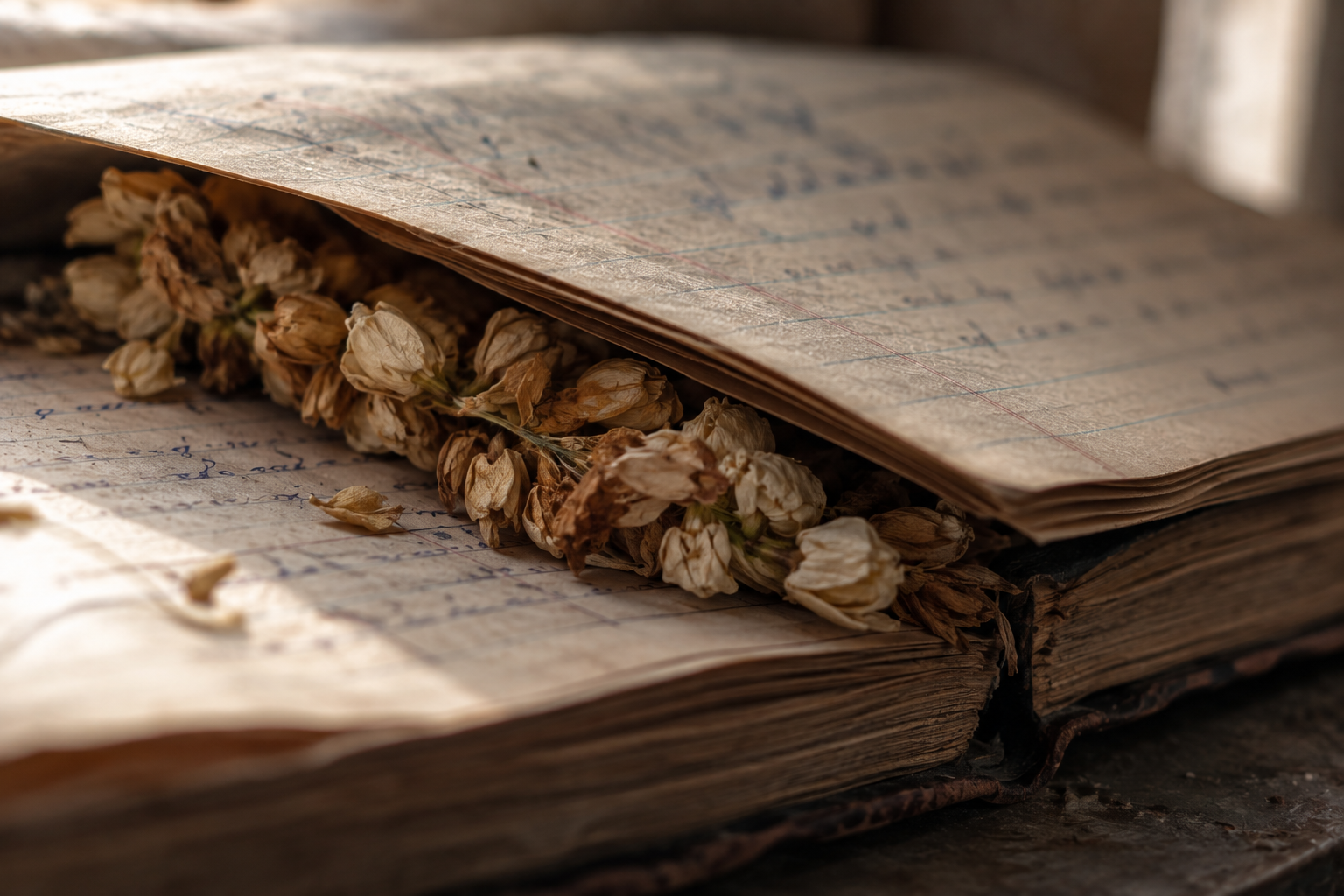
Image generated with AI
Fourteen years passed. My daughter is in school now. My hair is grey at the sides and my knees complain on stairs.
Last August, my company sent me to a government school on the outskirts of the city, because we were sponsoring school bags and the company wanted photographs for its annual report. I was the senior man, so I had to go and smile.
The teacher who received us was a young woman in a cotton saree, very organised, with a list in her hand and a stern way of managing two hundred children in a courtyard. She took us around, told us how many children came from the labour colony, asked us pointedly whether we could sponsor shoes instead of bags next year because bags they already had.
At the end, after the photographs, she asked me whether I used to live in Pune near the flyover and drive a white Maruti.
I said yes, many years ago.
She went into the staff room and came back with an old notebook. Inside it, between two pages, there was a gajra. Dried to brown thread, flattened completely, the petals gone to paper.
She said she had kept the first one that she had ever sold twice over, meaning the first one sold to a customer who came back the next day. She said when she was a child she had decided that if a person ever came back the next day, it meant the work was real work and not begging, and that she could keep doing it until she finished her school.
Her name is Lakshmi. She teaches mathematics and she is the one who argues with contractors about shoes.
I had spent fourteen years feeling mildly good about myself for buying flowers from a poor child. I stood in that courtyard and understood that the lesson had been going the other way the whole time, at ten rupees an evening, and that she had been the teacher even then.
Note: This is a fiction story.