Story: The Tiffin My Mother Never Ate
My mother had one answer for everything. "I already ate." It took me twenty-two years and one steel tiffin box to understand how big those three small words were.
We were not poor in the way films show poverty. We were poor in the quiet way. My father worked at a mill that shut down when I was nine, and after that he did whatever work came his way. Painting. Loading. Watchman duty in the winter months.
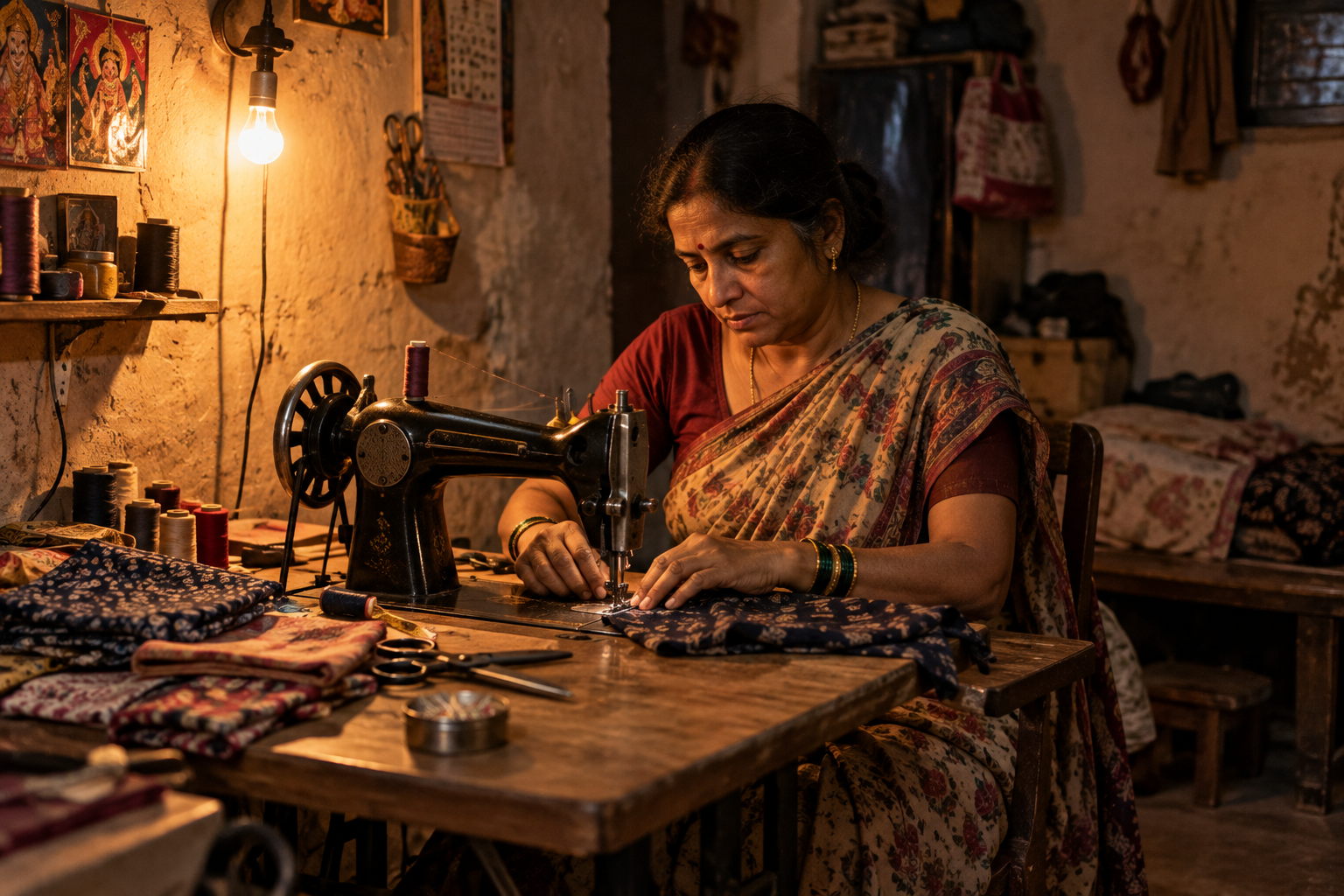
My mother stitched blouses for the women of our neighbourhood. Her machine stood in the corner of our one-room house, and the sound of that pedal is the sound of my whole childhood.
I was a good student. Not brilliant, but stubborn. My mother had decided when I was very small that one day I would sit in an office with my own chair and my own table. She said it so often that I began to believe it myself.
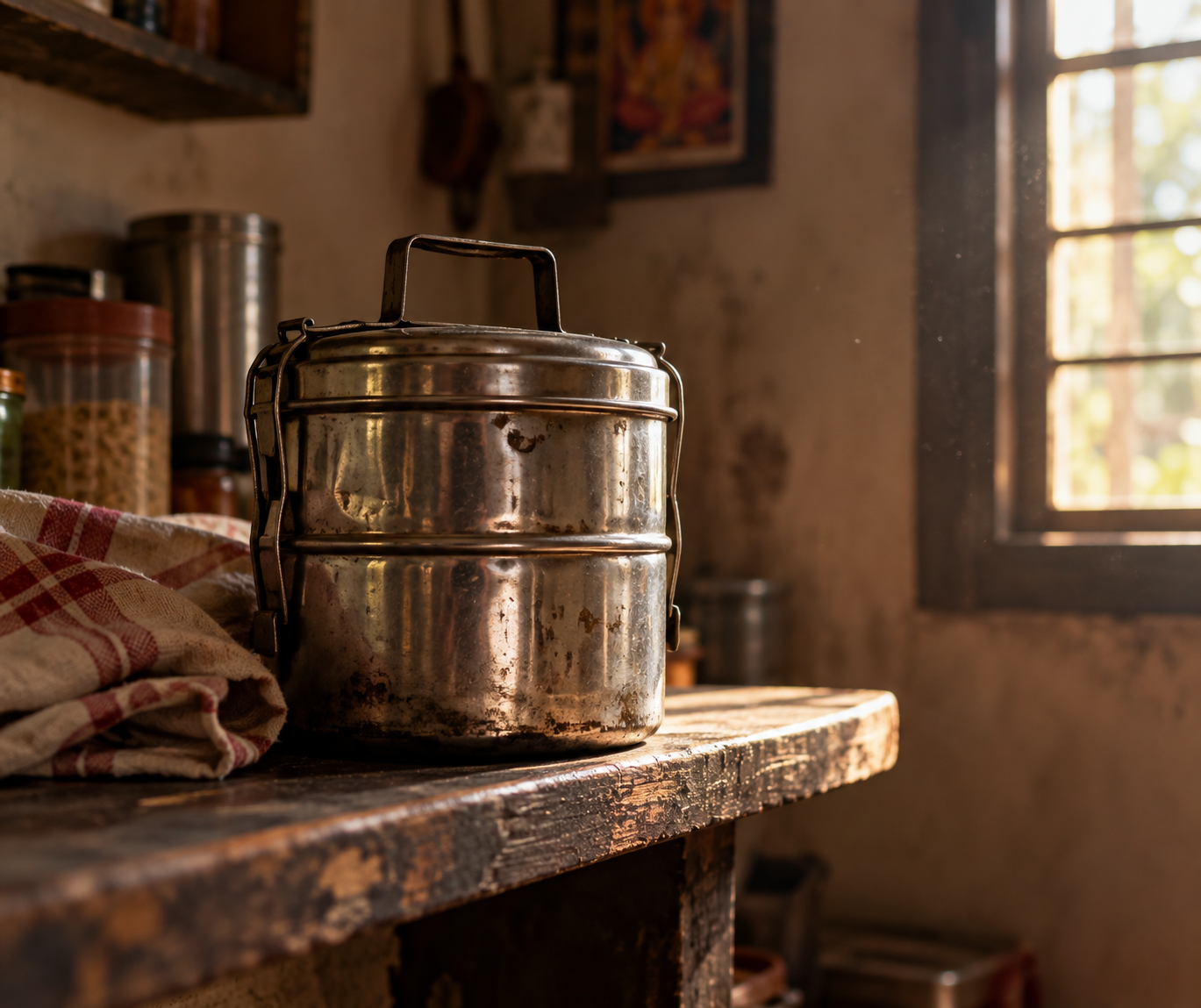
Every morning she packed two chapatis and a little sabzi in a steel tiffin box with a dent on its lid. Every morning I asked the same question: "Maa, have you eaten?" And every morning, without lifting her eyes from the machine: "I already ate."
By the time I reached college, the box had become lighter. Some days there was only one chapati inside. When I complained, she said the flour was finished and the shop had been closed. Once I found a folded twenty-rupee note tucked under the chapati and no sabzi at all. She said she had forgotten.
I was busy being twenty years old. I believed her.
In my final year the interview call came. A bank job, in another city. Train ticket, a decent shirt, a file, photocopies, the agent's fee for my documents. Everything needed money we did not have.
One night my mother put an envelope in my hand. Almost four thousand rupees, in tens and twenties and fifties, every note folded very small. I asked her where it had come from. She said she had been saving from her stitching for two years.
I got the job. With my first salary I bought her a chain that she still wears and still refuses to accept is only gold-plated. The machine in the corner finally went quiet. My father's knees were ruined by then, but at least he could rest them.
Last winter she fell ill. Pneumonia. She was in the hospital for eleven days.
On the second day, the doctor asked me about her medical history and I realised I did not have one to give him. He told me she had an old gastric ulcer, and an anaemia so long-standing that her body had simply adjusted to it. He asked, not unkindly, whether she had gone long hours without food over the years.
I said no. My mother had eaten with us every night of my life.
That evening Sushila aunty came to the hospital with an orange in her bag. She had lived in the room next to ours for eighteen years. While my mother slept, aunty patted my hand and told me what I had never once suspected.
For years, my mother ate only at night. One meal. In the afternoons she drank tea, lay down on the floor, and waited for the hunger to pass, because lying down made it quieter. Aunty said she used to laugh about it. A stitched blouse earned thirty rupees, and a plate of food at the corner shop cost thirty rupees. So a plate of food was one blouse less, and one blouse less was my fees, my bus pass, my photocopies.
That is where the second chapati in my tiffin came from. That is where four thousand rupees in folded notes came from.
I went back into the room and sat by her bed. She opened her eyes and asked whether I had eaten. I asked her, with my voice shaking, whether she had.
"I already ate," she said.
She is well now, and she is impossible. She hides food to give to the neighbour's children. She argues with my wife about salt. Every single afternoon I video call her and sit there until she finishes her plate, and she complains every single time that I do not trust her.
I do not. That is exactly the point.
The dented tiffin box stands on my desk at the office now. My colleagues think it is there because I am sentimental about my mother's cooking. It is there so that I never forget who paid for my own chair and my own table, and what she paid with.
Note: This is a fiction story.