What Makes Animatronic Dinosaur Movement Look Real? Servo vs. Stepper Motors Explained
📝 Editor's Note: This article was originally published on the Sanhe Creature Official Website. To read the full technical breakdown and explore our complete commercial solutions, please visit the Original Article on Sanhe Creature.
Many buyers focus on a dinosaur’s appearance first: skin texture, size, and painting quality. But when it comes to animatronic dinosaur movement, the reality of theme park operations is quite different. Visitors may not know what motor is inside the machine, but they immediately notice whether the motion feels natural. Within the first few seconds, movement often determines whether an animatronic creature feels alive or mechanical.
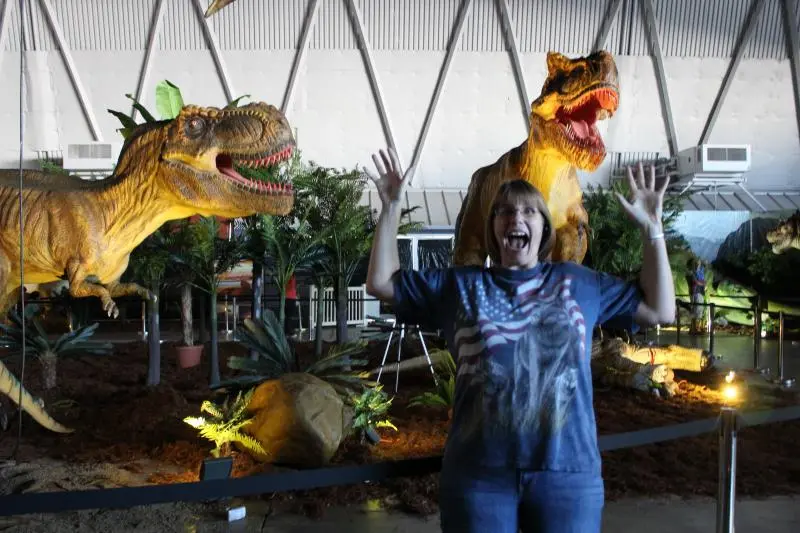
A dinosaur with perfect skin details but unnatural, robotic movement still feels like a machine. On the other hand, a slightly less detailed model with fluid, organic motion will create a much more convincing experience.
Movement Smoothness Is More Than Just Speed
In industrial automation, a robotic arm moves from point A to point B as fast as possible. But living creatures don’t move like that.
If you watch a real animal turn its head, you’ll see a specific sequence: slow acceleration, a slight natural overshoot, and a gentle settle into the final position. Professional motion control systems are programmed to mimic these natural patterns of living creatures, eliminating robotic stiffness.
Servo Motors vs. Stepper Motors: Which Is Better?
AC Servo Motors: Feature closed-loop feedback and high torque. Preferred for large theropods, heavy tails, and complex necks.
Stepper Motors: Traditional open-loop systems. Highly effective, precise, and cost-efficient for smaller movements like facial expressions, blinking eyes, and light loads.
The best choice depends entirely on the specific joint and movement requirements.
How Professional Manufacturers Test Movement
Before any animatronic system is delivered, professional manufacturing requires comprehensive testing procedures, including:
Repeat Cycle Testing: Running full movement sequences to check for mechanical fatigue.
Noise Measurement: Minimizing unnecessary mechanical noise from motors and gears.
Load Testing: Simulating worst-case scenarios to ensure motors don’t stall.
👉 Explore More Engineering & Design Insights on Sanhe Creature
El hecho de que usés servos AC con retroalimentación cerrada para cuellos pesados y colas largas es esto es genial, la diferencia se nota en la suavidad del movimiento. Además, incluir pruebas de ruido y ciclos de fatiga me parece muy práctico para que el dinosaurio no haga “crack” en plena exhibición. ¿Probaste alguna combinación híbrida servo‑stepper en articulaciones de la cara? 🤖
Thanks for chiming in! it mostly comes down to space limitations: Face & Eyes: We pretty much stick to DC motors here because there's just no physical room to squeeze anything else in. Jaw/Mouth: That’s a toss-up between DC motors or servos, depending entirely on how much space we have and the torque needed. Smaller Models: If we're building a smaller dino, space is tight all over, so DC motors are usually the go-to. As for steppers, our team feels they're pretty much outdated for modern animatronics nowadays due to performance limits. Really appreciate your insights—always awesome to geek out over this stuff with someone who gets it!