Uncap NVMe IOPS: Bypass Hardware RAID with mdadm 💿💻
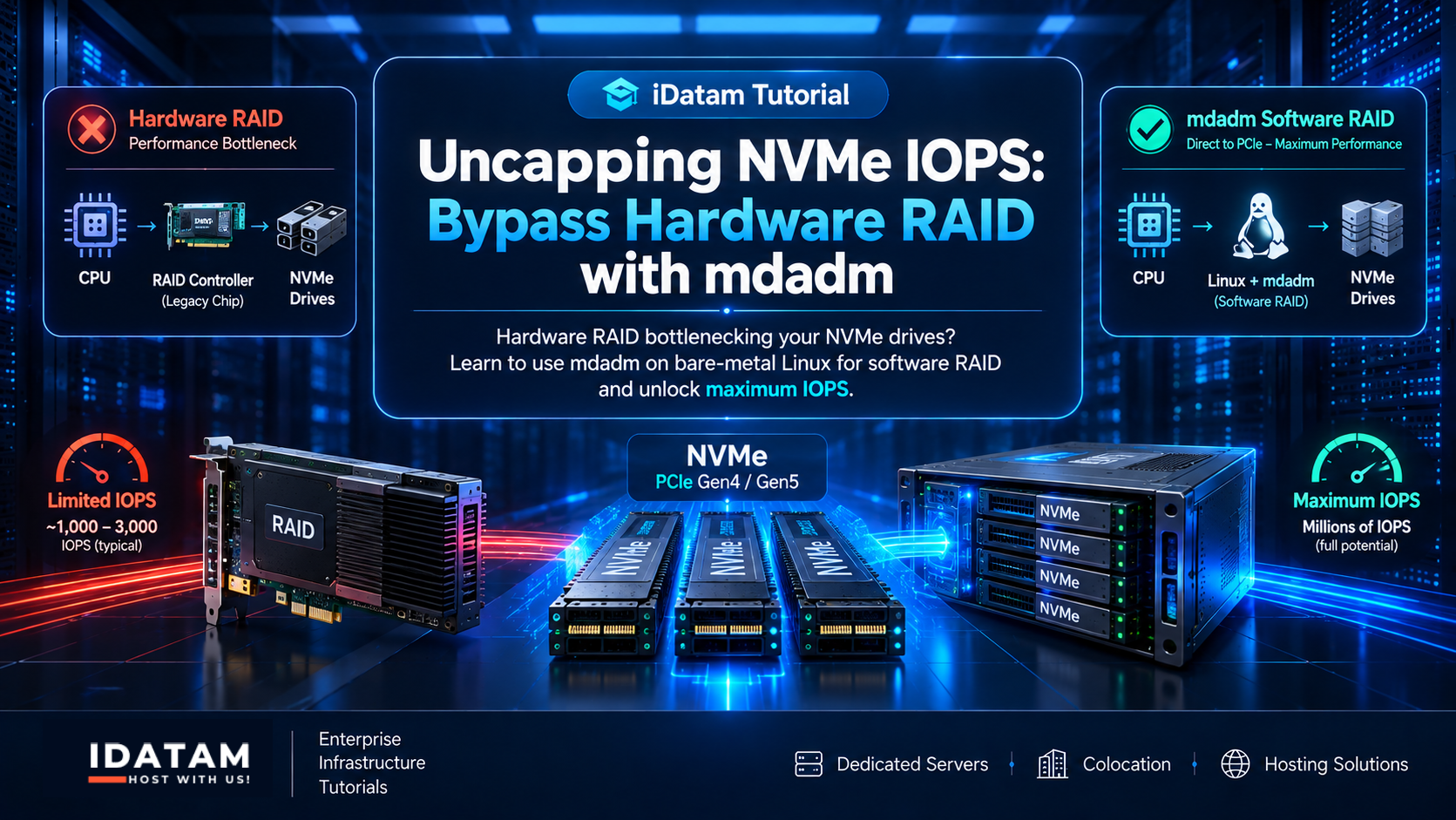
Hello Steemians! If you manage database servers, cloud nodes, or AI pipelines, storage throughput is vital. But using hardware RAID controllers with NVMe SSDs actually throttles your speed.
🛑 The Problem: The Hardware RAID Bottleneck
Hardware RAID controllers were designed for slow SAS and SATA drives. PCIe Gen4 NVMe drives generate millions of IOPS and transfer data at over 7,000 MB/s per drive. A hardware RAID controller's ASIC chip cannot handle this volume, capping your storage performance.
🛠️ The Solution: Linux Software RAID (mdadm)
By switching to software RAID, your NVMe drives connect directly to the CPU's PCIe lanes:
Direct PCIe Connectivity: Eliminates storage controller bus bottlenecks.
Zero CPU Penalty: Modern multi-core Intel/AMD CPUs handle software RAID parity with negligible load.
Maximum Bandwidth: Unlocks native PCIe speeds for databases and big data applications.
Read the full Linux terminal setup guide here:
https://www.idatam.com/tutorials/howto/bypass-hardware-raid-nvme-mdadm/
If you need high-throughput bare-metal servers equipped with native NVMe drives, explore iDatam’s Dedicated Servers:
https://www.idatam.com/dedicated-servers/
Es increíble cómo un controlador RAID tradicional te termina ahogando esos 7000 MB/s que te da un NVMe PCIe Gen4. Saltarse el ASIC y conectar los discos directo al CPU con
mdadmes super práctico y la diferencia se nota de una. Esto es genial para exprimir ese hardware al máximo.