How to Build Stronger Bones in Women Naturally
How to Build Stronger Bones in Women Naturally: 10 Easy Tips
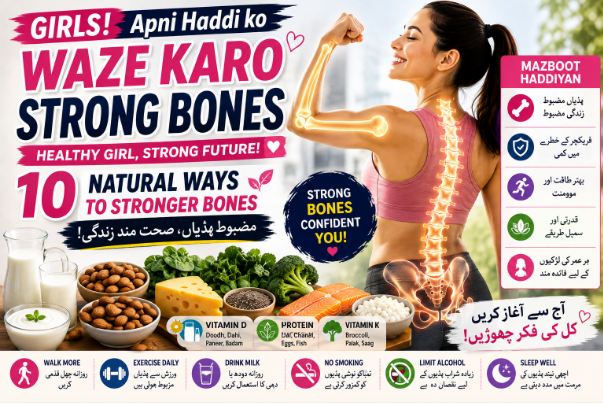
خواتین میں قدرتی طور پر ہڈیاں مضبوط بنانے کا طریقہ: 10 آسان مشورے
Strong bones are essential for women at every stage of life. Bones provide support, protect important organs, and help the body move properly. However, bone strength can gradually decrease with age, especially after menopause. The good news is that healthy lifestyle habits can help women support their bone health naturally.
If you want to know how to build stronger bones in women naturally, start with these 10 simple and practical tips.
Eat Calcium-Rich Foods
Calcium is one of the most important nutrients for maintaining strong bones. Instead of relying only on supplements, include calcium-rich foods in your daily diet.
Good choices include:
Milk and yogurt
Cheese
Sardines or canned salmon with bones
Leafy green vegetables
Tofu made with calcium
Fortified plant-based milk
Sesame seeds and almonds, Try to include a variety of calcium-containing foods throughout the week.Get Enough Vitamin D
Vitamin D helps the body absorb calcium and plays an important role in maintaining healthy bones.
Sunlight can help the body produce vitamin D, while foods such as fatty fish, egg yolks, and fortified foods can also contribute to vitamin D intake.
If you are concerned about vitamin D deficiency, talk with a healthcare professional about whether testing or supplementation is appropriate.Do Weight-Bearing Exercises
Regular physical activity can help maintain bone strength. Weight-bearing activities make your bones work against gravity and can support bone health.
Examples include:
Brisk walking
Stair climbing
Dancing
Hiking
Jogging, if appropriate for your fitness level, Start gradually if you are new to exercise and choose activities that are suitable for your age and physical condition.Add Strength Training
Strength training is another useful way to support healthy bones and muscles. Exercises using body weight, resistance bands, or weights can help improve muscle strength and physical function.
Simple exercises such as squats, lunges, and resistance-band exercises can be included in a regular fitness routine.
If you have osteoporosis or a history of fractures, ask a healthcare professional or qualified trainer which exercises are safe for you.
Eat Enough Protein
Protein is important for muscles as well as bones. Getting enough protein from a balanced diet can support overall musculoskeletal health.
Healthy protein sources include:
Eggs
Fish
Chicken
Beans and lentils
Yogurt
Milk
Nuts and seeds
Tofu, Combine protein-rich foods with vegetables, fruits, and whole grains for a balanced diet.Eat Plenty of Fruits and Vegetables
A colorful diet provides a wide range of vitamins, minerals, and other nutrients that support overall health.
Include foods such as spinach, broccoli, carrots, oranges, berries, tomatoes, and other vegetables and fruits in your meals.
A varied diet is generally better than depending on one particular “bone-strengthening” food.
- Avoid Smoking
Smoking can negatively affect bone health and is associated with a higher risk of osteoporosis and fractures.
If you smoke, quitting can be an important step toward protecting your bones and improving your overall health. Support from a healthcare professional can make quitting easier.
Limit Excessive Alcohol
Drinking too much alcohol can negatively affect bone health and increase the risk of falls and injuries.
Keeping alcohol intake low—or avoiding it altogether—is a healthier choice for your bones and your overall well-being.Maintain a Healthy Body Weight
Being significantly underweight can increase the risk of bone loss and fractures. On the other hand, maintaining a healthy weight supports muscles, mobility, and overall physical health.
Focus on nutritious foods and regular physical activity rather than extreme dieting or rapid weight-loss plans.Pay Extra Attention to Bone Health After Menopause
Women’s bone health deserves special attention as they get older. Hormonal changes around and after menopause can accelerate bone loss.
Women with risk factors for osteoporosis may benefit from discussing bone-health screening with their healthcare professional. Depending on age and individual risk, a doctor may recommend a bone density test.
Final Thoughts:
Building stronger bones is not about one miracle food or a single exercise. It is about making healthy habits part of your everyday life.
A balanced diet with enough calcium and vitamin D, regular weight-bearing and strength exercises, avoiding smoking, limiting excessive alcohol, and maintaining a healthy lifestyle can all contribute to better bone health.
If you are worried about osteoporosis, frequent fractures, significant bone loss, or your nutritional needs, speak with a qualified healthcare professional for personalized advice.
Remember: Strong bones are an important part of healthy aging, and it is never too early to start taking care of them.
Disclaimer: This article is for general educational purposes only and is not a substitute for professional medical advice, diagnosis, or treatment. www.healthgru.com https://www.facebook.com/profile.php?id=61590856329238