Tarot Cards: A Deck Built for Thinking Things Through
A tarot deck looks, at first glance, like a strange kind of playing cards — swords, cups, wands, coins, and a set of larger illustrated cards with names like The Tower or The Star. But tarot isn't really about the cards themselves. It's about the questions people bring to them, and the structured way a reading helps someone look at a situation from angles they might not have considered on their own.
Unlike a natal chart, which is calculated once from your birth data and describes who you are, tarot works from a specific question asked at a specific moment. That distinction is worth holding onto, because it's the reason tarot and astrology are often offered together on the same platforms — Natal Chart Ruler, for instance, provides both natal chart calculations and tarot consultations, since the two tools answer genuinely different kinds of questions.
Where Tarot Actually Comes From
Tarot didn't start as a divination tool. The earliest tarot decks appeared in 15th-century Italy as playing cards for a trick-taking game called tarocchi, popular among the Italian nobility. It wasn't until the 18th century, particularly in France, that tarot began to be used for fortune-telling and esoteric study, with occultists assigning symbolic and astrological meanings to cards that had originally just been part of a card game.
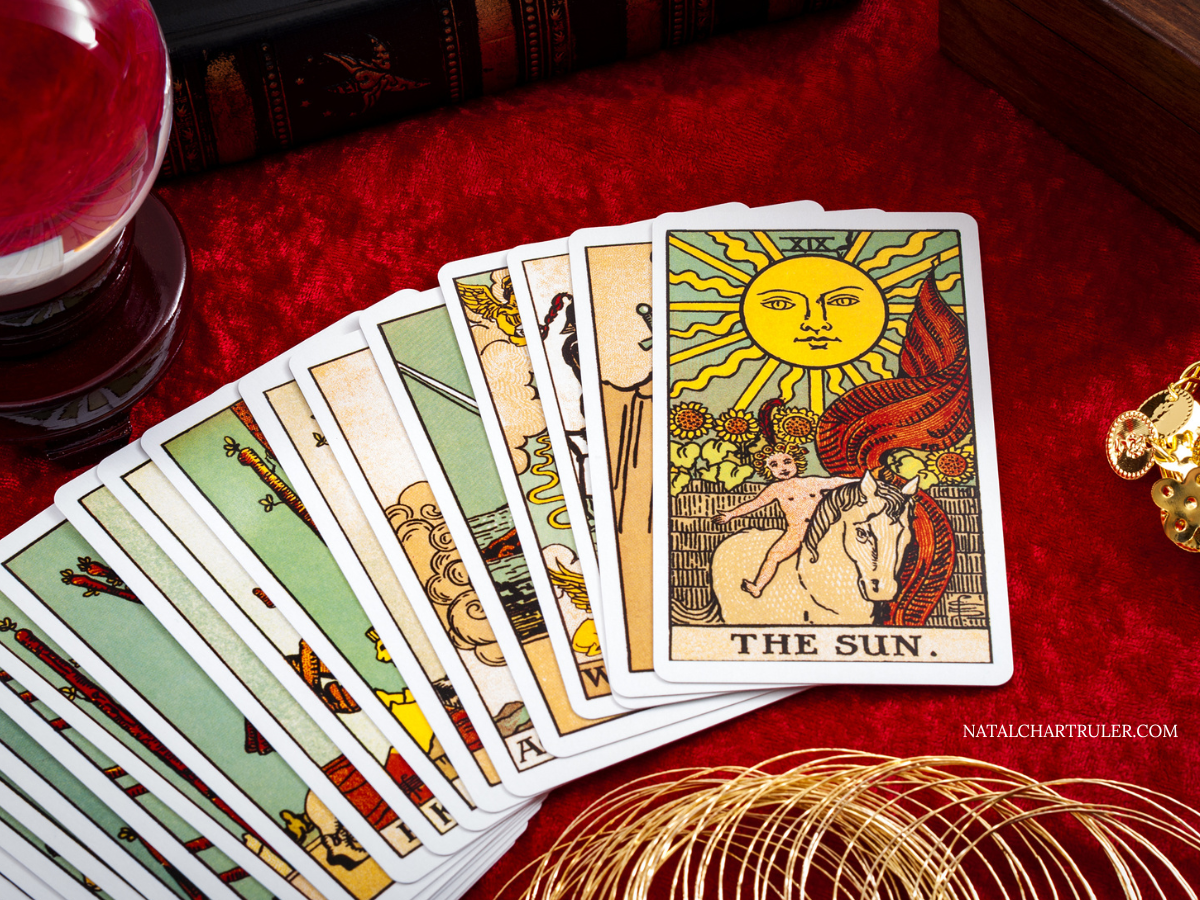
The most widely recognized deck today, the Rider-Waite-Smith deck (published in 1909), is largely responsible for the imagery most people picture when they think of tarot — it was the first mass-produced deck to illustrate all 78 cards, including the minor arcana, with detailed symbolic scenes rather than simple suit-and-number designs.
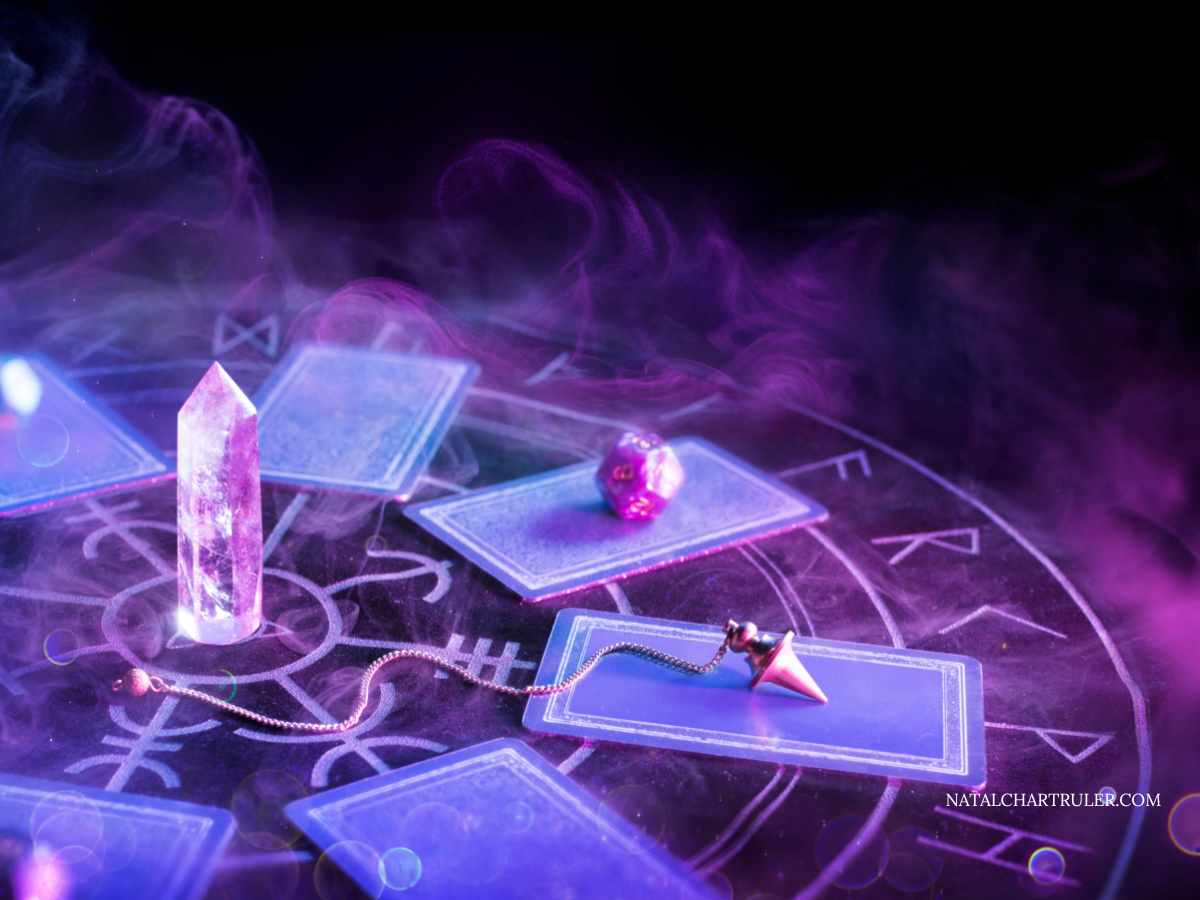
The Structure of a Tarot Deck
A standard tarot deck has 78 cards, split into two groups:
The Major Arcana — 22 cards representing significant life themes and turning points: The Fool, The Magician, The High Priestess, The Tower, Death, The Star, and so on through to The World. These cards tend to describe big-picture forces and transitions rather than everyday details, and their appearance in a reading is usually read as a sign that something significant is at play.
The Minor Arcana — 56 cards split into four suits of 14 (Ace through 10, plus four court cards: Page, Knight, Queen, King). The suits typically map to:
- Wands — action, ambition, creative drive
- Cups — emotion, relationships, intuition
- Swords — thought, conflict, communication
- Pentacles (or Coins) — money, work, physical resources
The Minor Arcana tends to describe the day-to-day texture of a situation, while the Major Arcana marks the larger forces shaping it. A reading usually draws from both.
How a Reading Actually Works
A tarot reading starts with a question — often something specific and current, like a decision between two paths, or how a particular relationship or work situation is likely to unfold. The cards are shuffled, drawn, and laid out in a pattern called a spread, with each position in the spread assigned a specific meaning (past/present/future is a common simple spread; more complex ones might separate out obstacles, hidden influences, or likely outcomes).
The reader's job is to interpret the combination of card, position, and question together — not to read each card in isolation. The same card, say The Tower, means something different in a "what am I not seeing" position than it does in an "outcome" position. This is why tarot readings are usually done by a practicing reader rather than a fully automated tool: much like a natal chart reading, the value is in connecting the pieces into a coherent narrative rather than listing individual card meanings.
Tarot vs. Astrology: Different Tools for Different Questions
It's worth being precise about the difference, since the two get bundled together so often:
- Astrology and natal charts are calculated from your birth data and describe who you are as a relatively stable pattern — your Sun, Moon, Rising sign, and the rest of your chart don't change.
- Tarot is drawn fresh for a specific question at a specific moment, and doesn't require any birth data at all.
Many practicing astrologers work in both systems, using a natal chart as the foundation for understanding someone's overall patterns, and tarot for the "what do I do right now" questions that come up along the way. Platforms built around natal charts, including Natal Chart Ruler, often offer both side by side for exactly this reason — a free birth chart to map the bigger picture, and tarot consultations with a practicing reader when a specific, timely question needs its own answer.
What Tarot Can and Can't Tell You
A reputable tarot reading, like a reputable astrology reading, doesn't claim to predict the future with certainty. What it offers is a structured mirror: a way to look at a question from several angles at once, surface considerations you might have been avoiding, and think through a decision more deliberately than you might on your own. It isn't a substitute for medical, legal, or financial advice, and a good reader will say so directly rather than let a reading stand in for those.
Where tarot tends to genuinely help is in situations that feel stuck — a decision you keep circling back to, a relationship pattern you can't quite name, a choice where the "logical" answer and the way you actually feel don't line up. The spread doesn't hand you an answer so much as it gives you a structured way to sit with the question.
Getting Started with Tarot
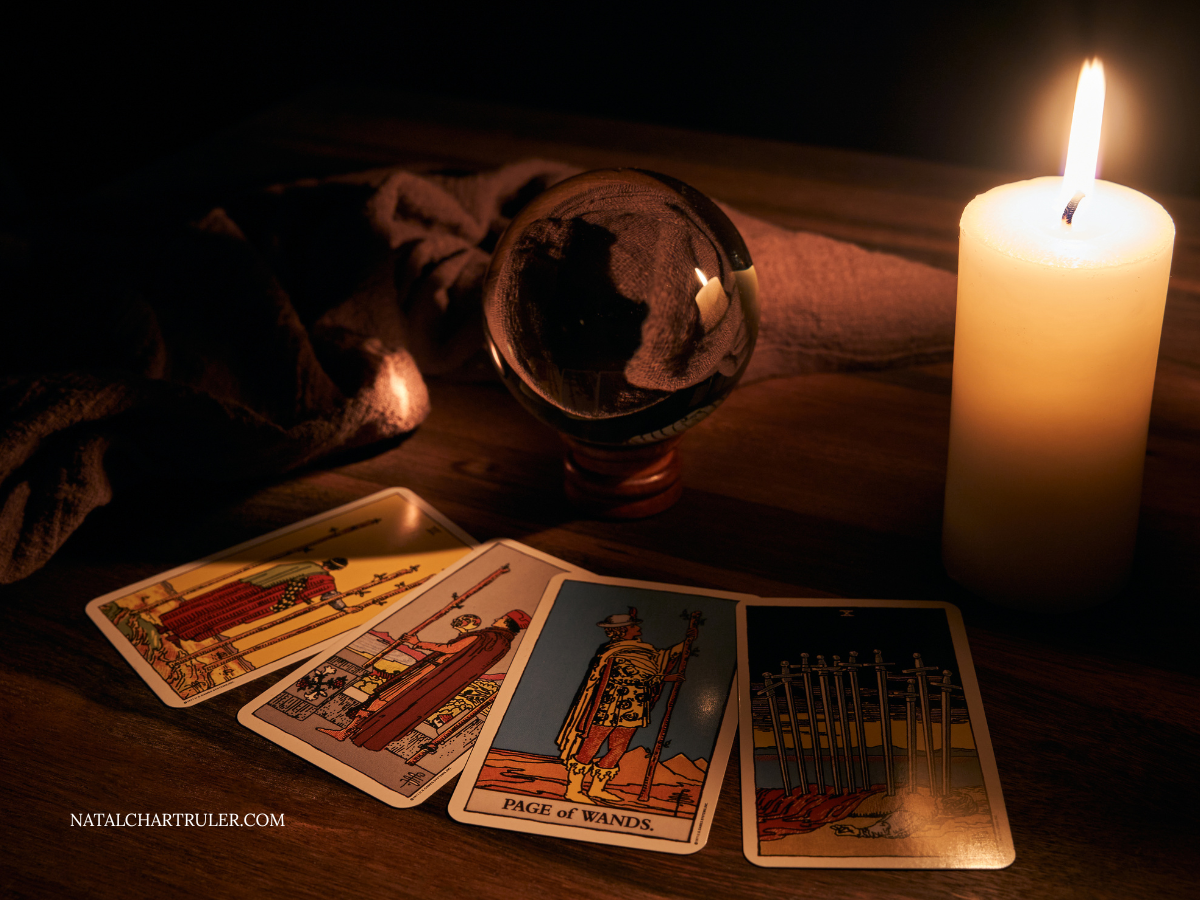
If you're new to tarot, there's no need to memorize all 78 cards before your first reading. A reasonable starting point:
- Come with a real, specific question. Vague questions tend to produce vague readings; a specific one gives the reader (or the cards) something concrete to work with.
- Start with a simple spread. A three-card past/present/future spread is a good entry point before moving into more elaborate layouts.
- Pay attention to the Major Arcana first. These 22 cards carry the most significant thematic weight and are the easiest to start recognizing.
- Consider a session with a practicing reader rather than relying solely on generic card-meaning references, since the interpretation of a card shifts depending on its position and the question asked.
Platforms that combine natal charts with tarot, like natalchartruler.com, make it possible to start with whichever tool actually fits your question — a natal chart if you're trying to understand a broader pattern in yourself, or a tarot consultation if you have something specific and current you're trying to work through.
Closing Thoughts
Tarot's real value isn't in predicting what happens next — it's in the structure a reading gives you for thinking through a question you're already sitting with. Whether you approach it as a serious practice or a curious once-in-a-while tool, the deck works the same way either time: it gives you a set of angles on a question you brought to it, and leaves the decision about what to do with them entirely up to you.