Borrow the Idea, Not the Risk: A Small-Test Method for Online Advice
Adopting online recommendations regarding new software settings, productivity workflows, or digital tools without testing introduces operational risks. A technique that saves time for a specialist operating on a specific desktop configuration may create unnecessary friction for a beginner using a mobile device.
Evaluating online advice relies on converting general recommendations into small, reversible trials. Testing ideas on non-sensitive data before altering primary workflows isolates performance benefits without exposing core systems to data corruption or privacy risks.
Environmental Variances and Reversible Trial Rationale
Sincere community recommendations frequently fail when applied outside their originating context. Differences in operating systems, browser extensions, team sizes, regional policies, or technical skill levels alter tool performance.
Instead of accepting or rejecting advice entirely based on online enthusiasm, researchers should frame the evaluation around personal context. A functional small test utilizes minimal non-sensitive data, operates within a single session, costs nothing, and leaves current workflows undisturbed as a baseline comparison.
Six-Part Test Card Architecture and Impression Translation
Structuring a controlled trial requires recording six operational parameters before executing any software changes or system tweaks.
Six-Field Trial Card Structure
Documenting test parameters ensures that evaluation remains objective and focused on specific operational outcomes:
Test Card Parameter
Operational Field Definition
Practical Trial Specification
Plausible Claim
Promised operational benefit
"Reduces time required for weekly document formatting"
Test Task
Single observable execution step
Formatting a ten-page test document
Baseline Metric
Current workflow performance speed
Current formatting time: twelve minutes, two styling errors
Isolated Sample
Non-sensitive duplicate test data
Synthetic text document containing placeholder data
Stop Rule Trigger
Conditions requiring immediate cancellation
Unexpected payment demand or account permission request
Evidence Output
Observable metrics for final decision
Completion time, formatting errors, and rollback effort
Subjective Impression Conversions into Observable Metrics
Online recommendations frequently utilize subjective marketing language, such as describing tools as faster, cleaner, or safer. Researchers must translate subjective impressions into measurable parameters:
Faster Performance: Measured by the exact minutes required to complete a standardized task.
Cleaner Output: Measured by the reduction in duplicate entries or formatting errors.
Easier Usability: Measured by fewer required navigation steps or help document checks.
Safer Operation: Measured by minimal permission requests, zero data sharing, and instant rollback ability.
Workflow Boundaries, Edge-Case Samples, and Stop Rules
Maintaining workflow security requires creating strict boundaries between testing environments and primary operational systems.
Non-Sensitive Parallel Data Isolation
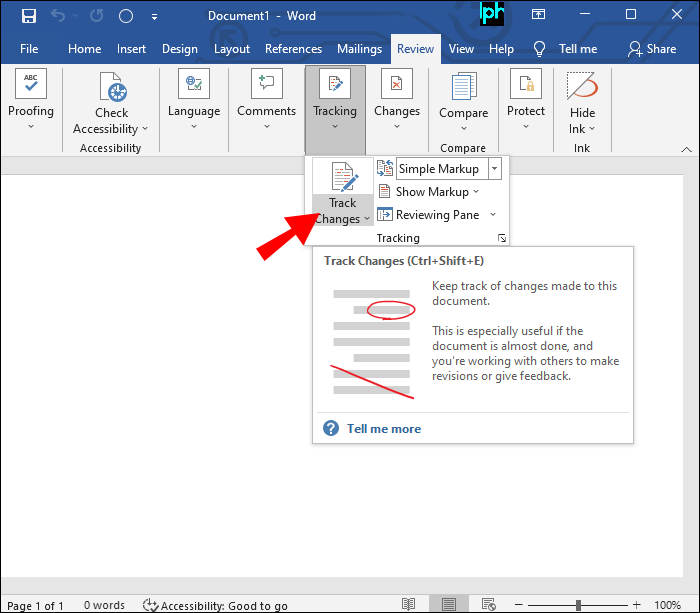
Controlled trials must never utilize confidential business files, customer databases, personal photo archives, or primary user accounts. Researchers should generate synthetic placeholder data that mirrors the technical structure of real files without containing sensitive data. Maintaining a parallel testing environment allows researchers to evaluate new methods side-by-side against existing baselines without performing system restores.
Pre-Execution Stop Rule Definitions
Establishing pre-execution stop rules prevents curiosity from turning a brief test into an uncontrolled commitment.
A trial should terminate immediately if:
The tool demands unexpected account permissions or credit card registration.
System modifications cannot be reversed using visible user interface controls.
Test output cannot be exported in a standard, open file format.
Execution time exceeds baseline metrics across three consecutive attempts.
Discovery Aggregator Testing, Four-Outcome Triage, and Reliability Pitfalls
Exploring curated discovery portals like 웹사이트모음 주소온길 provides a practical launchpad for identifying candidate tools across specific categories. However, directory listings serve as discovery maps, requiring researchers to evaluate destination utilities independently using isolated test files.
Following a controlled trial, researchers assign the recommendation to one of four specific operational outcomes:
Adopt: The new method improved baseline metrics, preserved system boundaries, and allowed clean execution.
Adapt: A specific sub-step proved helpful while the full workflow added unnecessary friction, retaining only the useful element.
Retest: The initial sample size was insufficient or variables were unconfirmed, requiring a second isolated test.
Reject for Now: The recommendation triggered a stop rule, demanded unacceptable permissions, or underperformed baseline metrics.
Avoiding common testing errors (such as modifying multiple software variables simultaneously or evaluating tools using artificially clean data) ensures that digital workflow upgrades remain safe, effective, and reliable over time.