Building a Second Brain in 2026: A Simple Guide
Building a Second Brain in 2026: A Simple Guide
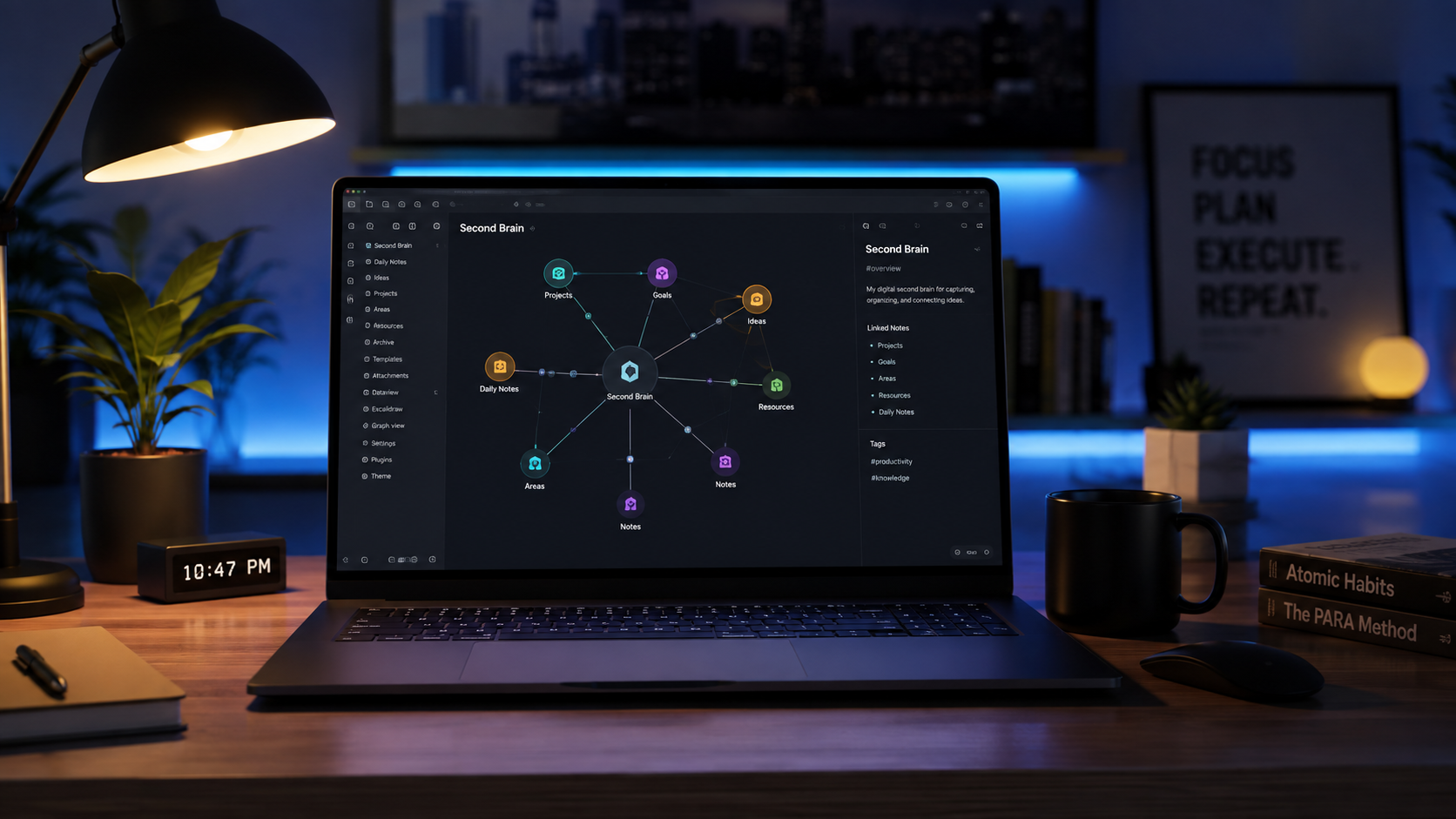
A few years ago, my browser bookmarks were a mess. I had hundreds of saved articles, tutorials, videos, AI prompts, and random ideas. My notes weren't much better. Some were in my phone, some in documents, and some existed only as screenshots.
The funny part? I was collecting information faster than I could actually use it.
Eventually, I started building what I call a Second Brain — a simple system for capturing useful information, organising it around my work, and turning it into something I can actually use.
Here's the setup that works for me in 2026.
1. Capture Everything
My first rule is simple: don't rely on memory.
Whenever I find something useful, I capture it immediately instead of thinking, "I'll come back to this later."
I keep one main digital inbox for:
- Interesting articles and research
- Business and content ideas
- Useful AI prompts
- Web3 resources and project notes
- Quotes, screenshots, and quick observations
- Things I want to learn later
I don't worry about organising everything at this stage. The goal is to get information out of my head and into a place I can trust.
2. Organize by Project
I used to organise everything by topic. That sounded logical, but I rarely knew where to look when I actually needed something.
Now, I organise information around projects and outcomes.
For example:
- Website growth
- New content projects
- Web3 research
- AI automation experiments
- Personal learning
- Business ideas
If I'm working on a particular project, I can quickly find the research and notes connected to it.
I also delete things that no longer have value. My Second Brain isn't supposed to become another giant pile of digital clutter.
3. Review Weekly
This is the part I initially ignored.
Once a week, I spend around 20–30 minutes reviewing my notes. I look through the things I captured during the week and ask:
- Is this still useful?
- Does it belong to an active project?
- Can I turn this into something?
- Should I archive or delete it?
This small habit prevents my system from becoming another forgotten folder.
4. Create and Share
A Second Brain becomes useful when information comes back out.
Instead of endlessly collecting articles, I try to turn what I've learned into something practical:
- A blog post
- A tutorial
- A social media post
- A project idea
- A checklist
- A personal decision
For me, this is the real purpose of the system. I don't want a huge database of information. I want a reliable place where my ideas can grow into useful work.
Conclusion
Building a Second Brain doesn't require a complicated productivity system. My setup is simply capture → organize → review → create.
The goal isn't to remember everything. It's to build a system that remembers things for me.
What would you put into your own Second Brain first — articles, ideas, AI prompts, work notes, or something else?