How AI Automation is Transforming Small Businesses in 2026: A Practical Guide
How AI Automation is Transforming Small Businesses in 2026
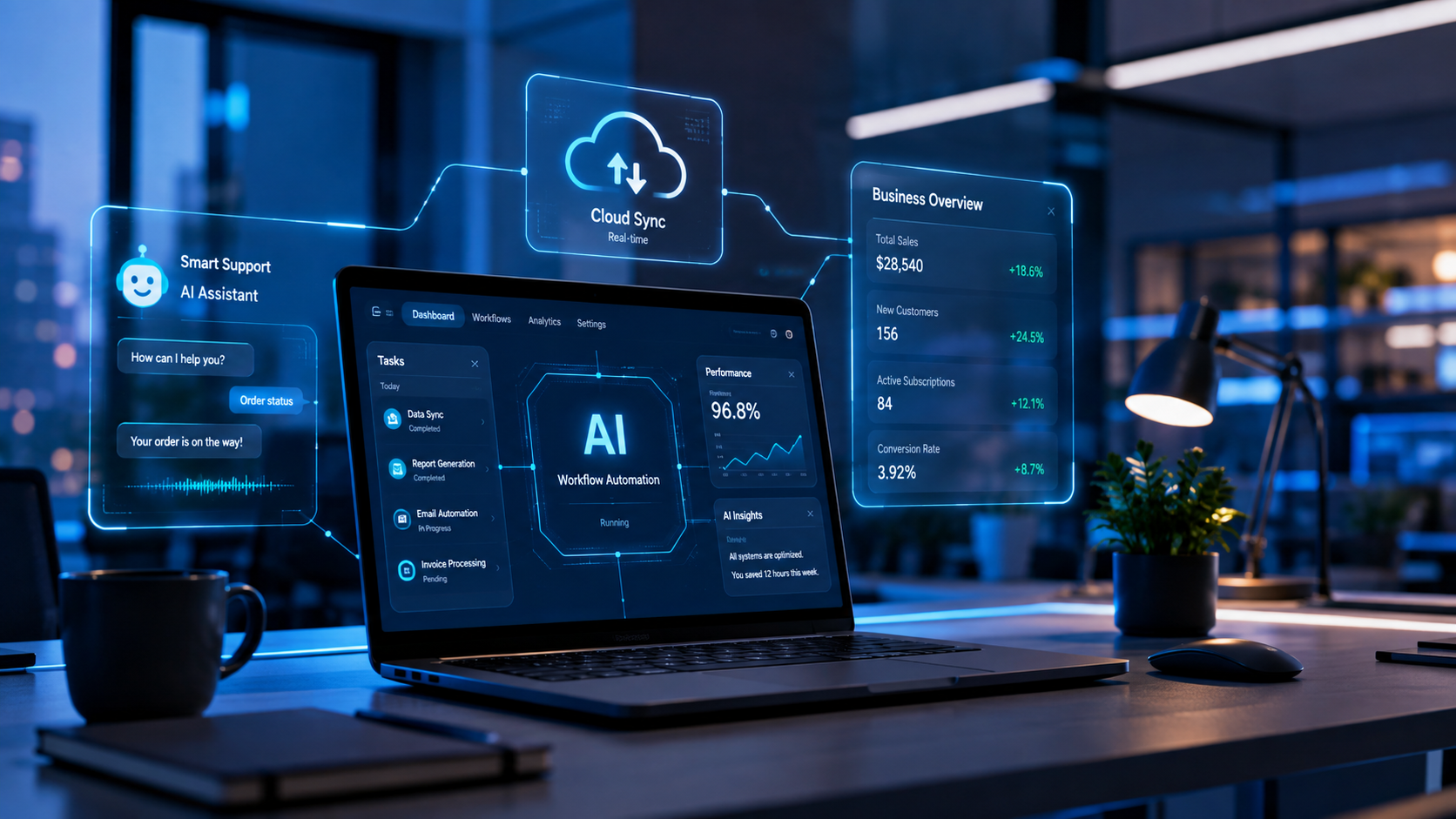
When I first started exploring AI tools, I honestly found them overwhelming. There were endless apps, dashboards, prompts, and features. But once I stopped trying to automate everything and focused on a few repetitive tasks, things changed. Simple automation started saving me hours every week.
In 2026, that same approach is becoming practical for small businesses. You don't need a huge team or an expensive AI system. You need the right tasks automated.
1. Automate Repetitive Daily Tasks
The easiest place to start is with work that happens repeatedly.
Instead of manually copying information, sending routine emails, or updating spreadsheets, businesses can connect AI-powered tools with their existing workflow.
For example:
- Automatically sort incoming emails.
- Create summaries from long documents.
- Generate routine reports.
- Schedule appointments and reminders.
- Move customer information between apps.
My advice is simple: track what you do repeatedly for one week. The tasks that feel boring are often the best candidates for automation.
2. Use AI for Content Editing
Creating content doesn't always require AI to write everything from scratch. I actually find AI more useful as an editor.
A small business owner can create the initial idea and use AI to improve clarity, grammar, structure, and consistency.
It can help with:
- Blog post editing.
- Product descriptions.
- Social media captions.
- Email newsletters.
- SEO title and meta description suggestions.
- Repurposing one article into several short posts.
This keeps the human voice intact while reducing the time spent polishing every sentence.
3. Add Customer Support Bots
Customer questions can consume a surprising amount of time, especially for businesses with a small team.
An AI support bot can handle common questions before a human needs to step in.
For instance, it can answer questions about:
- Opening hours.
- Product availability.
- Shipping information.
- Basic troubleshooting.
- Booking procedures.
- Frequently asked questions.
The important part is knowing where automation should stop. Complicated complaints or sensitive customer issues should still reach a real person.
4. Organize Files Automatically
File management sounds boring until you have thousands of documents scattered across folders, email attachments, and cloud storage.
AI can make this much easier by identifying documents, extracting information, summarizing files, and helping employees find what they need.
A simple workflow might automatically:
- Rename uploaded documents.
- Categorize invoices and receipts.
- Extract important information from PDFs.
- Summarize lengthy reports.
- Find documents using natural-language searches.
For a small business, saving five minutes on hundreds of files can add up quickly.
5. Use AI for Better Decisions
This is where AI becomes particularly useful to business owners.
Instead of staring at spreadsheets and trying to identify patterns manually, I can use AI to summarize business data and highlight areas worth investigating.
It can help analyze:
- Sales trends.
- Customer behavior.
- Marketing performance.
- Inventory levels.
- Website traffic.
- Expenses and revenue patterns.
But I wouldn't blindly follow an AI recommendation. Numbers still need human judgment. AI can point toward a possible problem or opportunity, while the owner decides what action makes sense.
Conclusion
AI automation in 2026 isn't about replacing every person with software. For small businesses, the real value is much simpler: less repetitive work, faster processes, and more time for important decisions.
I'd start small. Automate one annoying task, measure the time saved, and then move to the next one.
What is the first task in your business that you would automate with AI? Share it in the comments—I'd love to hear what other small-business owners are working on.
Estos temas van a redefinir cómo nos relacionamos con la tecnología en el día a día. Buen análisis de las implicaciones prácticas.
Thank you so much @wgonz! Really appreciate your thoughts. Practical implementation is definitely key when it comes to technology and automation today.