Burnable vs Mintable Tokens: How to Choose the Right Features for Your Project
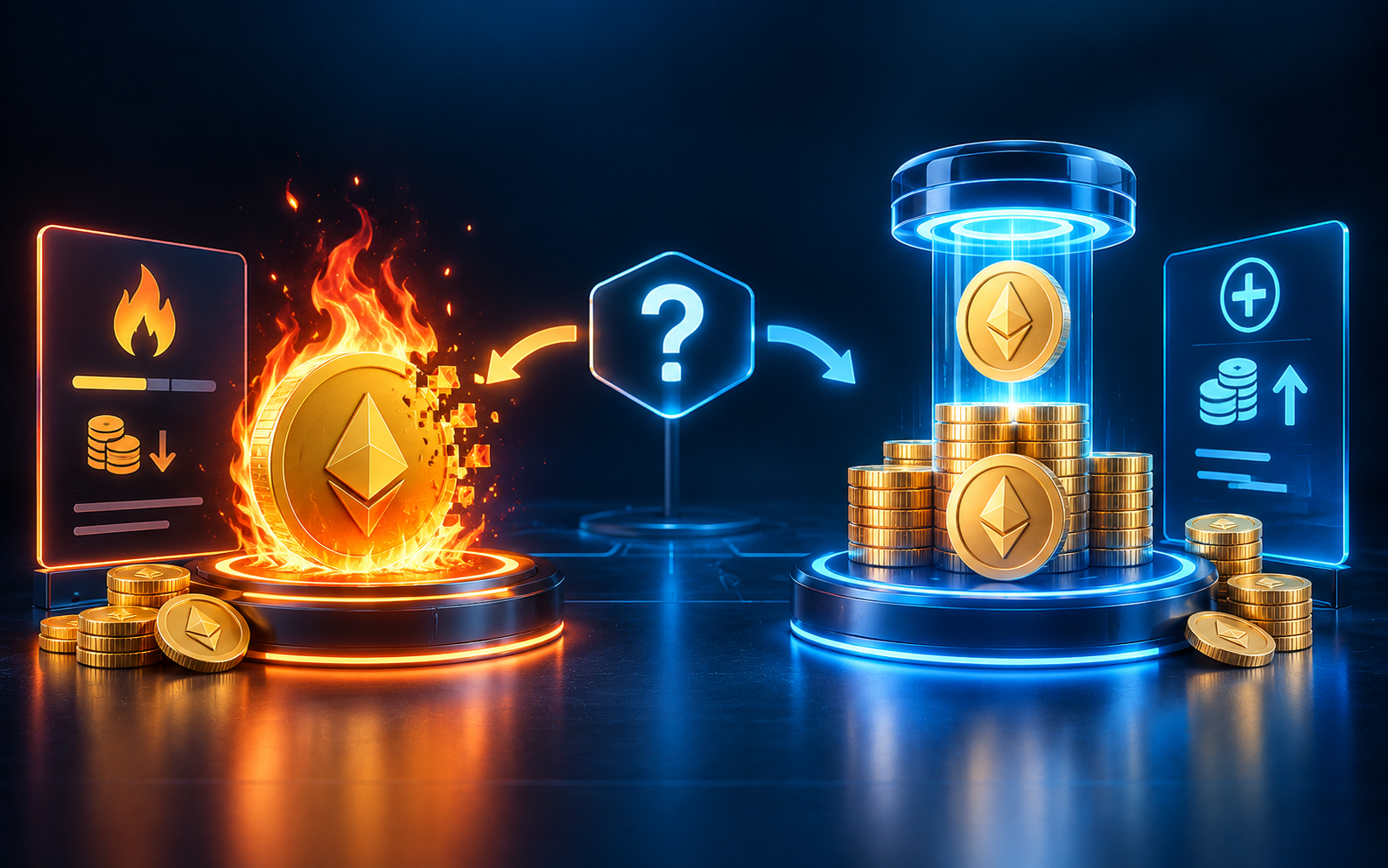
A token's supply rules influence its utility, distribution, and long-term credibility. Two features play a key role: minting, which creates new tokens, and burning, which permanently removes tokens from circulation.
For crypto founders, choosing these features affects how a project rewards users, manages supply, and supports ecosystem growth. The right approach depends on the business model, token utility, and expected demand.
The goal is not to create scarcity or unlimited supply. It is to build tokenomics that support real product usage.
Minting vs Burning: What's the Difference?
A mintable token allows authorized parties or smart contracts to create additional tokens. Projects may use minting for staking rewards, contributor incentives, and ecosystem funding.
A burnable token allows tokens to be permanently removed from circulation through transaction fees, user actions, or predefined protocol rules.
Minting increases supply, while burning reduces it. Neither guarantees a higher token price. Demand, liquidity, distribution, and actual utility also influence market performance.
When Should a Project Choose Mintable Tokens?
Minting can help projects that need to reward contributors as their networks grow. For example, a decentralized computing platform may issue tokens to operators who provide verified computing resources.
However, excessive issuance can dilute existing holders and create selling pressure. Founders should define who can mint, how many tokens can be created, and what conditions trigger issuance.
Clear supply limits, scheduled releases, and controlled permissions help projects maintain transparency and reduce risks.
When Does Token Burning Make Sense?
Burning works best when it supports a clear product or economic function. A project might burn transaction fees or remove tokens used in specific platform activities.
Ethereum provides a real-world example through its EIP-1559 mechanism, which burns the base fee paid for transactions. BNB also uses scheduled burns and gas-fee-related supply reduction mechanisms.
These examples connect burning to network operations rather than relying on scarcity alone. Burning tokens does not automatically increase their price. If demand weakens, a smaller supply may not improve market performance.
Can a Project Use Both Features?
Yes. A project can mint tokens to reward participation and burn tokens through product usage.
Consider a blockchain game that issues rewards to players and burns tokens spent on specific in-game purchases. Minting encourages activity, while burning removes tokens from the game's economy.
The outcome depends on the balance between issuance and burning. Founders should also track circulating supply, planned token releases, and vesting schedules to understand how the token economy may change.
How to Implement These Features Securely
Minting and burning should be planned during smart contract development. Projects need restricted permissions, clearly defined rules, and appropriate security testing.
Founders should consider multisignature approvals, issuance limits, and governance controls for important supply changes. Independent smart contract audits can help identify vulnerabilities before deployment.
Transparency is equally important. Users should understand who controls minting, when burning occurs, and how supply changes are communicated.
Which Features Fit Your Business Model?
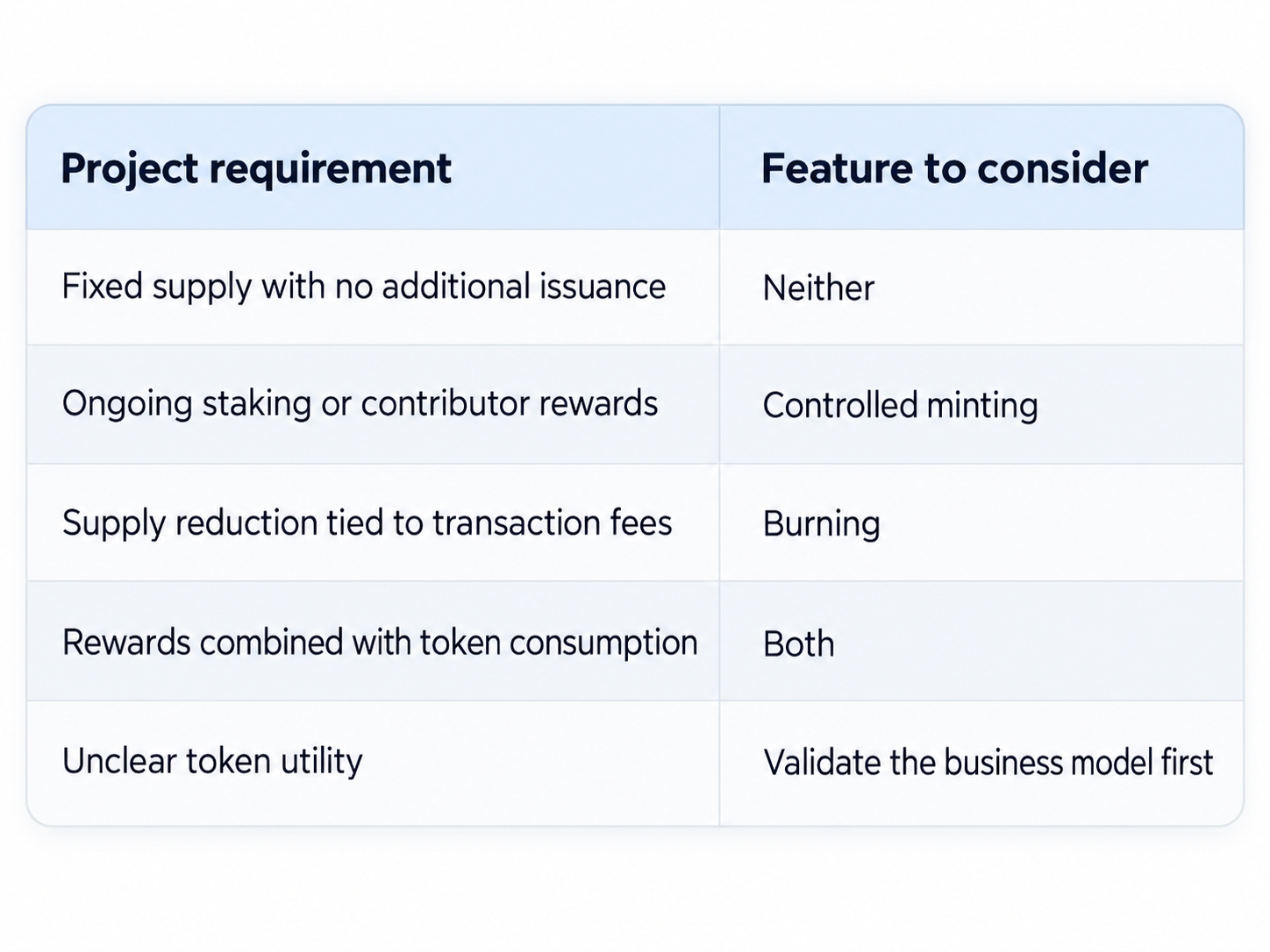
The right choice depends on the project's needs. Founders should test their tokenomics under different adoption levels and market conditions before finalizing the design.
Build Tokenomics Around Real Demand
Minting supports network growth and incentives, while burning can connect token usage to supply reduction. Both can be useful when they serve clearly defined economic purposes.
For founders, the priority is to build tokenomics around real demand, transparent rules, and secure implementation rather than relying on supply changes to attract buyers.
Blockchain App Factory helps projects plan token features, define tokenomics, and develop smart contracts around their business requirements. Start by identifying why your project needs to create, distribute, use, or remove tokens.