ERC-20 vs. ERC-721 vs. ERC-1155: How to Choose the Right Token Standard for Your Project
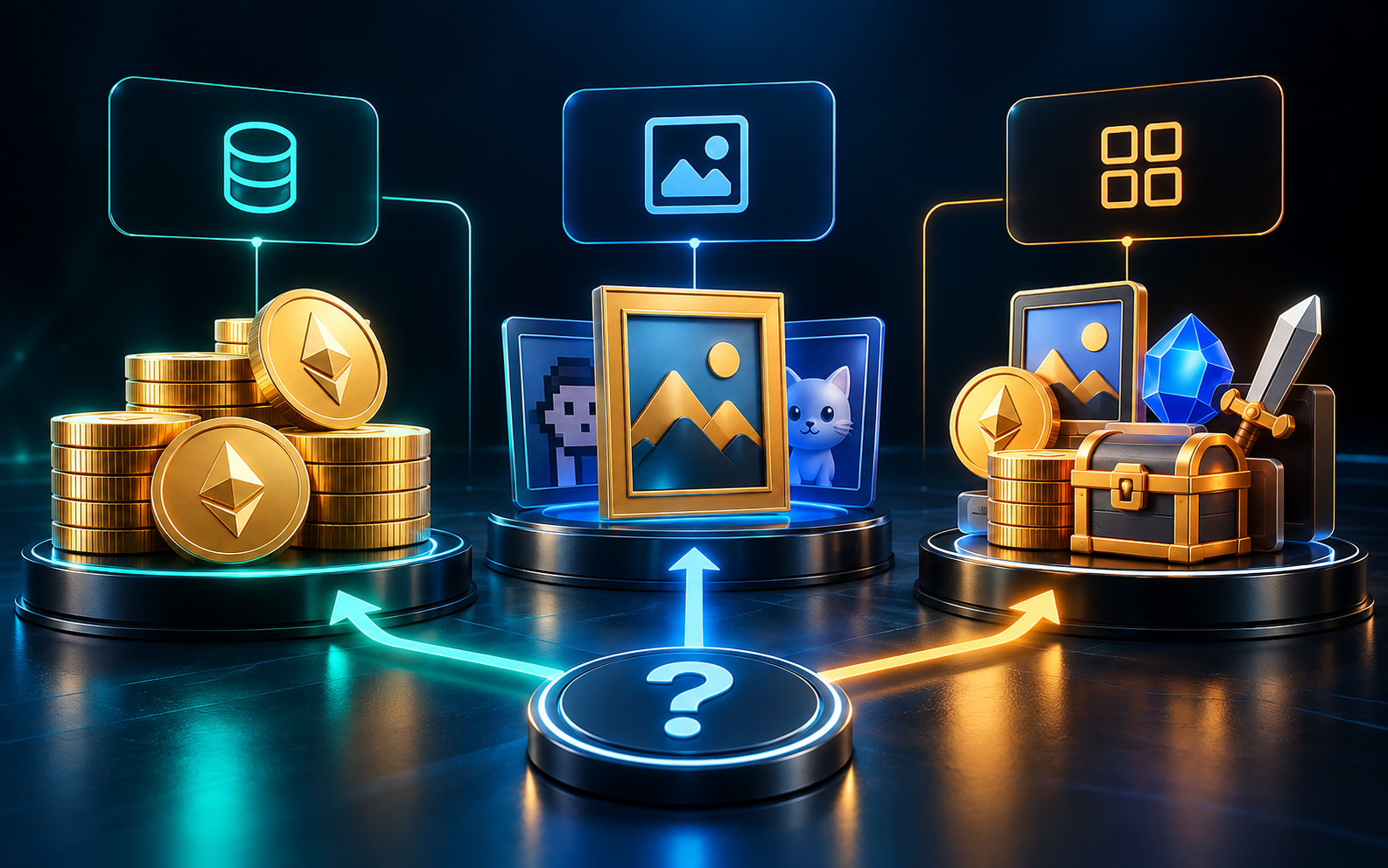
Choosing the right Ethereum token standard affects how a blockchain application manages assets, transfers ownership, and scales. ERC-20, ERC-721, and ERC-1155 serve different purposes, from creating cryptocurrencies to issuing unique digital assets and managing multiple token types.
For startups and Web3 businesses, the best choice depends on the token's purpose, security requirements, and integration needs. Understanding these differences helps reduce development complexity and supports long-term project growth.
1. Understanding the Three Token Standards
Ethereum token standards establish common rules that help wallets, marketplaces, and decentralized applications interact with digital assets.
ERC-20: Designed for fungible tokens, where each unit is interchangeable with another.
ERC-721: Designed for non-fungible tokens (NFTs), where each token has a unique identity.
ERC-1155: Supports multiple fungible and non-fungible token types within a single smart contract.
These standards are not direct replacements for one another. Each addresses different asset management requirements.
2. ERC-20: Best for Fungible Tokens
ERC-20 is widely used for utility tokens, governance tokens, stablecoins, and digital currencies. Its standardized interface supports token transfers, balance checks, and spending approvals, helping compatible wallets and decentralized exchanges integrate these assets.
For example, a startup launching a governance token can use ERC-20 to distribute voting units among community members. Additional smart contract logic can connect token balances to voting rights.
However, ERC-20 does not automatically provide price stability, governance mechanisms, or regulatory compliance. These require separate design decisions.
Businesses should also evaluate minting permissions, spending allowances, access controls, and smart contract security before deployment.
Choose ERC-20 when your project requires interchangeable token units for payments, utility, governance, or rewards.
3. ERC-721: Best for Unique Digital Assets
ERC-721 supports NFTs by assigning each token a unique identifier. It is suitable for digital collectibles, artwork, event tickets, game characters, and certain tokenized asset representations.
For example, an NFT ticketing platform can issue individually identifiable tickets, allowing ownership to be tracked through blockchain transactions. Each token can reference metadata containing event details or other asset information.
ERC-721 also supports digital marketplaces that need to identify and transfer specific assets. However, developers must consider metadata storage, ownership verification, and marketplace integrations. The standard does not automatically guarantee permanent metadata or enforce royalties across every marketplace.
For businesses building NFT platforms, Blockchain App Factory can help assess token architecture, smart contract requirements, and marketplace integration needs.
Choose ERC-721 when each asset requires distinct identity and ownership tracking.
4. ERC-1155: Best for Multiple Asset Types
ERC-1155 allows developers to manage multiple token types within a single smart contract. It supports fungible, non-fungible, and semi-fungible assets, making it useful for gaming platforms and digital marketplaces.
Consider a blockchain game featuring gold coins, unique weapons, and consumable health potions. ERC-1155 can represent these different assets under one contract. Its batch-transfer functionality can also reduce transaction overhead when multiple token types are transferred together.
Actual gas savings depend on implementation and transaction details. Developers must still design token IDs, permissions, and metadata carefully.
Choose ERC-1155 when your application manages multiple asset categories or requires batch transfers.
5. ERC-20 vs. ERC-721 vs. ERC-1155: Key Differences
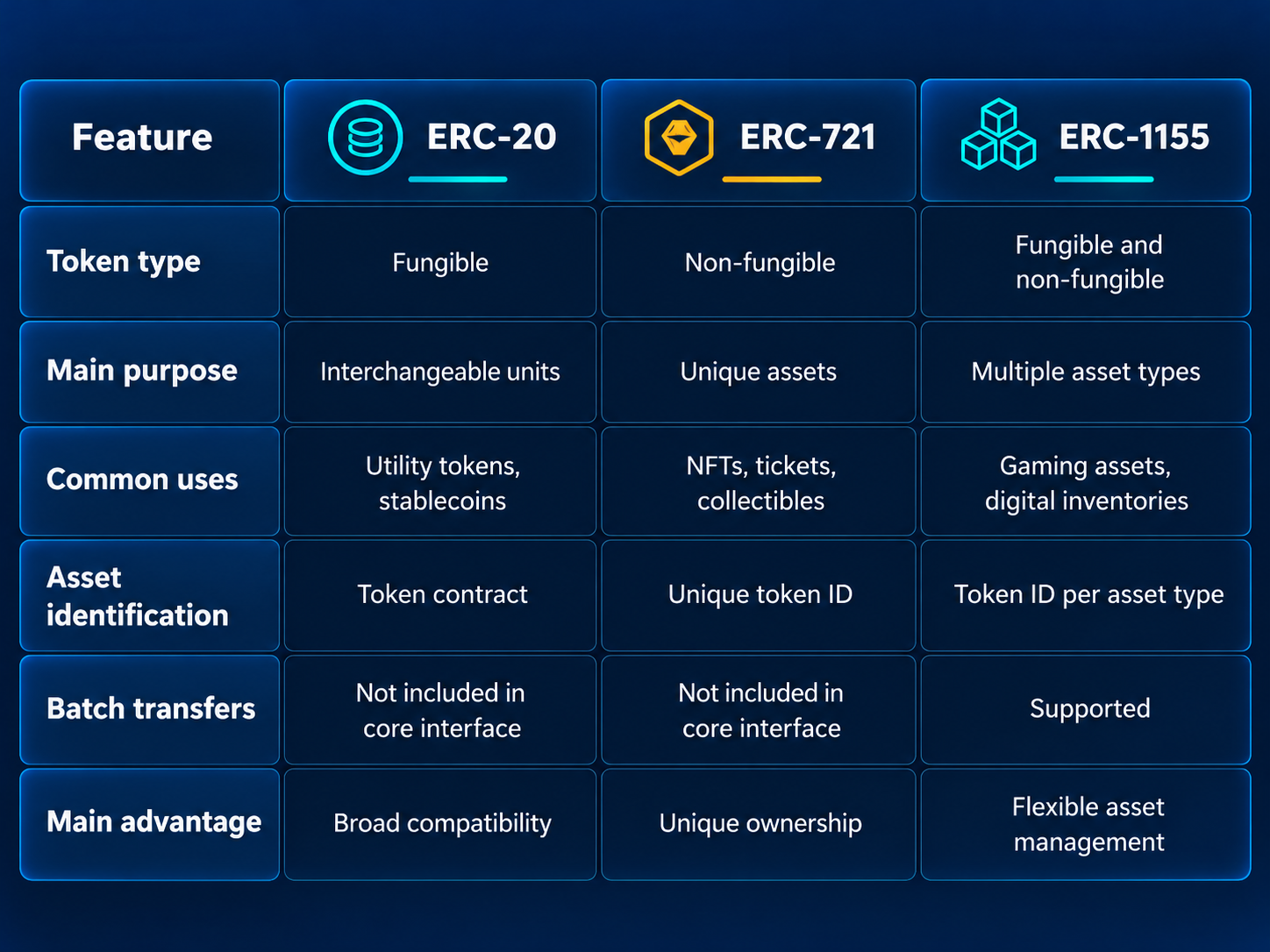
The right standard depends on how assets behave and how the application needs to manage them.
6. How to Choose the Right Standard
Start by identifying what the token represents. Interchangeable units generally suit ERC-20, individually identifiable assets often suit ERC-721, and applications managing varied inventories may benefit from ERC-1155.
Next, evaluate wallet compatibility, marketplace support, transaction costs, and integration requirements. The selected standard should support the project's immediate needs without introducing unnecessary complexity.
Security is equally important. Review access controls, minting and burning permissions, transfer restrictions, and testing procedures. Independent audits can help identify vulnerabilities, although they cannot eliminate every risk.
Businesses should also plan for future requirements, such as staking, governance, new asset categories, or additional platform integrations. Blockchain App Factory helps businesses evaluate token development requirements and select an appropriate architecture for their blockchain projects.
Conclusion
ERC-20 is suited to fungible tokens, ERC-721 to unique digital assets, and ERC-1155 to applications managing multiple token types.
Businesses should compare these standards based on asset behavior, security, ecosystem compatibility, and future development plans. The right decision creates a practical foundation for smart contract development and application integration.
Blockchain App Factory supports businesses planning blockchain token projects by helping align token architecture with technical requirements and commercial objectives.