The Biggest Risks in Cryptocurrency Token Development and How to Overcome Them
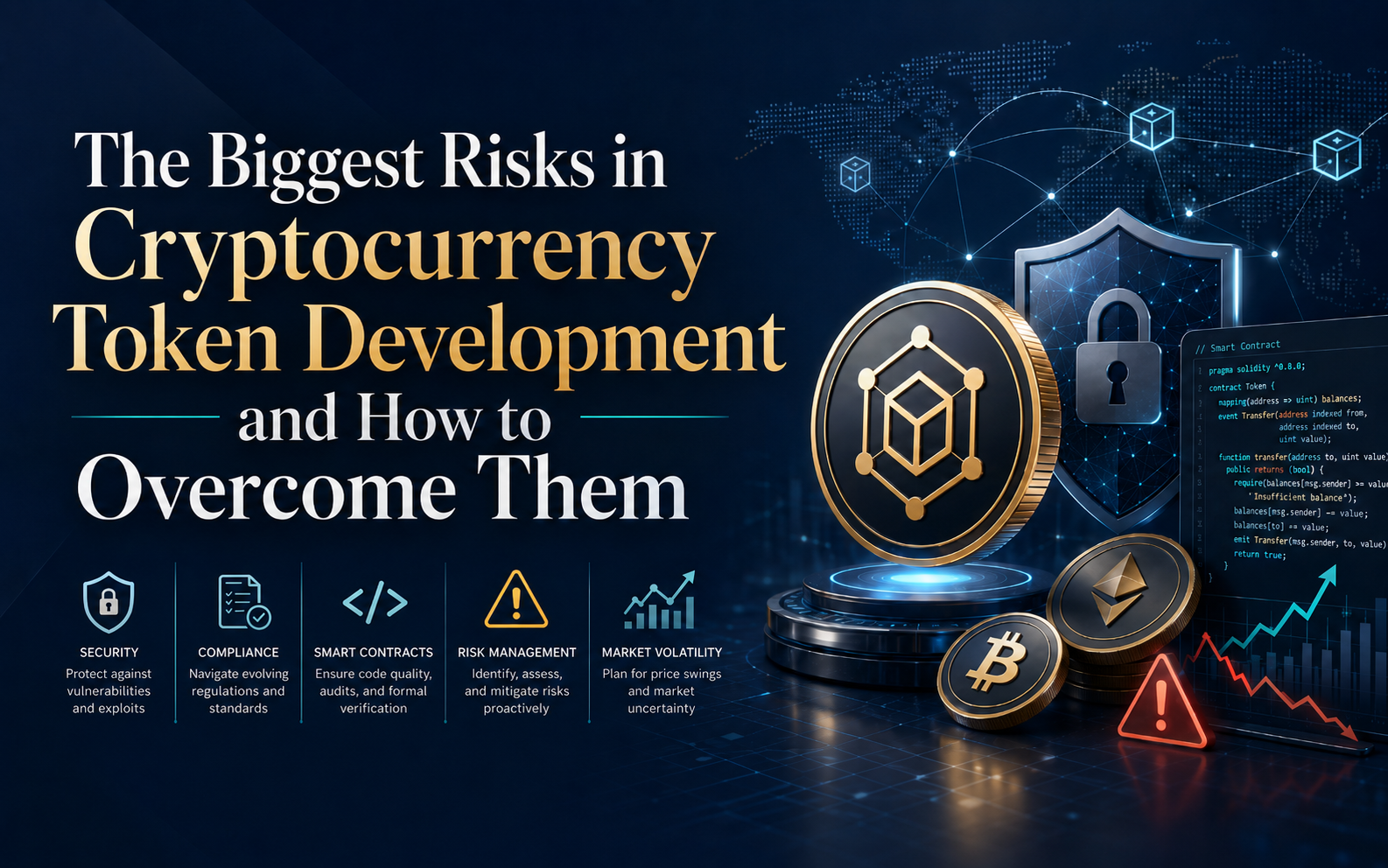
Cryptocurrency token development has evolved into one of the most important building blocks of the Web3 economy. Tokens now power decentralized applications, blockchain games, AI platforms, decentralized physical infrastructure networks (DePIN), real-world asset (RWA) platforms, loyalty ecosystems, and digital governance systems. As blockchain adoption continues to expand, startups are increasingly turning to custom tokens to create sustainable digital economies and engage global user communities.
However, developing a cryptocurrency token is far more complex than deploying a smart contract. Every decision from defining the token's purpose to designing tokenomics, selecting a blockchain, implementing security controls, and planning liquidity introduces risks that can significantly impact a project's long-term success.
The blockchain industry offers countless examples of projects that failed not because of weak ideas, but because of preventable mistakes. Security vulnerabilities, poorly designed tokenomics, inadequate liquidity planning, weak governance, and insufficient ecosystem integration have repeatedly undermined promising initiatives.
For founders, understanding these risks before development begins is just as important as understanding blockchain technology itself. This article explores the biggest risks in cryptocurrency token development and the practical strategies startups can use to overcome them.
Building a Token Without a Clear Purpose
One of the earliest and most damaging mistakes is creating a token without a compelling reason for its existence.
During previous market cycles, many projects launched tokens primarily to raise capital or capitalize on market hype. Once trading began, users discovered that the token had little practical value within the platform.
A cryptocurrency token should support a business model rather than exist independently of it.
Successful projects answer critical questions before development starts:
-What problem does the token solve?
-Why is blockchain necessary?
-How does the token improve the user experience?
-What motivates users to hold or spend the token?
-How will long-term demand be generated?
For example, an AI marketplace may require tokens to purchase computing services, while a decentralized storage platform may reward node operators through token incentives. A gaming ecosystem may use tokens for in-game purchases, governance, and creator rewards.
Projects with genuine utility naturally generate recurring demand, whereas speculative tokens often struggle once initial excitement fades.
The solution is to validate the business model first and build the token around measurable platform utility.
Poorly Designed Tokenomics
Tokenomics determines how tokens are created, distributed, circulated, and used throughout an ecosystem.
Even technically impressive projects can fail when economic incentives are poorly structured.
Common tokenomics risks include:
-Excessive token inflation
-Large insider allocations
-Weak vesting schedules
-Unsustainable staking rewards
-Limited community incentives
-Inefficient treasury management
Many failed projects allocated significant portions of token supply to founders and early investors while providing minimal incentives for long-term users. When vesting periods ended, large token unlocks created substantial selling pressure, weakening market confidence.
Effective tokenomics balances the interests of developers, investors, users, validators, and ecosystem partners.
Leading projects increasingly conduct economic simulations before launch to model supply, demand, staking participation, and potential market behavior under different growth scenarios.
Rather than maximizing short-term fundraising, sustainable tokenomics focuses on supporting ecosystem growth over several years.
Choosing the Wrong Blockchain Infrastructure
Blockchain selection affects nearly every aspect of token performance.
Different networks offer varying levels of security, scalability, transaction costs, interoperability, and developer support.
Launching on the wrong blockchain can result in:
-High transaction fees
-Slow confirmation times
-Limited wallet compatibility
-Reduced liquidity
-Poor developer adoption
-Difficult ecosystem integration
Ethereum remains the preferred platform for security and decentralized application development, while Solana offers high transaction throughput and low costs for consumer-focused applications.
BNB Chain attracts projects seeking affordability, whereas Layer-2 ecosystems such as Arbitrum, Optimism, and Base improve scalability while maintaining Ethereum compatibility.
Selecting infrastructure should depend on technical requirements rather than market popularity.
Many startups also reduce future migration risks by planning multi-chain expansion from the beginning.
Smart Contract Vulnerabilities
Smart contracts represent one of the highest-risk components of cryptocurrency token development.
Once deployed, blockchain transactions cannot easily be reversed, making software vulnerabilities especially costly.
According to blockchain security reports, billions of dollars have been lost through smart contract exploits over recent years. Many incidents originated from preventable coding errors, inadequate testing, or permission misconfigurations.
Common vulnerabilities include:
-Reentrancy attacks
-Integer overflow and underflow
-Access control weaknesses
-Flash loan exploit vectors
-Oracle manipulation
-Improper ownership management
Professional development teams minimize these risks by following secure coding standards and building on audited smart contract libraries whenever possible.
Security should be integrated throughout development rather than treated as a final checklist before deployment.
Skipping Independent Security Audits
Internal testing alone rarely identifies every potential vulnerability.
Independent security audits provide an objective review of smart contracts before launch.
Professional auditors examine contract architecture, business logic, administrative permissions, and exploit scenarios that internal developers may overlook.
Comprehensive security processes typically include:
-Unit testing
-Integration testing
-Testnet deployment
-Static code analysis
-Manual code review
-Third-party audits
-Bug bounty programs
Publishing audit reports also improves transparency and increases confidence among exchanges, investors, and community members.
Although audits require additional investment, they often prevent losses that would be significantly more expensive after deployment.

Inadequate Liquidity Planning
Launching a token without sufficient liquidity creates immediate challenges for users.
Limited liquidity leads to:
-High price volatility
-Large bid-ask spreads
-Excessive slippage
-Poor trading experiences
-Reduced market confidence
Liquidity planning should begin long before launch.
Development teams typically prepare:
-Decentralized exchange liquidity pools
-Centralized exchange documentation
-Treasury allocations
-Market-making partnerships
-Token verification
-Wallet integrations
Projects that establish healthy liquidity from the outset create more stable trading environments while improving accessibility for new users.
Weak Governance and Treasury Management
As blockchain ecosystems mature, governance has become increasingly important.
Without transparent governance mechanisms, decision-making often remains centralized, reducing community trust.
Modern cryptocurrency projects frequently implement governance systems that allow token holders to participate in:
-Protocol upgrades
-Treasury allocation
-Ecosystem funding
-Parameter adjustments
-Community proposals
Treasury management also requires careful planning.
Poor financial oversight may limit future ecosystem development or create unnecessary selling pressure if reserves are managed inefficiently.
Transparent governance frameworks strengthen accountability while encouraging greater community participation.
Ignoring Regulatory Considerations
The global regulatory environment surrounding digital assets continues to evolve.
Although regulations vary by jurisdiction, startups should evaluate legal considerations before launching a token.
Areas requiring attention often include:
-Token classification
-Anti-money laundering (AML) obligations
-Know Your Customer (KYC) requirements
-Consumer protection standards
-Tax implications
-Disclosure practices
Legal guidance helps founders structure projects responsibly while reducing future compliance risks.
Regulatory planning should complement technical development rather than delay it until after launch.
Launching Without an Ecosystem
Many projects invest heavily in token creation but underestimate the importance of ecosystem integration.
A token without meaningful applications often struggles to generate sustained demand.
Successful ecosystems integrate tokens into daily user activities such as:
-Platform payments
-Staking
-Governance
-NFT marketplaces
-AI services
-Gaming economies
-Loyalty programs
-Creator rewards
Every additional use case strengthens the token's role within the ecosystem.
Projects that continuously expand utility generally experience healthier long-term adoption than those relying primarily on speculative trading.
Neglecting Post-Launch Development
Token deployment should mark the beginning rather than the end of development.
Successful blockchain ecosystems evolve continuously based on user feedback, technological innovation, and market conditions.
Post-launch priorities include:
-Monitoring on-chain analytics
-Expanding token utility
-Optimizing gas efficiency
-Introducing governance improvements
-Supporting additional blockchain networks
-Enhancing wallet integrations
-Maintaining security updates
Continuous development demonstrates long-term commitment while helping projects remain competitive in an evolving industry.
Lessons From Successful Blockchain Ecosystems
Several leading blockchain ecosystems illustrate how effective risk management contributes to long-term success.
Ethereum's ecosystem emphasizes developer adoption, extensive security research, and decentralized governance.
Chainlink built sustained demand by integrating its token into decentralized oracle infrastructure that serves numerous blockchain networks.
The Sandbox expanded utility beyond trading by embedding its token into gaming, governance, creator rewards, and virtual land transactions.
These projects share several common characteristics:
-Clearly defined utility
-Sustainable tokenomics
-Continuous innovation
-Strong developer ecosystems
-Transparent governance
-Ongoing community engagement
Rather than focusing exclusively on token launches, they invested in building resilient blockchain ecosystems capable of adapting over time.
Why Experienced Development Partners Reduce Project Risk
Cryptocurrency token development requires expertise across multiple technical and strategic disciplines.
Founders must coordinate blockchain engineering, tokenomics, security auditing, infrastructure deployment, liquidity planning, governance design, and ecosystem integration.
For many startups, building these capabilities internally is difficult.
Working with an experienced token development company helps reduce technical complexity while improving development quality and launch readiness.
Professional development partners contribute structured processes, established security practices, blockchain expertise, and ongoing technical support throughout the project lifecycle.
How Blockchain App Factory Helps Startups Build Secure Cryptocurrency Tokens
Reducing development risk requires both technical excellence and strategic planning. Blockchain App Factory provides end-to-end cryptocurrency token development services that help startups navigate every stage of the token lifecycle.
Its services include token strategy consulting, tokenomics design, smart contract development, multi-chain deployment, security-focused engineering, exchange readiness, and post-launch ecosystem support. By combining blockchain expertise with proven development methodologies, Blockchain App Factory enables businesses to build secure, scalable, and utility-driven cryptocurrency tokens that are designed for long-term success.
Conclusion
Building a successful cryptocurrency token involves much more than writing smart contracts. Every stage of development introduces risks that can influence security, user adoption, liquidity, governance, and long-term sustainability.
The most successful blockchain projects reduce these risks through careful planning, sustainable tokenomics, rigorous security practices, thoughtful blockchain selection, and continuous ecosystem development. Rather than treating token creation as a single technical milestone, they approach it as the foundation of a growing digital economy.
For startups entering the Web3 space, understanding these challenges before development begins can significantly improve the chances of a successful launch. By combining strategic planning with experienced technical execution and partnering with trusted providers such as Blockchain App Factory, founders can transform innovative ideas into secure, scalable, and resilient cryptocurrency token ecosystems built for long-term growth.