How Companies Can Use Digital Tokens to Create New Revenue Streams
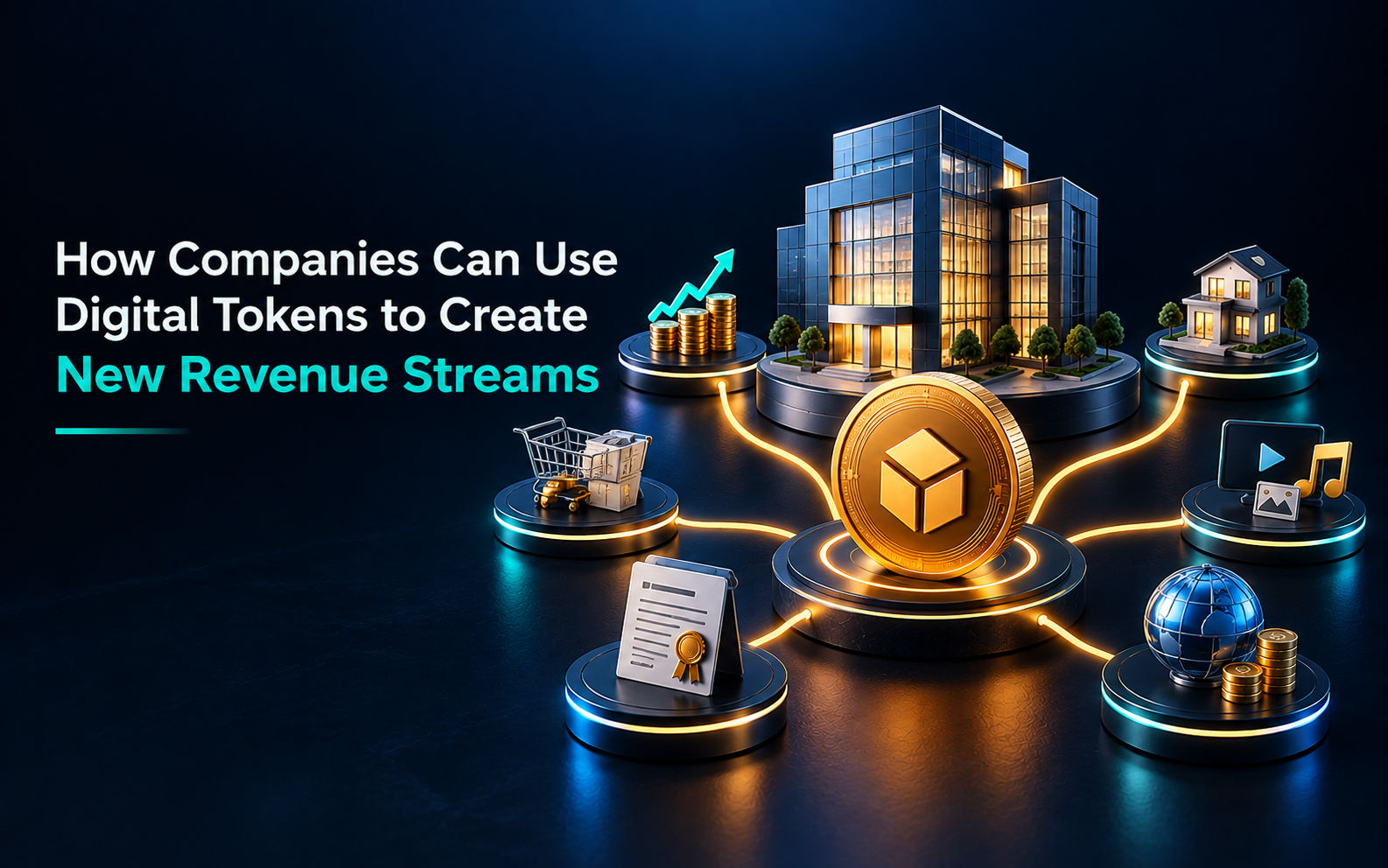
Digital tokens are moving beyond speculative trading and into practical business models. Companies can use tokens to represent assets, provide access to products, reward customer participation, facilitate payments, coordinate communities, and create new forms of digital ownership.
The opportunity is not simply about creating a token and listing it on an exchange. The stronger opportunity lies in connecting a digital token to an existing business activity that generates measurable value.
Tokenization is already expanding across financial markets. CoinGecko reported that tokenized real-world assets reached $19.32 billion by the end of Q1 2026, up from $5.42 billion at the start of 2025. Tokenized Treasuries remained the largest category, while tokenized commodities, stocks, and ETFs also expanded.
For companies, this growth raises a practical question: How can tokens become part of a sustainable revenue model rather than simply another digital asset?
Turning Digital Tokens Into Business Infrastructure
A company can generate revenue from token-based models when the token has a defined role in the customer or business journey.
The token might be required to access a platform, pay for a service, participate in a network, represent ownership, receive premium benefits, or transact within an ecosystem. Each use case creates a different economic relationship between the company, customers, partners, and token holders.
This distinction is important because a token itself does not automatically create revenue.
Suppose a software company issues one million tokens but gives customers no reason to acquire or use them. The company has created a digital asset, but not necessarily a business model.
Now consider a decentralized infrastructure company where users need tokens to purchase network resources while providers earn tokens for contributing infrastructure. The token becomes part of the operating economy. Revenue can come from network usage, transaction fees, subscriptions, enterprise access, or other services surrounding that economy.
The strongest token models therefore begin with a business activity and then determine whether blockchain-based ownership or incentives can improve that activity.
1. Creating New Payment and Transaction Revenue
One of the most direct applications is using digital tokens as a payment mechanism.
Businesses can accept blockchain-based assets for products or services, particularly when customers operate across multiple countries. Stablecoins are particularly relevant because they are designed to maintain relatively stable values against reference assets such as national currencies.
Visa's 2026 research highlights the growing use of stablecoins across global payments and notes that adoption is expanding beyond U.S. dollar-denominated assets into currencies including euros, Brazilian reais, Singapore dollars, and yen.
A company can build revenue around this infrastructure through transaction fees, premium payment services, cross-border settlement, merchant services, or embedded financial products.
For example, a global digital marketplace could allow buyers to pay using supported stablecoins while sellers receive settlement through blockchain infrastructure. The company could charge a transaction fee while reducing some of the friction associated with traditional cross-border payment rails.
The opportunity becomes more compelling when payment speed, geographic reach, or settlement flexibility directly addresses customer demand.
2. Tokenizing Real-World Assets
Asset tokenization creates another potential revenue channel.
Companies can represent ownership or economic interests in assets through blockchain-based tokens. Depending on the legal structure, these assets can include securities, funds, commodities, real estate interests, collectibles, or other rights.
The financial sector is already moving in this direction. The SEC stated in January 2026 that tokenized securities can represent securities where ownership records are maintained partly or entirely through crypto networks.
This can create revenue opportunities for asset managers, financial platforms, property businesses, marketplaces, and technology providers.
A company could potentially generate revenue through issuance fees, transaction fees, management fees, custody-related services, platform subscriptions, or secondary-market activity.
The growth of tokenized assets shows that this is becoming more than a theoretical concept. CoinGecko reported that tokenized stocks grew from roughly $2 million in June 2025 to nearly $487 million by March 2026.
The business case, though, depends heavily on the underlying asset and its legal structure. Tokenization does not remove the rights and obligations associated with the original asset.
3. Building Token-Based Membership Models
Digital tokens can also create new forms of membership.
A company could issue tokens that provide access to premium communities, events, products, services, research, software features, or loyalty programs.
Unlike conventional membership databases, blockchain-based memberships can potentially become transferable digital assets. This opens additional possibilities for secondary transactions and partner integrations.
Imagine a professional network issuing membership tokens that provide access to private events, research libraries, founder communities, and partner discounts. The company could earn initial membership revenue while partners pay to reach qualified members.
The token then becomes part of a broader commercial ecosystem.
This model can also create stronger customer retention when the membership has continuing utility. Customers are not simply paying for access once. They are participating in an ecosystem where the token remains useful.
4. Creating Loyalty and Customer Incentive Economies
Traditional loyalty programs usually generate points that customers redeem within one company's ecosystem.
Token-based loyalty can introduce more flexible structures.
A retail business could issue digital tokens for purchases, referrals, reviews, community contributions, or other valuable actions. Those tokens could then unlock discounts, products, experiences, partner offers, or premium access.
The commercial opportunity comes from encouraging behavior that has measurable value for the business.
For example, a company may discover that customers acquired through referrals have higher lifetime value. It could reward successful referrals with tokens that provide future benefits. The company gains customer acquisition activity while the customer receives an incentive.
The critical issue is reward design. If tokens are distributed without a clear economic purpose, the program can become expensive without improving customer behavior.
A well-designed system connects the reward to an action that contributes to revenue, retention, or network growth.
5. Creating New Revenue Around Digital Ownership
Companies can also use tokens to turn previously static products into programmable digital assets.
A luxury brand could connect physical products with blockchain-based ownership certificates. A ticketing company could issue programmable event passes. A gaming company could create transferable digital assets linked to in-game experiences.
The revenue opportunity can extend beyond the initial sale.
A company might earn from primary issuance, royalties where legally and technically applicable, marketplace fees, premium upgrades, authentication services, or related digital products.
The underlying principle is that ownership becomes programmable.
This can also create opportunities for businesses to build secondary markets around products that previously generated revenue only at the point of initial sale.
6. Creating Token-Based Access to Services
Some businesses can use tokens as access keys for digital services.
A decentralized computing platform, for example, could require users to purchase tokens or credits to access computing resources. Infrastructure providers could receive rewards for supplying capacity.
The company can earn from usage fees while the token coordinates supply and demand.
This model becomes particularly interesting when a network has multiple participants and the business needs a common economic mechanism to coordinate them.
However, companies should avoid creating a token simply because blockchain is part of the technology stack. If conventional credits, subscriptions, or database records provide the same functionality more simply, a token may not add enough value.
7. Building New Revenue Through Tokenized Financial Products
Financial companies have one of the clearest opportunities to develop token-based revenue models.
Funds, securities, and other financial instruments can potentially be represented onchain. This can support new approaches to issuance, transfer, settlement, collateral management, and distribution.
The SEC has increasingly addressed this area. In September 2026, the Commission introduced a temporary Innovation Exemption allowing certain tokenized NMS stocks to trade on permissioned Tokenized Securities Venues under specified conditions. The SEC described tokenization as having potential implications for issuance, trading, transfer, settlement, and ownership records.
This creates potential business opportunities around issuance platforms, compliant marketplaces, custody infrastructure, settlement technology, analytics, and asset management.
For companies entering this market, regulatory architecture is not a secondary consideration. It is part of the product.
Revenue Depends on the Economic Loop
The most important factor in token-based business models is the economic loop.
A company needs to understand:
Who buys the token? Who uses it? Who earns it? Where is it spent? What creates recurring demand? What does the company charge for?
A healthy model connects these activities.
For example:
Customer pays for service → token facilitates access → service generates usage → network participants receive incentives → users continue participating → company earns transaction or platform revenue.
This is stronger than relying on token appreciation.
Companies should also model supply, distribution, unlock schedules, incentives, and treasury management. Poor token economics can create selling pressure and weaken the commercial model even when the underlying product is valuable.
Regulatory and Security Considerations
Revenue generated through token models also comes with additional responsibilities.
A token that represents an investment interest may fall under securities regulations depending on its structure and distribution. The SEC has emphasized that tokenization does not change the underlying legal nature of a security.
Companies also need to consider custody, consumer protection, disclosures, transfer restrictions, taxation, anti-money-laundering requirements, and jurisdiction-specific rules.
Security presents another major concern.
Smart contract vulnerabilities can affect token balances, transfers, ownership rights, and treasury assets. Businesses should therefore treat contract architecture, access controls, testing, audits, and key management as core components of the revenue model.
A token economy cannot generate sustainable revenue if users do not trust the infrastructure supporting it.
Choosing the Right Token Revenue Model
Not every company needs the same approach.
A business should start with its existing customers and revenue structure. The goal is to identify where tokenization can introduce a meaningful commercial improvement.
For some companies, that could mean faster payments. For others, it could mean asset tokenization, customer rewards, digital memberships, decentralized infrastructure, or programmable ownership.
The strongest opportunity usually appears where three elements overlap:
- A clear customer or business problem
- A genuine reason for blockchain-based ownership or transactions
- A revenue mechanism connected to actual usage
This prevents the common mistake of designing the token first and searching for utility later.
Building Revenue Around Utility, Not Speculation
Digital tokens can open new revenue channels, but their value depends on the business ecosystem surrounding them.
Companies can generate revenue from transaction fees, access, memberships, asset issuance, marketplaces, financial products, loyalty programs, and network usage. The token can act as the infrastructure connecting these activities.
The market is already showing strong momentum. Tokenized real-world assets reached $19.32 billion by March 2026 according to CoinGecko, while regulatory developments are creating clearer pathways for certain forms of onchain financial activity.
For business leaders, the opportunity is not simply to launch another crypto asset. It is to identify where programmable digital ownership, payments, and incentives can create economic value that traditional systems struggle to deliver.
Blockchain App Factory helps businesses translate token concepts into practical blockchain solutions designed around utility, ecosystem requirements, and long-term commercial objectives. A successful token strategy starts with the revenue model and business problem, then builds the token around the value the company intends to create.