Why combine Uganda gorilla trekking with Tanzania or Kenya safari
Tour Company: Dav safaris
Website: www.davsafaris.com
Email: info@davsafaris.com
Tel: +256701412430 / +25675779578
Combining Uganda gorilla trekking with a Tanzania or Kenya safari saves you money on flights. Most travelers fly long-haul into Nairobi or Kilimanjaro, and adding Uganda means one more short flight rather than a separate trip later. Gorilla permits in Uganda cost less than in Rwanda, so pairing Uganda with Tanzania or Kenya stretches your budget further. You also share international airfare across two destinations instead of paying for two separate long trips. For anyone who wants both apes and big cats on one ticket, this combination makes financial sense and reduces the number of times you cross time zones.
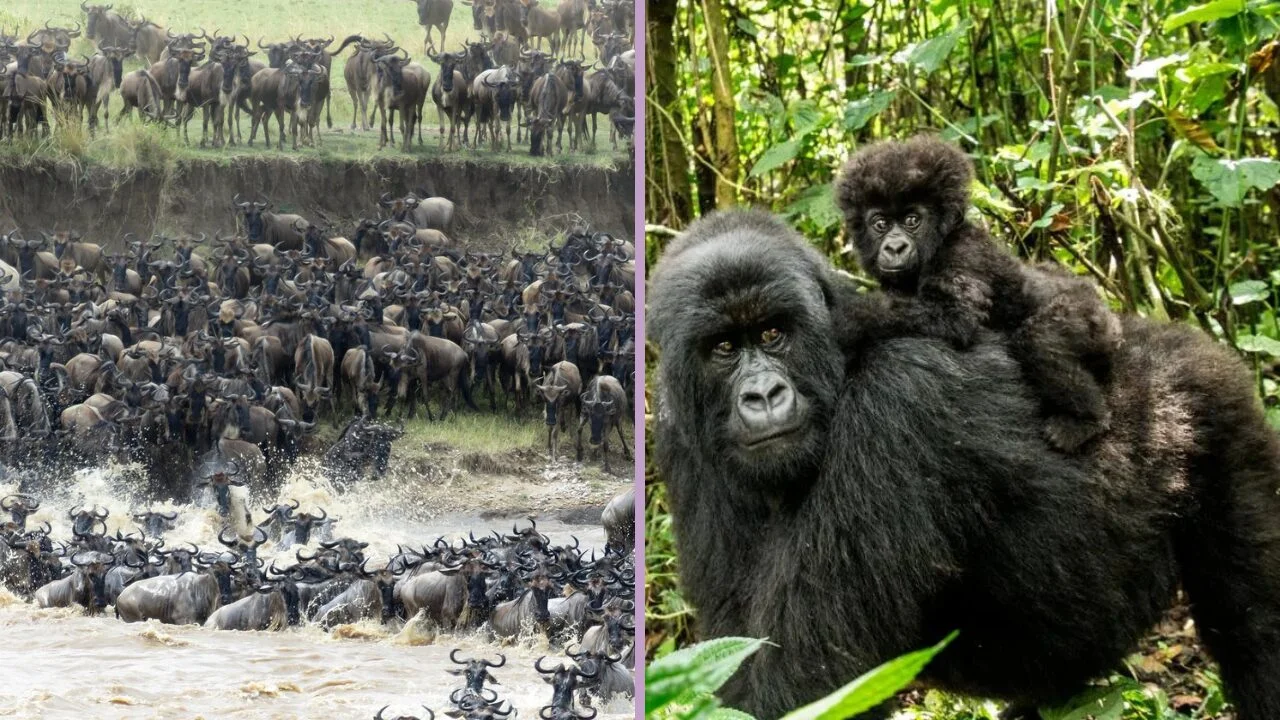
Uganda gorilla trekking gives you something a standard savannah safari cannot. You walk into Bwindi forest with a guide and spend one hour close to a habituated gorilla family. That hour is quiet, physical, and completely different from sitting in a vehicle watching lions. Tanzania and Kenya offer open plains, migration herds, and predators, but no apes. By joining the two, your trip covers forest and grassland, walking and driving, wet and dry habitats. You go home with a complete picture of East Africa rather than half of it.
The order of your trip matters for how your body handles the change. Starting with Uganda gorilla trekking means you tackle the steep, humid forest trails while you are fresh. Bwindi sits at high altitude, so trekking first gives you time to adjust before long game drives. After the gorillas, you fly to the Serengeti or Masai Mara and rest in a vehicle. Doing it the other way round leaves you tired from early mornings before the hardest walk of the trip. Put the forest first.
Weather and season planning is simpler when you combine these countries. Uganda's Bwindi forest is open for trekking all year, though the dry months of June to August and December to February give easier trails. Tanzania and Kenya share similar dry seasons, so one window works for both. The long rains from March to May make forest paths muddy and some safari roads difficult, so avoid that period. Check that your chosen dates fall in a dry stretch on both sides. This avoids paying for a trip where rain spoils the walking or the driving.
Permit and booking logistics need attention early. Uganda gorilla permits sell out months ahead in peak season, and you need a confirmed date before booking safari camps in Tanzania or Kenya. Buy the permit first, then build flights and lodges around it. Use one operator who handles both countries so permits, transfers, and park fees stay coordinated. Confirm what your permit includes, such as ranger fees and porter tips. Getting this right at the start prevents expensive changes later and keeps your schedule realistic.
Combining countries gives you more variety in lodging and daily rhythm. In Uganda you stay near Bwindi in simple forest lodges where the focus is the trek. In Tanzania or Kenya you move between tented camps and larger lodges on the plains. The pace shifts from one intense walking day to relaxed game drives with sundowners. Families and couples with mixed interests find this balance useful: one partner may care most about gorillas, the other about predators. Both get their priority without a separate trip. This mix keeps energy levels steady across two weeks.
A combined trip does require more planning and a longer holiday. You need at least ten to twelve days to do both properly, plus internal flights between Entebbe, Kilimanjaro, or Nairobi. Visas, yellow fever certificates, and luggage limits on small planes add steps. Be honest about your fitness for the Bwindi walk and your patience for transfers. If you have only a week, pick one country. If you have two weeks and want both apes and plains, book Uganda gorilla trekking first, lock your permit, then add Tanzania or Kenya around it.