💰 Can Fresher Web Development Earn Money? My Realistic Approach
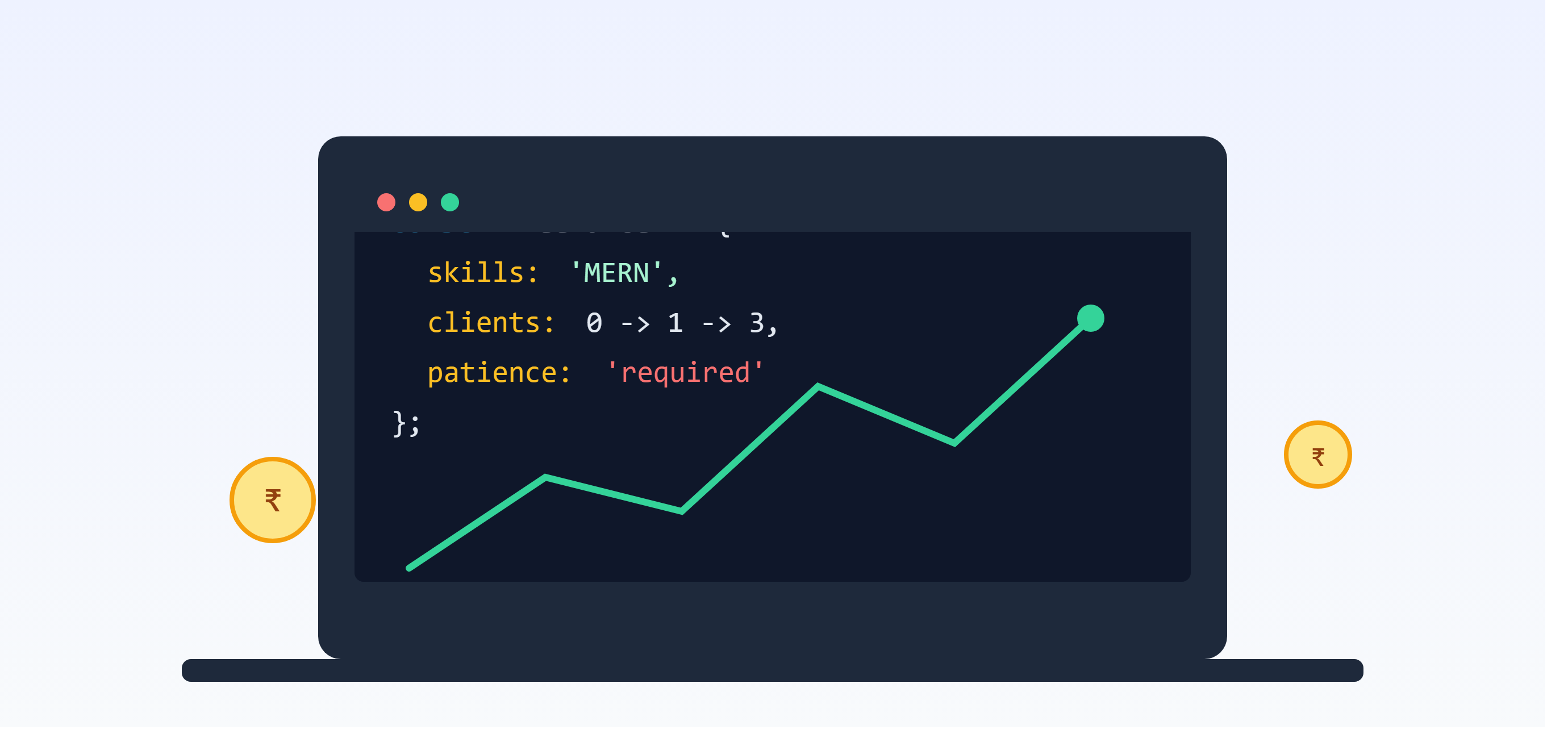
When I completed my BCA and started learning the MERN stack, the first question I had was, "Can I actually earn from this, or am I just learning for my resume?" People on YouTube and LinkedIn say, "Fresh web devs are making millions"—but the reality is a little different. I'm sharing my real experience, without sugarcoating it.
Step 1: Building a Portfolio—a foundation, not a shortcut
First, I created my portfolio website—using an open-source template and adding my actual project content to it. Don't skip this step. When you approach a client, the first question is, "Show me the work." No one will trust you without a portfolio, no matter how confident you sound.
Step 2: Fiverr and freelance platforms—it starts slowly.
I created a seller profile on Fiverr and listed gigs—services like React landing pages, Instagram page setup, etc. Honestly, there was zero response in the first week. This is normal. New accounts don't have a trust score, and the algorithm doesn't push new sellers as much. Patience is tested here—many people give up within 1-2 weeks.
Step 3: Approaching Local Businesses Directly – A Game Changer
Instead of waiting on Fiverr, I contacted local businesses (salons, gyms, coaching centers, restaurants) in my area—Ulwe, Kharghar, and Panvel—directly via WhatsApp and Instagram DM. I sent messages to over 35 businesses. Here, too, I got a reality check—most didn't even reply. But a salon client inquired about Instagram ad management, and that's when I realized—local businesses need more to improve their Instagram presence than a fancy website.
This taught me an important lesson: low response doesn't mean a bad approach, it often means low volume. Don't expect to get two clients by messaging 10 people. It's a numbers game—the more outreach, the better your chances.
Realistic Income Expectations—To be honest, I'm telling you.
If someone tells you, "A fresher web dev will earn ₹50,000 in their first month of freelancing," they're lying. A realistic timeline looks something like this:
Month 1-2: Zero or very low income. Focus on portfolio, outreach, and gig setup.
Month 2-3: First small project landed—perhaps a simple website or landing page for ₹1,500-₹5,000.
Month 3-6: If you continue consistent outreach, you may land 2-3 regular small clients—social media ads management, small websites, or maintenance work.
After 6 months: As both skills and reputation grow, bigger projects and better rates become possible.
This isn't a "get rich quick" scheme. It's a slow, consistent grind that requires you to keep improving your craft.
3 Things I Learned:
Start small: Instead of dreaming of large e-commerce platforms or complex SaaS products, build simple, useful solutions for local businesses—a landing page, an Instagram ad strategy, a basic booking system.
Communication skills are as important as coding: understanding clients, setting expectations, managing deadlines—all of these are no less important than technical skills.
Don't be afraid of rejection: If you only reply to 2-3 out of 35 messages, that's normal. Those who continue outreach are the ones who move forward.
Is it worth it?
Yes — but only if you view it as a "side income + learning experience," not a guarantee of instant success. The real-world client handling, deadline pressure, and diverse project experience that freelancing provides is more valuable than any tutorial course — and it also strengthens your resume when you apply for full-time roles.
If you're a freshman looking to start earning money in web development, my advice is this: build a portfolio, start small, target local businesses in your area, and be consistent with your outreach. Results won't come instantly, but if you keep grinding, it can definitely become a realistic income path.
MUST VISIT:
https://bit.ly/4rgikWP