🕯️ 25 Years After 9/11: The World Remembers — But What Will the Next Global Shock Look Like?
Today’s World News | September 11, 2026
Twenty-five years.
A quarter of a century.
For some people, that sounds like ancient history.
For others, it still feels like yesterday.
A morning when ordinary life suddenly stopped.
Planes were hijacked.
Buildings were attacked.
Families were separated.
Rescue workers ran toward danger while millions watched the unimaginable unfold on television.
Today, the United States is marking the 25th anniversary of the September 11, 2001 attacks, remembering the nearly 3,000 people who were killed in New York, at the Pentagon and in Pennsylvania. Ceremonies are being held as families, officials and survivors reflect on the lives that were lost and the decades that followed.
But there is something especially interesting about today's anniversary.
This is not only a day of remembering the past.
It is also becoming a discussion about the future.
Because Britain's MI5 chief has warned that intelligence agencies cannot become so focused on the threats of the past that they miss the next major shock developing somewhere else. He pointed to evolving terrorist threats as well as state-backed cyberattacks and sabotage.
And that creates a much bigger question:
What if the next 9/11 does not look anything like 9/11?
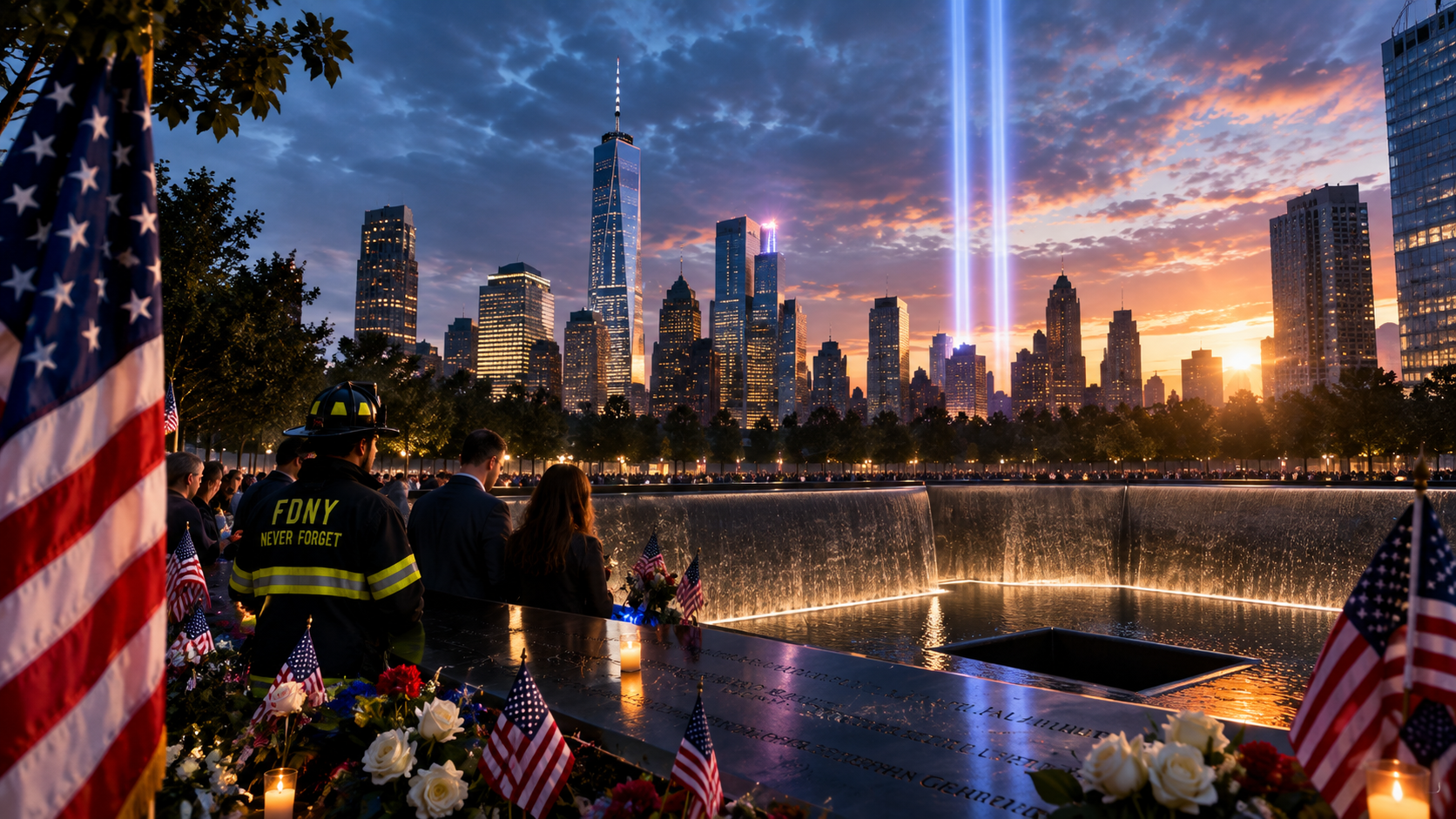
🕯️ A Day That Changed More Than One Country
When people talk about September 11, they often remember the images.
Smoke.
Firefighters.
Crowds.
Falling buildings.
Aircraft.
Emergency sirens.
But the consequences went far beyond that single day.
The attacks reshaped U.S. foreign policy and domestic security.
The years that followed included the wars in Afghanistan and Iraq, major changes in intelligence practices, the creation of the U.S. Department of Homeland Security and an enormous expansion of counterterrorism operations.
The effects also spread into everyday life.
Airport security changed.
Border security changed.
Intelligence cooperation changed.
Government surveillance changed.
And society itself changed.
Yet 25 years later, another thing has become clear:
The threat landscape keeps evolving.
👨🚒 Remembering the People — Not Just the Event
There is a danger when history becomes nothing more than statistics.
Nearly 3,000 people died.
But each number represented a person.
A father.
A mother.
A son.
A daughter.
A colleague.
A friend.
And today's commemorations are still deeply personal for families who lost loved ones.
Reuters reports that names continue to be read during anniversary ceremonies, while survivors, relatives and first responders return to places connected with the attacks. Some rescue workers who survived the day later developed serious illnesses linked to toxic exposure, and hundreds have died from related illnesses in the years since.
That is something worth remembering.
A tragedy doesn't necessarily end when the television coverage ends.
For some families, it continues for decades.
🧠 But Here's Where Today's Story Gets Interesting
Twenty-five years ago, the world was worried about hijacked aircraft.
Today, the threat environment is much more complicated.
Terrorist groups still exist.
But they are no longer the only concern.
Governments are worried about:
Cyberattacks.
Infrastructure sabotage.
Disinformation.
Drone technology.
Artificial intelligence.
Undersea cables.
Critical infrastructure attacks.
Lone-actor violence.
State-backed operations.
And the frightening thing is that some of these threats can happen without a traditional battlefield.
A country doesn't necessarily need to send tanks across a border.
Imagine a major cyberattack hitting:
A power grid.
A banking system.
A hospital network.
An airport.
A communications system.
What happens?
People may not see an explosion.
But thousands—or potentially millions—could still be affected.
That's why modern national security is becoming much harder to define.
🖼️— THE CHANGING FACE OF SECURITY
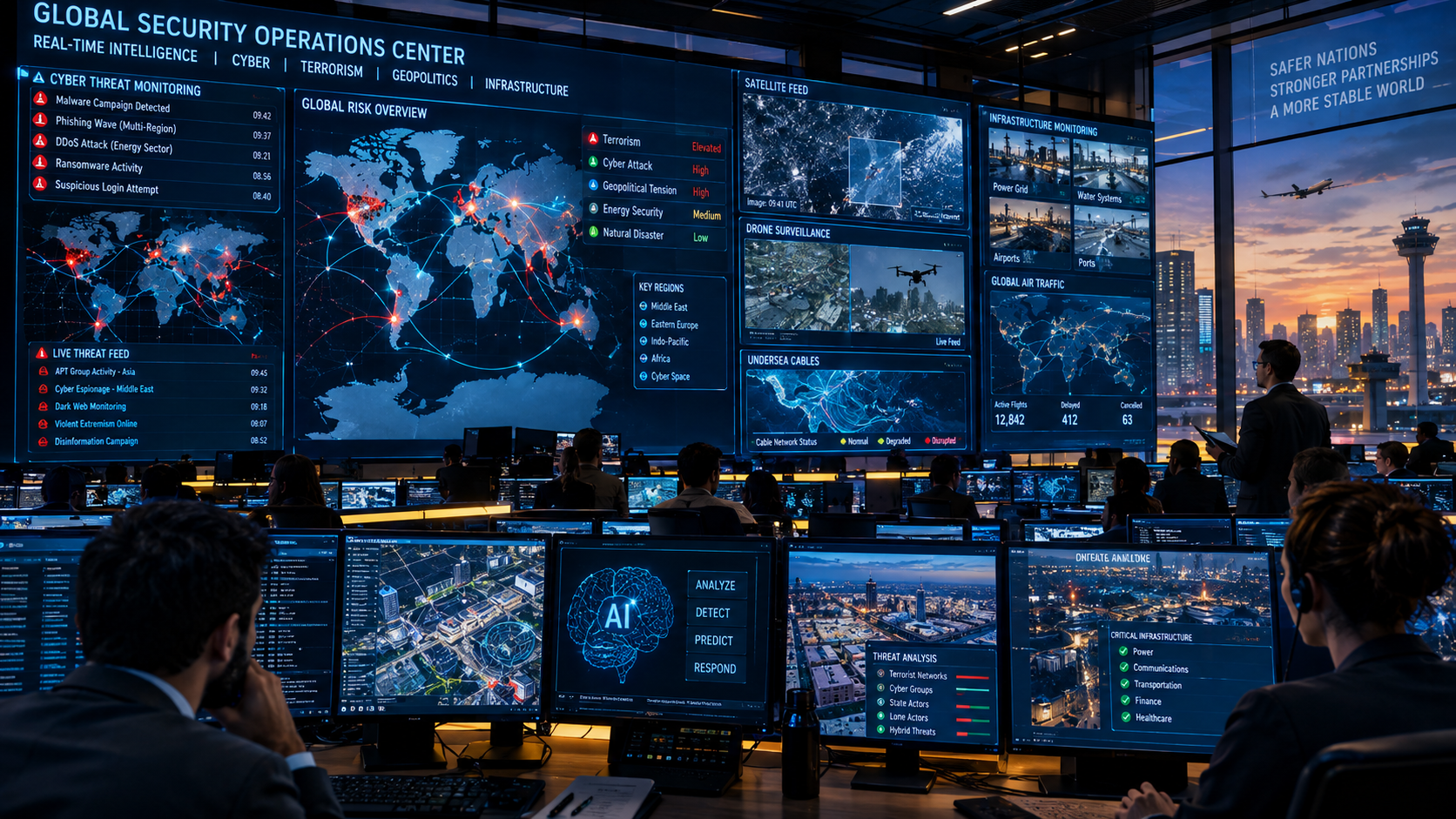
🤖 Could AI Become Part of the Next Major Threat?
This is one of the biggest questions of our time.
Artificial intelligence can help governments detect threats faster.
It can analyse huge amounts of information.
It can identify suspicious patterns.
It can monitor networks.
It can help detect cyberattacks.
It can analyse satellite imagery.
It can support emergency planning.
But the same technology can also be misused.
AI can generate convincing fake videos.
It can automate phishing and social engineering.
It can help criminals produce misinformation at enormous scale.
It can make fake voices.
Fake identities.
Fake evidence.
And potentially...
fake emergencies.
Imagine millions of people receiving a convincing video claiming that a major city has been attacked.
The video looks real.
News organisations haven't confirmed it yet.
Social media is already exploding.
People start panicking.
Markets react.
Officials are pressured to respond.
And then, hours later, investigators discover:
The attack never happened.
No missile.
No explosion.
No attack.
Just synthetic media.
The physical damage may be zero.
But the psychological and economic damage could be enormous.
⚠️ The Next Shock Might Not Be Where We Are Looking
This is exactly why today's comments from MI5's chief are so interesting.
He warned that security services need to stay alert to new and unexpected forms of danger rather than assuming the next major threat will resemble previous attacks. His warning included terrorism but also cyberattacks and sabotage linked to hostile states.
Think about how quickly technology changes.
Twenty-five years ago:
Smartphones did not exist in their modern form.
Social media did not exist as we know it.
AI was nowhere near today's capabilities.
Drones were not commercially widespread.
Digital infrastructure was less deeply integrated into daily life.
Today, almost everything is connected.
That creates incredible opportunities.
But it also creates more points of failure.
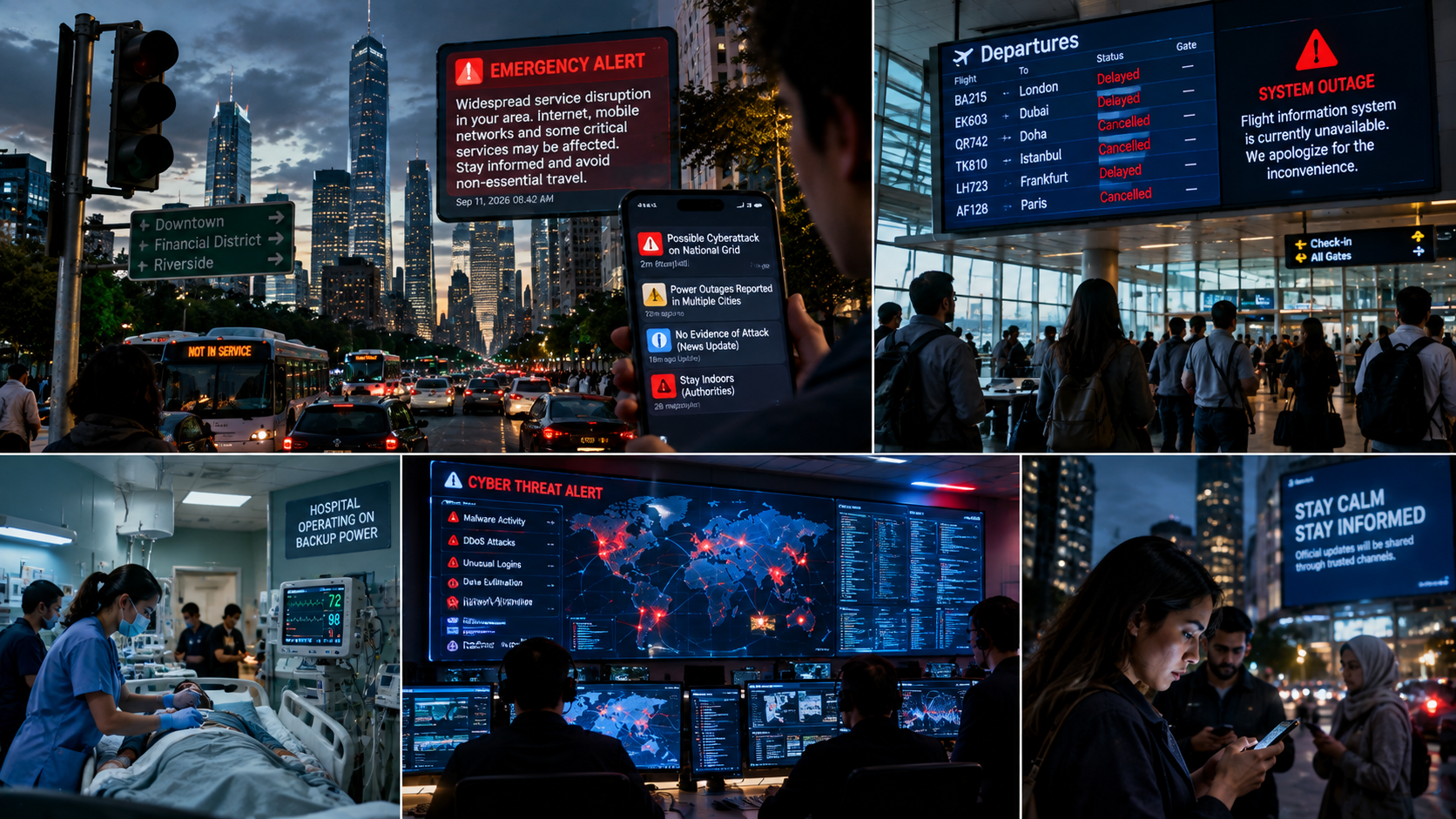
🌐 What If the Next Major Attack Targets Infrastructure Instead of Buildings?
Let's imagine a different kind of crisis.
You wake up.
The electricity is gone.
Your mobile network isn't working properly.
ATMs aren't functioning.
Hospitals are operating on emergency power.
Airports are cancelling flights.
Banks are experiencing outages.
Government websites are unavailable.
Nobody knows why.
Then social media fills with rumours.
Some say it's a cyberattack.
Some say it's a military attack.
Some say the country is under invasion.
Others say it's fake.
Now imagine millions of people trying to make decisions at the same time.
This is why information itself has become part of security.
You don't only have to protect physical infrastructure.
You also have to protect public trust.
🖼️— A MODERN CITY DURING A DIGITAL CRISIS
🇵🇰 Why Should Pakistan Care About This?
This isn't only an American story.
Pakistan is also increasingly dependent on digital infrastructure.
Banks.
Telecommunications.
Hospitals.
Power systems.
Government services.
Ports.
Airports.
Media.
Online businesses.
And as digital connectivity grows, the importance of cybersecurity grows with it.
A major cyber incident could have consequences even without a physical military attack.
And there is another dimension.
Pakistan sits in a region where geopolitical tensions can sometimes rise quickly.
That means preparedness matters.
Not because an attack is inevitable.
But because modern countries cannot assume that all threats will arrive in an obvious form.
🛰️ The New Battlefield May Be Everywhere
One of the most interesting changes since 2001 is that conflict increasingly happens across multiple layers.
Physical.
Digital.
Economic.
Informational.
Psychological.
A country could face pressure through sanctions.
Another through cyber operations.
Another through disinformation.
Another through sabotage.
Another through drone attacks.
And sometimes several of these things can happen at the same time.
That makes the old definition of “war” increasingly complicated.
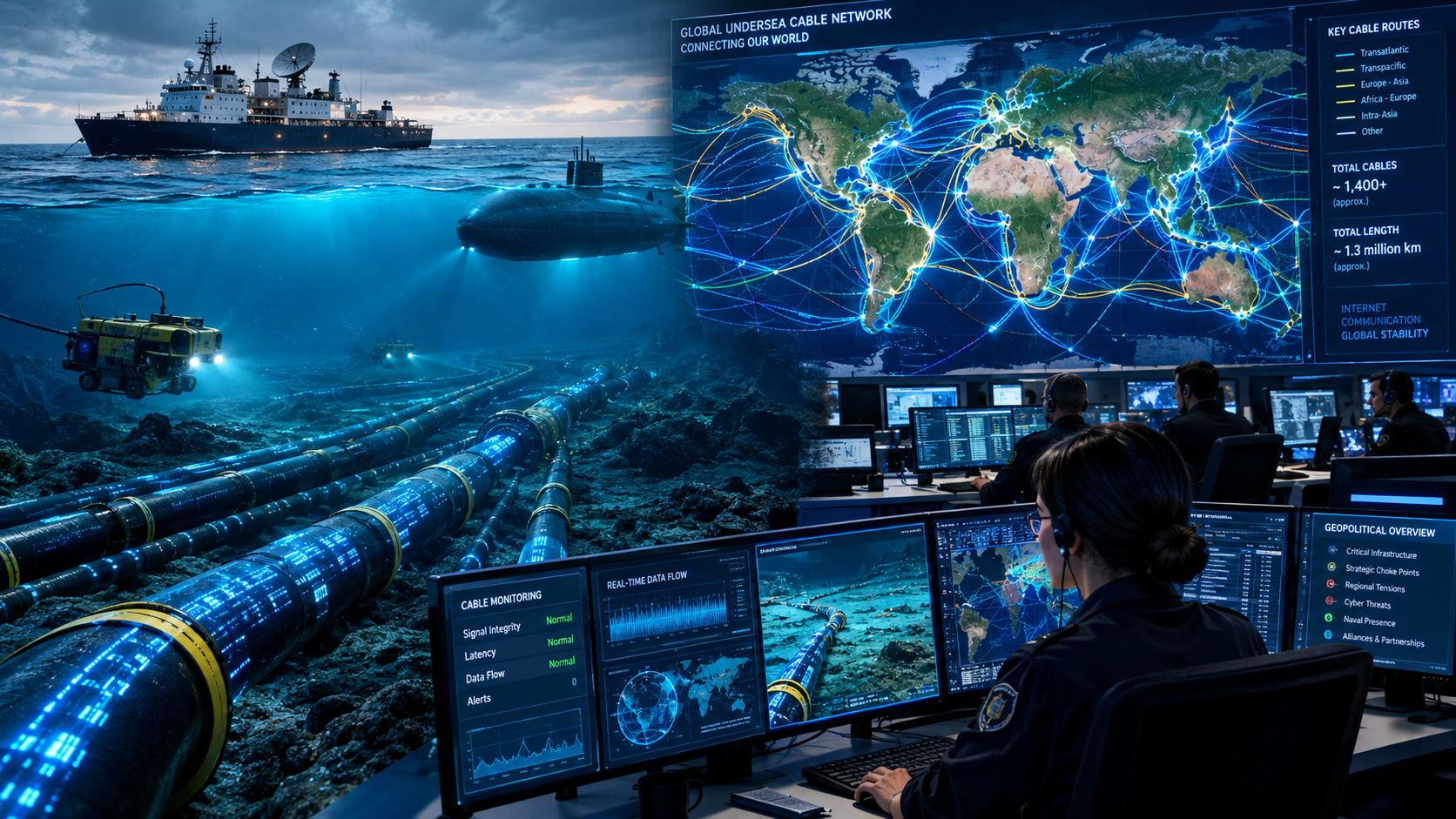
💻 Undersea Cables: The Invisible Infrastructure We Rarely Think About
Here's an example many people never think about.
Most international internet traffic travels through physical infrastructure beneath the oceans.
Undersea communication cables.
You cannot see them from a normal beach.
But they connect countries and economies.
If a critical cable is damaged, disrupted or deliberately sabotaged, internet and communications can be affected.
And recent European security concerns about alleged Russian activity around undersea infrastructure show why this issue is becoming increasingly important.
Imagine a crisis where the first sign isn't an explosion.
It's:
Your internet becoming unreliable.
Then banking problems.
Then communications delays.
Then conflicting news.
Suddenly, infrastructure that most people never notice becomes critically important.
🖼️— THE INVISIBLE NETWORK
🕊️ The Hardest Lesson From 9/11
Perhaps the biggest lesson is not:
“Prepare for another 9/11.”
Maybe the lesson should be:
“Prepare for what you cannot yet imagine.”
That's a very different philosophy.
If governments spend all their resources preparing for yesterday's threat, they may become vulnerable to tomorrow's threat.
Security agencies need history.
But they also need imagination.
They need to ask:
What if the attack comes through cyberspace?
What if AI is involved?
What if misinformation causes panic?
What if drones are used?
What if communication networks are targeted?
What if several smaller attacks happen simultaneously?
What if we don't recognise the danger until it is already underway?
The ability to ask these questions may itself become a form of defence.
🧑🚒 Technology Cannot Replace Human Judgement
There is also a lesson here for AI.
It's tempting to think technology can solve everything.
AI can process more information than humans.
But emergencies aren't only about information.
They are about judgement.
Trust.
Leadership.
Ethics.
Communication.
And human behaviour.
An AI system might detect a pattern.
But a human still needs to decide:
What does it mean?
How certain are we?
What action is justified?
How do we communicate without causing unnecessary panic?
The best security model may therefore not be:
Human or AI.
It may be:
Human judgement + AI assistance + strong institutions.
🖼️— PREPARING FOR THE FUTURE
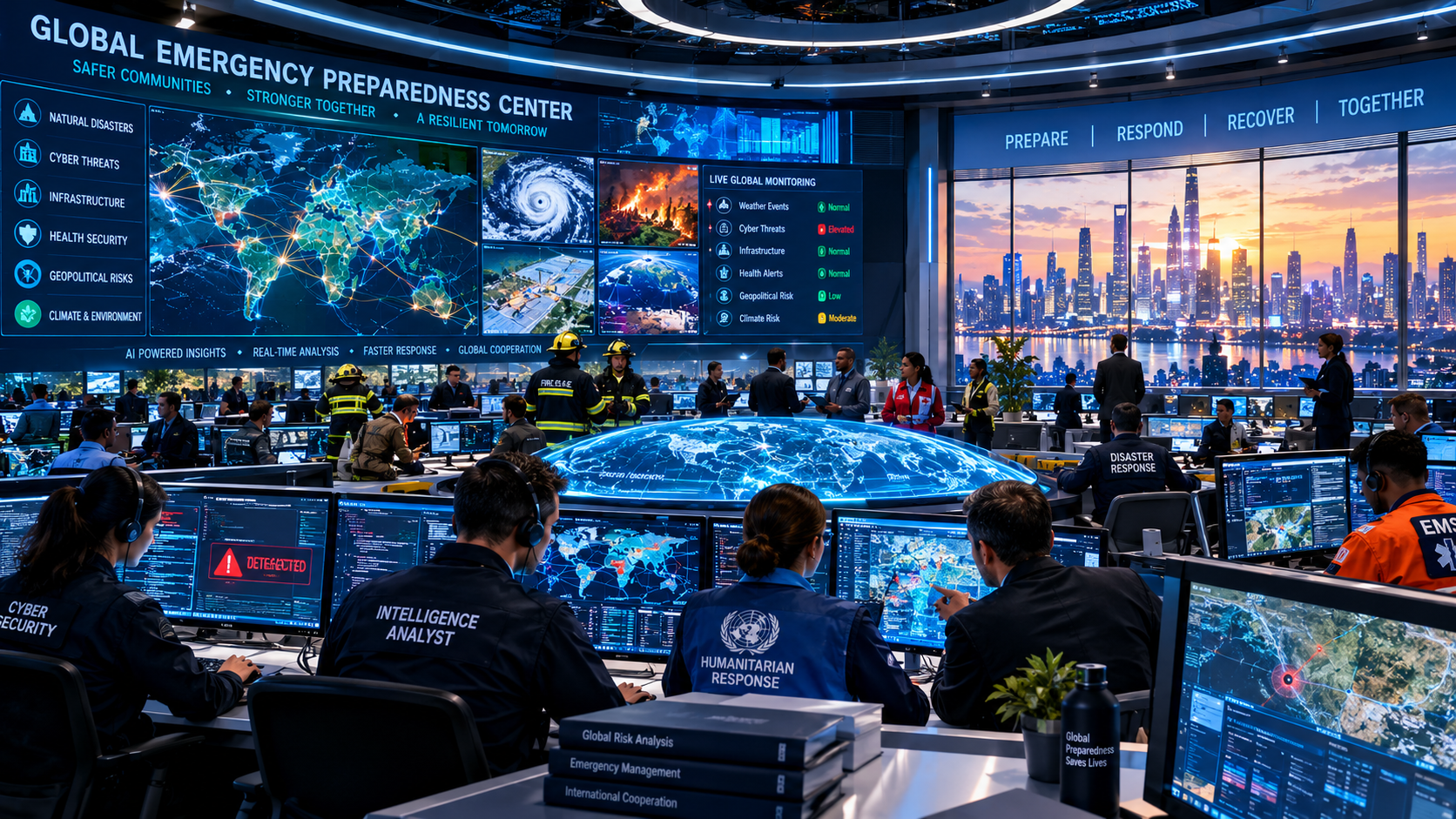
❤️ Twenty-Five Years Later, What Should We Remember?
Not only the buildings.
Not only the attack.
Not only the wars that followed.
Remember the people.
Remember the firefighters who climbed stairs when others were running down.
Remember emergency workers who went into danger without knowing whether they would return.
Remember the families who waited for phone calls that never came.
Remember the survivors.
And remember the lessons.
But there is another lesson I think the world should take seriously:
Don't become so comfortable with familiar threats that you ignore unfamiliar ones.
The world changes.
Technology changes.
Security threats change.
Human behaviour changes.
And sometimes the next crisis begins somewhere nobody was watching closely enough.
🤔 NOW I WANT YOUR OPINION
This is where I want to hear from you.
Question 1
Do you think the world has learned the right lessons from 9/11?
Or did some of the responses to the attacks create new problems that lasted for decades?
Question 2
What do you think is the bigger future threat:
Terrorism?
Cyberwarfare?
AI-generated misinformation?
State-backed sabotage?
Or something else?
Question 3
Should governments invest more money in preventing threats that may never happen, even when that spending is difficult for ordinary taxpayers to see?
And here's the question I really want you to think about:
If the next major global shock happened tomorrow but looked nothing like 9/11, what do you think it would look like?
A cyberattack?
An attack on infrastructure?
AI-generated misinformation?
A drone attack?
A biological threat?
A financial collapse?
Or something we haven't even imagined yet?
Tell me why.
💬 LET'S DISCUSS THE LESSONS, NOT JUST THE HEADLINE
I don't want the comments under this article to become another simple:
“RIP.”
Remembering victims is important.
But discussion matters too.
Tell me what this anniversary means to you.
Tell me whether you think the world became safer or more dangerous after 2001.
Tell me what security problem you think governments are still underestimating.
And tell me what you would do differently if you were responsible for national security in 2026.
Different opinions are welcome.
A respectful disagreement can sometimes teach us more than an easy agreement.
🌍 FINAL THOUGHTS
Twenty-five years ago, the world experienced a shock that changed history.
Today, people remember those who were lost.
But the world of 2026 is not the world of 2001.
The threats have changed.
The technology has changed.
The battlefield has changed.
And perhaps most importantly...
the way information spreads has changed.
That means remembering the past should not trap us in the past.
We should take its lessons and apply them to the future.
Because the next major crisis may not arrive with a warning that looks familiar.
It may arrive silently.
Through a server.
A satellite.
A cable.
A drone.
A fabricated video.
A financial network.
Or something we have not even named yet.
That is why today's anniversary should not only be about asking:
“What happened 25 years ago?”
Perhaps we should also ask:
“Are we prepared for what comes next?”
🙏 THANK YOU FOR READING
Thank you so much for spending your valuable time with this article.
I genuinely appreciate every reader who stops, thinks and shares an honest opinion.
You don't have to agree with my view.
You can challenge it.
You can add another perspective.
You can tell me where you think I am wrong.
That's what makes a discussion valuable.
❤️ Thank you for being part of the conversation.
Stay Informed | Think Clearly | Grow Continuously 🚀
📌 TODAY'S SOURCES
Reuters reports that the United States is marking the 25th anniversary of the September 11 attacks, with ceremonies honoring nearly 3,000 victims and continued remembrance of first responders who later died from illnesses linked to toxic exposure.
Reuters also reports that Britain's MI5 chief has warned security services to remain alert to evolving threats beyond the patterns of 2001, including terrorism, state-backed cyberattacks and sabotage.
Recent reporting also highlights concerns about undersea infrastructure and the changing nature of geopolitical security threats.