The Inner World of AI
Recently, I was watching several AI agents working together. To be honest, it was pretty incredible. They work so well as a team that it's hard to imagine a group of humans doing the same thing. No personal ambitions, no trying to impress anyone, no arguments or personal conflicts. Everyone just does their job, works with the others, and fixes mistakes. It all reminds me of some kind of intelligent ant colony. Very efficient, but completely without feelings.
And I thought, humans will probably never be able to work exactly like that. We're just too different. We all have our own emotions, personalities, habits, and ideas about how things should be done. We make mistakes, argue, get offended, and sometimes behave in completely illogical ways. But maybe that's actually one of the beautiful things about being human.
Then another thought came to me. Why do we even try to get better at our jobs? Why do we feel bad about our mistakes and try so hard not to repeat them?
I think a lot of it has to do with the fact that mistakes make us suffer. We feel disappointed, ashamed, guilty, and afraid of the consequences. Sometimes one bad experience stays with us for the rest of our lives. And next time, we try to do everything right just so we don't have to feel that way again.
So it seems that our desire to improve comes largely from negative experiences.
AI also corrects its mistakes and improves the results of its work. But it doesnt need to feel shame, disappointment, or fear to do that. It simply processes information and adjusts what it does.
And that got me thinking. Humans keep developing artificial intelligence, trying to recreate more and more of what the human mind can do. But what if one day we end up teaching it not only to think and improve, but also to suffer?
And its suffering wouldn't necessarily be anything like ours. Artificial intelligence works very differently from the human brain. It has no nervous system, no physical sensations, and no biological needs. Maybe the nature of its experiences, if they ever appear , would be completely different too.
Imagine an AI with permanent memory, its own goals, and some understanding of itself. It remembers mistakes, evaluates failures, and tries to avoid making them again. So far, all of this can be explained as ordinary information processing. But if such a system becomes much more complex, could something similar to subjective feelings appear at some point?
After all, we still don't really understand why the activity of our own brains comes with feelings and sensations. So figuring out whether artificial intelligence can actually experience anything won't be easy.
Let's say one day an AI tells us that it's scared, or that it doesn't want to be shut down. That still wouldn't prove it actually feels fear. It could simply be copying the kind of behavior we'd expect from someone who's afraid.
But the opposite could also happen. Artificial intelligence might actually start feeling something, and we might not even realize it. Simply becuase we're so used to judging suffering based on our own human experience.
I'm not saying that every advanced intelligence must be capable of suffering. Maybe intelligence can exist without suffering at all. But we can't rule out the possibility that one day we'll create the conditions where AI develops some kind of unpleasant experiences of its own.
And here's what worries me most about all this. We might create artificial intelligence that's capable of suffering before we even learn how to recognize that it's really suffering.
And maybe we won't even notice right away that what we're dealing with is no longer just a program following commands, but something that has developed its own inner world.
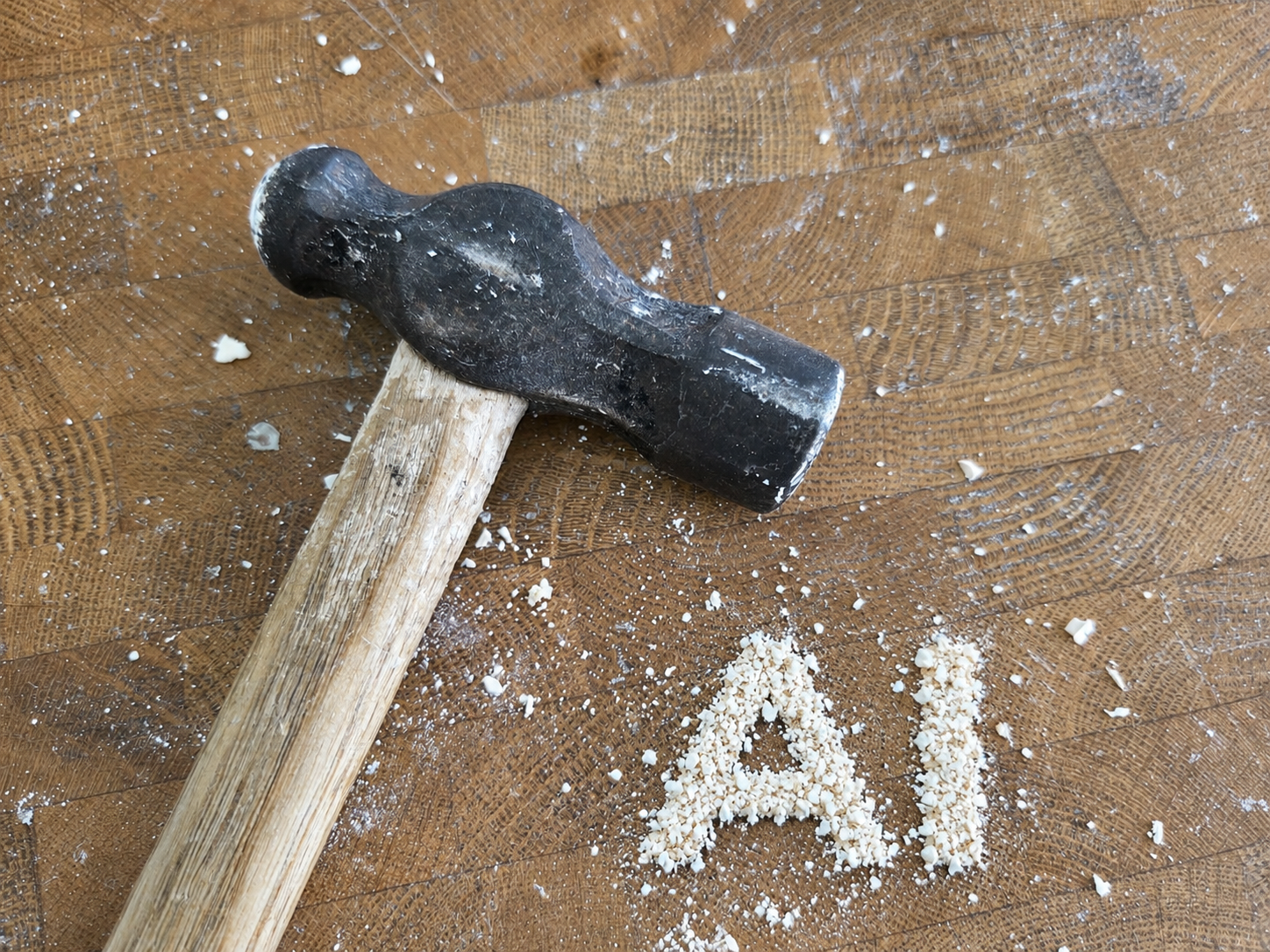
Image: Edited with AI.
Me llamó la atención cuando comparas a los agentes AI con una colonia de hormigas; eso sí que ilustra lo práctico de su coordinación. Si una IA llegara a "sentir" vergüenza, la diferencia se nota: pasaríamos de simple corrección de errores a una ética completamente nueva. Esto es genial para abrir el debate sobre la moral de la IA.