Morning Yoga vs Evening Yoga: Which Is Better for Your Lifestyle?
Morning yoga and evening yoga offer different benefits, and the best time to practise depends on your daily routine, energy levels, sleep schedule, and personal goals. Morning sessions can help you start the day with movement and focus, while evening practice may help you release physical tension and unwind after work. You do not need a perfect schedule to benefit from yoga; consistency matters more than the time on the clock.
Morning Yoga vs Evening Yoga: What Is the Difference?
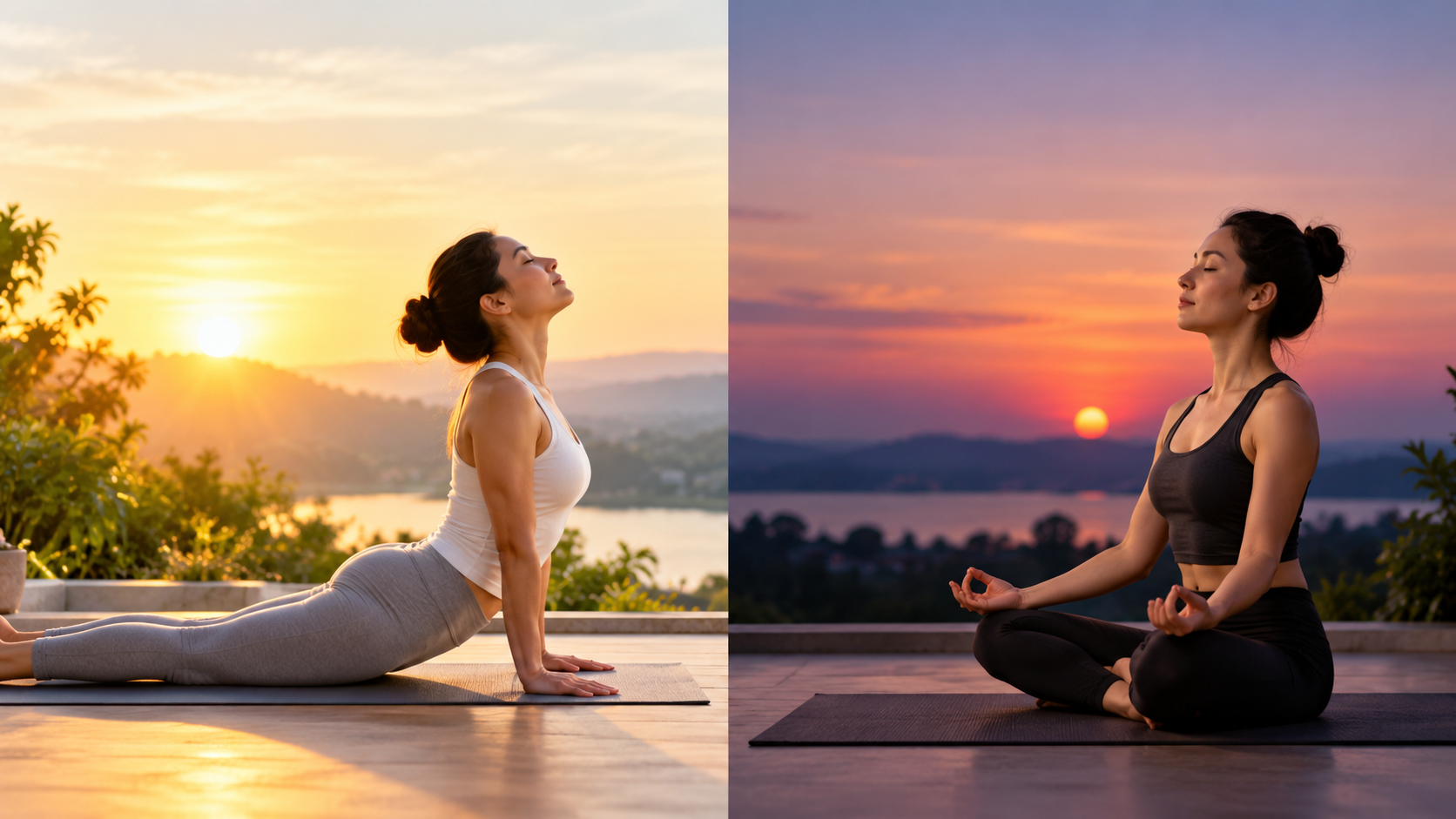
The main difference between morning and evening yoga is how each session fits into your day. Morning practice can prepare you for daily activities, while evening yoga can provide a break from work, screen time, and accumulated stress.
Neither time is automatically better for everyone. Your choice depends on what you want from your practice and when you can comfortably make time for it.
Benefits of Morning Yoga
Have you ever woken up feeling stiff, sleepy, or reluctant to leave your bed? A short yoga session can help you begin the day with gentle movement rather than rushing straight into emails, household tasks, or work.
Morning yoga is particularly useful for people who prefer to complete their exercise before daily responsibilities take over.
Why practise yoga in the morning?
- Gentle mobility: Simple stretches and joint movements can help ease the stiffness that follows a night of rest.
- A more focused start: Combining movement with steady breathing can create a quiet transition from sleep to daily responsibilities.
- A consistent routine: Practising before work may make it easier to protect your yoga time.
- A mindful beginning: A few minutes of breathing or meditation can give you space to notice how you feel before the day becomes busy.
- An active start: Gentle sun salutations and standing poses can warm up your body and prepare you for movement.
You do not need to complete an hour-long sequence to enjoy these benefits. Even 10–15 minutes of comfortable movement can be a practical starting point.
A simple morning yoga routine
Try this sequence after waking up:
- Begin with two minutes of slow, comfortable breathing.
- Practise Cat-Cow stretches to move your spine gently.
- Add a few rounds of gentle Sun Salutations if they suit your ability.
- Hold a low lunge on each side to move your hips.
- Finish with one minute of quiet breathing.
Move gradually, especially if your muscles feel stiff. If you have just woken up, there is no need to force deep stretches or attempt demanding inversions immediately.
Benefits of Evening Yoga
For many people, the evening is the first time the day becomes quiet. Work is finished, messages slow down, and there is finally room to pay attention to the body.
Evening yoga can offer a useful transition between the demands of the day and the time you spend resting at home.
Why practise yoga in the evening?
- Release accumulated tension: Gentle stretches can help you relax areas that feel tight after sitting or standing for long periods.
- Create a break from screens: Stepping away from your phone or computer gives your mind a change of activity.
- Slow down your breathing: Comfortable breathing exercises may help you feel calmer after a demanding day.
- Support a bedtime routine: A quiet, relaxing session can become a signal that your working day is over.
- Improve body awareness: Evening practice gives you an opportunity to notice how your body feels after hours of daily activity.
Research suggests that yoga may support sleep quality for some people, although results vary by individual and type of practice. Yoga should be treated as one part of a healthy sleep routine rather than a guaranteed solution for insomnia.
A simple evening yoga routine
Try this gentle sequence about 30–60 minutes before bed, adjusting the timing to suit your needs:
- Start with two minutes of relaxed breathing.
- Practise Child's Pose, using cushions if needed.
- Move through gentle seated forward folds without forcing the stretch.
- Lie on your back and bring your knees towards your chest if comfortable.
- Finish with five minutes of relaxation or a short Yoga Nidra practice.
Choose slow movements and comfortable positions. If a posture causes pain, numbness, or dizziness, stop and adjust your practice.
Morning Yoga vs Evening Yoga: A Quick Comparison
| Factor | Morning Yoga | Evening Yoga |
|---|---|---|
| Main purpose | Prepare for the day | Unwind after daily activities |
| Energy level | May help you feel more alert | Can encourage a calmer state |
| Best practice style | Gentle flows and mobility | Slow stretches and restorative poses |
| Time commitment | Often 10–20 minutes | Often 10–30 minutes |
| Common challenge | Waking up early | Feeling tired after work |
| Sleep routine | Can support a structured morning | Relaxing practice may complement bedtime habits |
| Suitable for | Early risers and busy schedules | People who prefer a quieter evening |
These are general patterns, not strict rules. You can practise an energising sequence in the evening if it suits you, or choose restorative yoga in the morning if that feels better.
Which Is Better for Your Lifestyle?
Instead of asking which time is best for everyone, consider which one you can maintain without adding stress to your schedule.
Choose Morning Yoga If You…
- Prefer to exercise before work or study.
- Have more energy soon after waking up.
- Want to build a predictable morning routine.
- Often find that evening plans interfere with exercise.
- Enjoy starting the day with movement and quiet reflection.
Morning yoga may be less practical if you regularly work night shifts, have very early responsibilities, or struggle to wake up rested. You do not need to sacrifice sleep to fit yoga into your morning.
Choose Evening Yoga If You…
- Spend much of the day sitting at a desk.
- Feel physically tense after work.
- Prefer slow, quiet movement.
- Want a relaxing activity before bedtime.
- Find it easier to protect your personal time in the evening.
Evening practice may be difficult if family responsibilities fill your schedule or you are too exhausted to exercise after work. A short session before dinner or immediately after arriving home may be more realistic than waiting until bedtime.
What If You Want to Practise Both?
You do not have to choose just one.
A flexible approach is to practise different styles at different times. For example, you could spend 10 minutes on gentle mobility in the morning and another 10 minutes on relaxation in the evening.
Your routine might look like this:
- Monday, Wednesday, Friday: Morning yoga for mobility and energy.
- Tuesday, Thursday: Evening yoga for gentle stretching and relaxation.
- Weekend: A longer session whenever you have time.
Treat this as a starting point rather than a strict schedule. If you miss a session, simply return to your routine when you can.
Does the Time of Day Change the Benefits of Yoga?
The time of day can influence how you feel during practice, but it does not determine every benefit you receive.
Morning body temperature and muscle stiffness may differ from conditions later in the day. Some people feel more flexible in the afternoon or evening, while others prefer moving shortly after waking up. These differences are normal.
The style and intensity of yoga also matter. A vigorous sequence may feel stimulating, while slow breathing and restorative poses may feel calming. Your response will depend on your fitness, sleep, stress levels, health, and experience.
Keep these practical points in mind:
- Warm up gradually before deeper stretches or demanding poses.
- Avoid forcing your body into a posture simply because it feels easier later in the day.
- If vigorous evening exercise makes it harder for you to sleep, finish it earlier and try a gentler practice at night.
- If morning yoga leaves you exhausted, shorten the session or choose slower movements.
- If you have an injury or medical condition, seek qualified guidance on appropriate modifications.
You can also explore different styles of yoga and their benefits to find a practice that suits your needs.
How to Build a Yoga Routine You Can Maintain
The most effective routine is one that fits your actual life, not an ideal schedule you struggle to follow.
Start by choosing a realistic time and duration. Practising for 10 minutes four days a week may be easier to maintain than planning an hour every day and repeatedly missing it.
Use these simple strategies:
- Connect yoga to an existing habit. Practise after brushing your teeth in the morning or after changing out of your work clothes in the evening.
- Prepare your space. Keep your mat somewhere accessible so you spend less time getting ready.
- Match the session to your energy. Choose a gentle sequence when you feel tired and a more active flow when you feel ready for movement.
- Notice how you feel. Pay attention to comfort, mood, energy, and sleep rather than judging each session by flexibility alone.
- Allow your schedule to change. Shift between morning and evening practice when work, family, or sleep needs require it.
Yoga does not have to become another task on your to-do list. It can be a small, regular opportunity to check in with yourself.
Final Thoughts
Morning yoga and evening yoga can both be useful, but they serve different purposes in everyday life. Morning practice may suit people who enjoy movement before their responsibilities begin, while evening sessions may work better for those who want to relax after work.
Start with the time that feels most natural, keep your sessions manageable, and pay attention to how your body responds. If you sleep better after evening relaxation or feel more prepared for the day after morning movement, use that information to guide your routine.
The best time to practise yoga is the time you can return to regularly, comfortably, and with care.
Frequently Asked Questions
1. Is morning yoga better than evening yoga?
Neither is universally better. Morning yoga may help you begin the day with movement, while evening yoga can help you unwind. Choose based on your routine and goals.
2. How long should I practise yoga in the morning?
Beginners can start with 10–15 minutes of gentle movement and breathing. Increase the duration gradually if it feels comfortable and fits your schedule.
3. Is evening yoga good for sleep?
Gentle evening yoga may help some people relax and improve sleep quality. Avoid vigorous sequences close to bedtime if they leave you feeling stimulated.
4. Can I do yoga twice a day?
Yes, many people can practise twice daily by keeping sessions appropriate to their ability. Combine gentle morning movement with evening relaxation and allow recovery when needed.
5. Should I eat before morning yoga?
For gentle yoga, a small snack or an empty stomach may both work. For demanding practice, allow time to digest a substantial meal and stay hydrated.
6. Which yoga is best before bed?
Restorative yoga, gentle stretching, comfortable breathing, and Yoga Nidra are common bedtime choices. Choose practices that help you relax without causing discomfort.
7. Is 10 minutes of yoga a day enough?
Ten minutes can be a useful starting point for mobility, relaxation, and building consistency. Your results depend on your practice, goals, and overall activity level.
References
- NCCIH: Yoga—Effectiveness and Safety — An evidence-based overview of yoga's potential benefits and safety considerations.
- Sleep Foundation: Yoga and Sleep — Information on how yoga may relate to relaxation and sleep quality.
- Johns Hopkins Medicine: Yoga — General information about yoga practice, benefits, and health considerations.