Yoga for Remote Workers: Simple Ways to Stay Active and Healthy
Working remotely offers flexibility, saves commuting time, and allows people to organise their day around personal commitments. But spending hours in front of a computer can take a toll on physical and mental health. Yoga for remote workers provides a practical way to reduce stiffness, improve posture, manage work-related stress, and create a healthier balance between professional responsibilities and personal life. Even 10–20 minutes of daily yoga can make a difference.
Why Remote Workers Need a Daily Yoga Routine
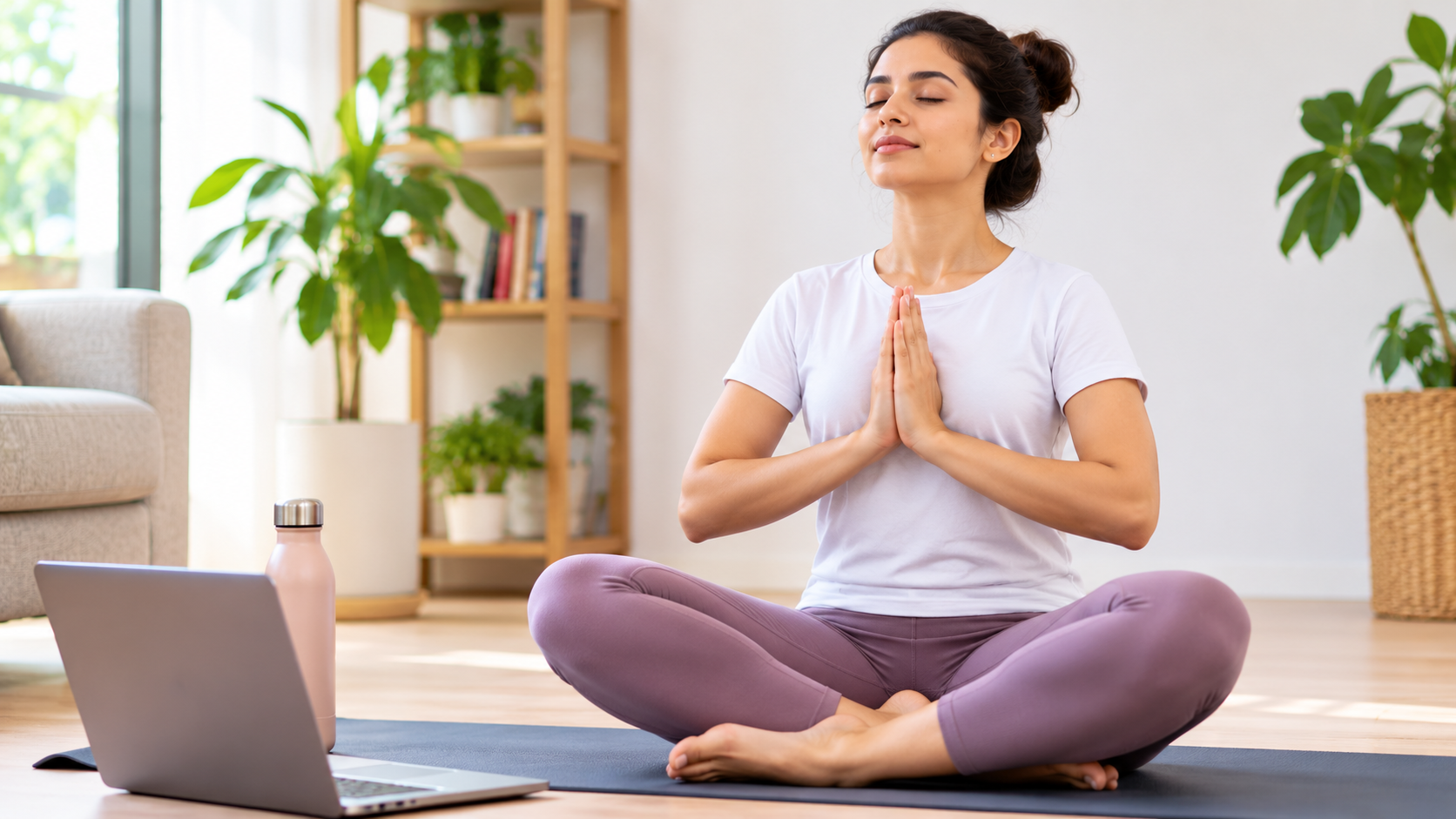
Working from home often means sitting at the same desk for several hours, taking fewer walking breaks, and moving less than people who commute to an office. Over time, these habits can lead to physical discomfort and mental fatigue.
Common challenges faced by remote workers include:
- Neck and shoulder tension: Long hours looking at screens can create stiffness around the neck and upper back.
- Lower back discomfort: Sitting for extended periods may place pressure on the lower back.
- Poor posture: Working from a sofa or an unsuitable chair can encourage rounded shoulders and a forward head position.
- Mental fatigue: Frequent online meetings, deadlines, and constant notifications can make it difficult to relax.
- Irregular daily routines: Without a clear separation between work and home, people may struggle to switch off after working hours.
Yoga offers a combination of physical movement, breathing exercises, and relaxation techniques that can address several of these everyday challenges.
1. Start Your Morning with 10 Minutes of Yoga
How you begin your morning can influence how you feel throughout the working day. Instead of checking emails immediately after waking up, spend a few minutes moving your body.
A short morning yoga routine can help loosen stiff muscles, increase body awareness, and prepare you for long periods of desk work.
Try these beginner-friendly movements:
- Cat-Cow Pose (Marjaryasana-Bitilasana): Move gently between rounding and extending your spine to improve spinal mobility.
- Child's Pose (Balasana): Relax your back and shoulders while taking slow breaths.
- Downward-Facing Dog (Adho Mukha Svanasana): Stretch your shoulders, calves, and the back of your legs.
- Standing Forward Fold (Uttanasana): Gently stretch the back of your body while allowing your neck to relax.
Spend around one to two minutes on each movement, adjusting the duration to your comfort.
You do not need an advanced yoga sequence to begin. A few mindful movements are often easier to maintain than a long routine that feels difficult to fit into your schedule.
2. Use Desk Yoga to Reduce Neck and Shoulder Stiffness
One of the most common problems associated with remote work is spending too much time in a fixed position. Even when your chair is comfortable, remaining still for hours can make your muscles feel tight.
Desk yoga allows you to move without changing clothes, rolling out a yoga mat, or leaving your workspace.
Here are five simple exercises to try between meetings:
Seated Neck Stretches
Sit upright and gently tilt your head towards one shoulder. Hold for 15–20 seconds before changing sides. Avoid pulling your head with your hand.
Shoulder Rolls
Raise your shoulders towards your ears, move them backwards, and slowly release. Repeat 8–10 times.
Seated Spinal Twist
Sit with both feet on the floor. Gently rotate your upper body to one side while keeping your hips facing forward. Repeat on the other side.
Wrist and Finger Stretches
Extend your arms and gently move your wrists in circles. Open and close your fingers to release tension from prolonged typing.
Standing Side Stretch
Stand beside your desk, raise one arm, and lean gently towards the opposite side. Repeat on both sides.
3. Practise Breathing Exercises Between Work Tasks
Remote work is not always physically demanding, but it can be mentally exhausting. Back-to-back meetings, messages, and approaching deadlines can make it difficult to concentrate.
Breathing exercises, also called pranayama in yoga, can provide a simple way to pause and settle your attention.
Try these two beginner-friendly practices:
Diaphragmatic Breathing
- Sit comfortably with your shoulders relaxed.
- Place one hand on your abdomen.
- Breathe in gently through your nose, allowing your abdomen to expand.
- Exhale slowly without forcing the breath.
- Continue for three to five minutes.
Alternate Nostril Breathing (Nadi Shodhana)
- Sit comfortably with your spine upright.
- Gently close your right nostril and inhale through your left.
- Close your left nostril and exhale through your right.
- Inhale through your right nostril.
- Close it and exhale through your left.
Continue for a few comfortable rounds without holding or forcing your breath. Stop if you feel dizzy or uncomfortable.
These practices can help you create a short mental break between demanding tasks.
4. Follow the 30–60 Minute Movement Rule
A common mistake among remote workers is waiting until the end of the day to exercise. By that time, physical stiffness and mental tiredness may already have built up.
Instead, make movement part of your working schedule.
Try this simple approach:
- Every 30–60 minutes, change your position or take a short movement break.
- Walk around your home for two to five minutes.
- Stand during a phone call when practical.
- Stretch your shoulders and wrists between meetings.
- Take a proper lunch break away from your computer.
You can also set a reminder on your phone or computer to avoid sitting continuously.
Remember that yoga does not replace regular physical activity. Walking, strength training, and other forms of exercise are also useful parts of a healthy routine.
5. Create an Evening Yoga Routine to Separate Work from Personal Life
One challenge of working remotely is knowing when to stop working. Since your home is also your workplace, it can become tempting to answer one more email or finish another task after working hours.
An evening yoga routine can help create a clear transition from professional responsibilities to personal time.
Consider practising these relaxing poses:
- Legs-Up-the-Wall Pose (Viparita Karani): Rest your legs against a wall and breathe comfortably.
- Reclining Bound Angle Pose (Supta Baddha Konasana): Lie on your back with the soles of your feet together and knees relaxed.
- Supine Spinal Twist: Gently lower your bent knees towards one side while keeping your shoulders relaxed.
- Savasana (Corpse Pose): Lie comfortably and allow your entire body to rest.
Spend around 10–15 minutes on your evening practice. Avoid forcing stretches, particularly when your body feels tired.
This routine can become a useful signal that your working day has ended.
6. Improve Your Home Workspace Alongside Your Yoga Practice
Yoga can help counter some effects of prolonged sitting, but your working environment also matters.
A comfortable workspace makes it easier to maintain better habits throughout the day.
Consider these adjustments:
- Keep your computer screen close to eye level.
- Position your keyboard and mouse so your shoulders remain relaxed.
- Use a chair that supports your lower back.
- Keep both feet supported by the floor or a footrest.
- Place frequently used items within easy reach.
- Maintain enough space to stand and stretch.
Try to avoid working from your bed or sofa for extended periods. These positions can make it harder to maintain comfortable alignment.
A healthy remote-working routine combines suitable ergonomics, regular movement, and sufficient rest.
7. Build a Weekly Yoga Schedule You Can Actually Maintain
Consistency matters more than the length of an individual session. Rather than planning an hour of yoga every morning, start with a routine that fits your existing responsibilities.
Here is a simple weekly example:
| Day | Yoga Practice | Duration |
|---|---|---|
| Monday | Morning stretching and breathing | 15 minutes |
| Tuesday | Desk yoga and neck stretches | 10 minutes |
| Wednesday | Beginner Hatha Yoga | 20 minutes |
| Thursday | Pranayama and gentle stretching | 15 minutes |
| Friday | Standing yoga poses | 15 minutes |
| Saturday | Full-body yoga practice | 30 minutes |
| Sunday | Restorative yoga and relaxation | 20 minutes |
Adjust this schedule according to your fitness level, available time, and personal comfort.
If you are interested in learning yoga beyond basic home practice, a structured programme such as Study authentic yoga in India with experienced teachers at Arhanta Yoga can help you understand yoga postures, breathing techniques, anatomy, and traditional yoga philosophy in greater depth.
Final Thoughts
Working remotely should not mean spending the entire day sitting in front of a screen. Small changes, such as morning stretching, desk yoga, mindful breathing, and evening relaxation, can make your daily routine healthier and more comfortable.
You do not need expensive equipment or a complicated yoga schedule. Start with 10 minutes, take regular movement breaks, and pay attention to how your body feels.
The most useful yoga routine is one that fits naturally into your working life and gives you a reason to move, breathe, and take care of yourself every day.
Frequently Asked Questions About Yoga for Remote Workers
1. Is yoga good for people who work from home?
Yes. Yoga introduces regular movement, stretching, and breathing practices into sedentary routines. It can help manage muscle stiffness, improve body awareness, and support general physical and mental well-being.
2. How much yoga should remote workers practise daily?
Beginners can start with 10–20 minutes daily. Short sessions throughout the working day are also helpful. Increase practice time gradually according to comfort and individual fitness levels.
3. Which yoga poses are best for people sitting all day?
Cat-Cow Pose, Child's Pose, Downward-Facing Dog, Standing Forward Fold, and gentle seated twists are useful options for addressing stiffness associated with prolonged sitting.
4. Can I practise yoga during office hours at home?
Yes. Desk yoga, shoulder rolls, wrist stretches, and gentle standing stretches can fit between meetings. Choose simple movements that do not interrupt your work or cause discomfort.
5. Does yoga help with work-related stress?
Yoga combines physical movement, controlled breathing, and relaxation. These practices may help reduce perceived stress and encourage better attention and emotional regulation during demanding workdays.
6. Is morning or evening yoga better for remote workers?
Both can be useful. Morning yoga prepares your body for the day, while evening yoga offers a chance to relax after work. Choose the time you can maintain consistently.
7. Can beginners practise yoga without joining a yoga class?
Yes. Beginners can start with simple, beginner-friendly postures and breathing exercises at home. Learning correct alignment from a qualified yoga teacher can help improve understanding and reduce the risk of injury.
References and Further Reading
- Arhanta Yoga Ashram: Yoga Stretches for Desk Workers – Practical stretches for people who spend long hours sitting.
- World Health Organization (WHO): Physical Activity – Recommendations and health information about regular physical activity.
- National Institute for Occupational Safety and Health (NIOSH): Centers for Disease Control and Prevention – Workplace health and safety information, including ergonomic considerations.
- Harvard Health Publishing: Yoga: Benefits Beyond the Mat – An overview of yoga and its potential health benefits.