West Chester Wildlife: Photographs and observations of small birds in September 2026 - part 2
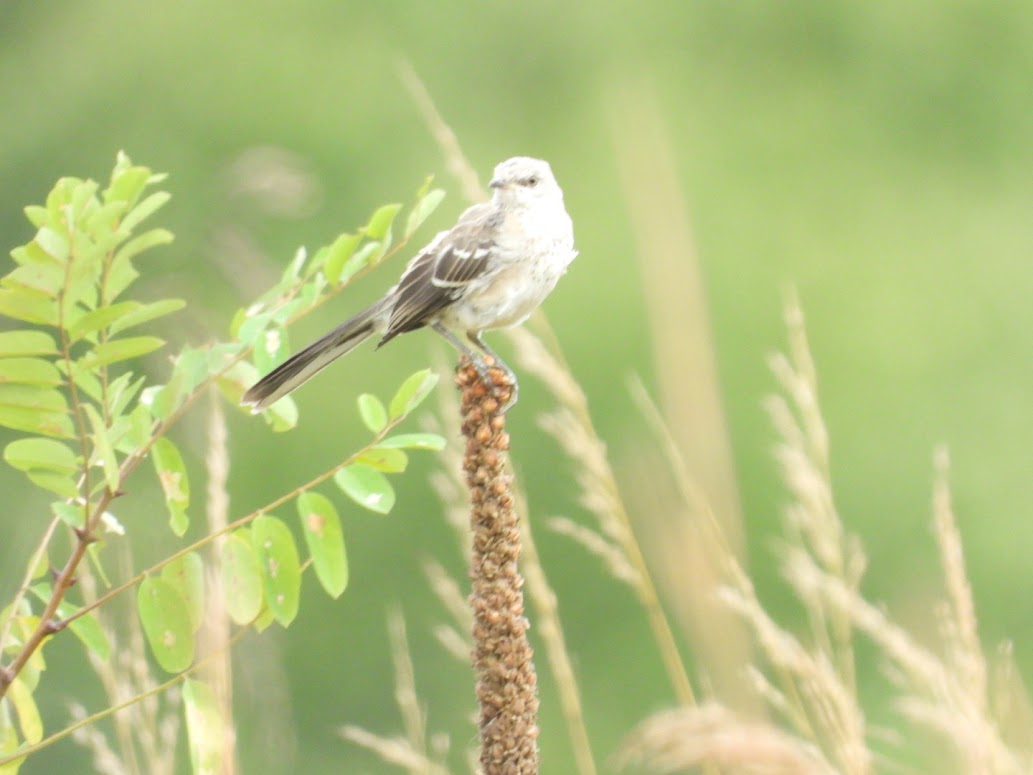
A juvenile Northern Mockingbird perched on a dried seed stalk and facing the camera against a blurred grassy-green background at Gordon Natural Area on a sunny day in the early fall.
Welcome to the second post in my backyard wildlife series covering small birds that were photographed in the month of September. All of the species in this post are listed with a conservation status of "Least Concern", and none has any specific concerns in the state of Pennsylvania. The post includes two now-common species that were introduced by humans, the House Sparrow and the House Finch.
As usual, the post starts off with a table to summarize the iNaturalist observations that I submitted for these birds, and then moves on to brief discussions of the species and encounters along with some photographs.
Highlights from this post are:
- Finding out that the American Goldfinch molts twice a year, and its fall plumage is quite different from its summer plumage
- Distinguishing between male and female Northern Flickers
- Differentiating between the Northern Flicker and the Red-bellied Woodpecker
- Side-by-side photos of adult and juvenile Northern Mockingbirds
Now, here is the summary table, and then on to the individual species. As a reminder, I don't submit all birds I see to iNaturalist as observations, so the photo dates and the summary table dates may not be in full agreement.
| Species | First Seen | September Sightings | Total Sightings | Observed Dates |
|---|---|---|---|---|
| American Goldfinch | 2026-08-23 | 2 | 4 | 2026-09-18, 2026-09-28 |
| Gray Catbird | 2026-05-01 | 2 | 17 | 2026-09-15, 2026-09-28 |
| House Finch | 2026-04-26 | 2 | 17 | 2026-09-18, 2026-09-30 |
| Northern Flicker | 2026-03-25 | 2 | 15 | 2026-09-10, 2026-09-28 |
| Red-bellied Woodpecker | 2026-03-01 | 2 | 12 | 2026-09-18, 2026-09-30 |
| House Sparrow | 2026-06-26 | 1 | 2 | 2026-09-28 |
| Northern Mockingbird | 2026-07-25 | 1 | 4 | 2026-09-28 |
| White-breasted Nuthatch | 2026-03-29 | 1 | 5 | 2026-09-15 |
American Goldfinch
I didn't realize it until October, but late September was the beginning of a big change in visibility for the American Goldfinch in my neighborhood. The bird that had been heard by Merlin, but almost never seen by me for most of the summer was suddenly visible everywhere, starting in late September and into October. The September pictures aren't great, but I think the October photos of this species will be some of the highlights of next month's posting. It turns out that they gather in flocks during the early fall.
The first inkling that I had that things would be different was the brown fall plumage in the September 28 photo here. You might recall from August that the summer colors for males are bright yellow and the juveniles have yellow bellies. I had never seen one that looked anything like this.
I actually challenged the AI, because I didn't believe the brown bird in the September 28th photo could be an American Goldfinch. Multiple AIs and iNaturalist all confirmed it, though, and it became more clear in the fall. This species has a summer look and a winter look, and September 28 was the first time I saw it dressed for fall. It turns out that these birds molt twice per year, and the two appearances are quite different.
Mostly, these birds are year-round residents in Pennsylvania and across the middle latitudes of the continental US. Some goldfinches, however, migrate north to southern Canada during the summer and down to the southern US and parts of eastern Mexico during the winter.
| September 18 | September 28 |
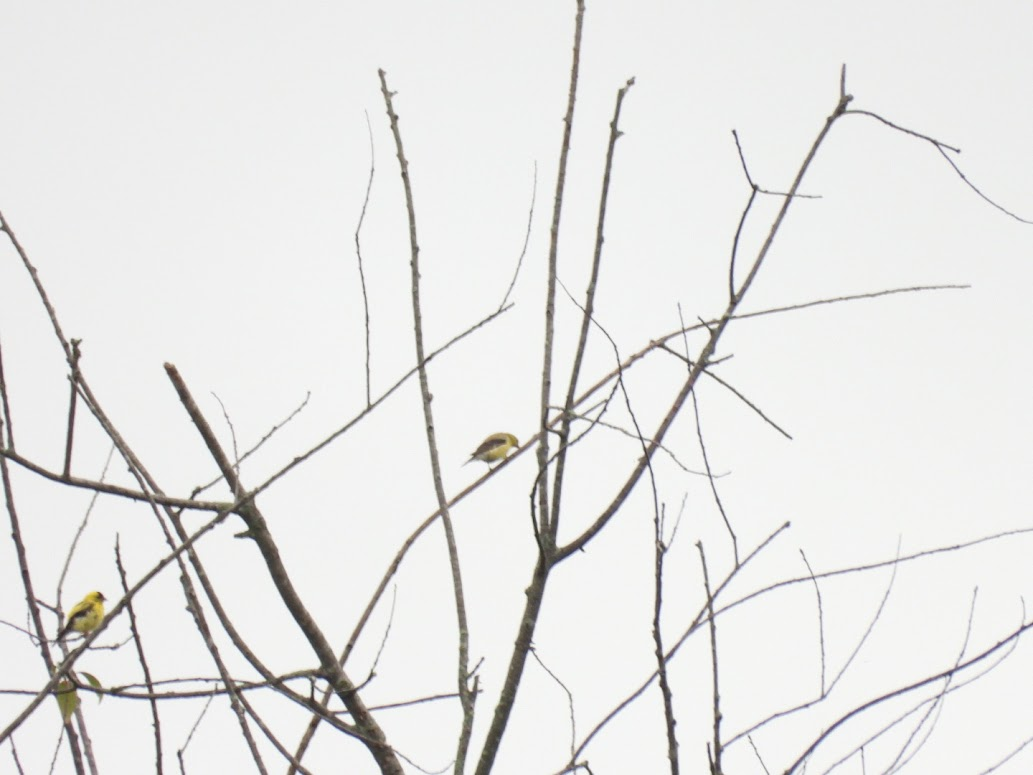 | 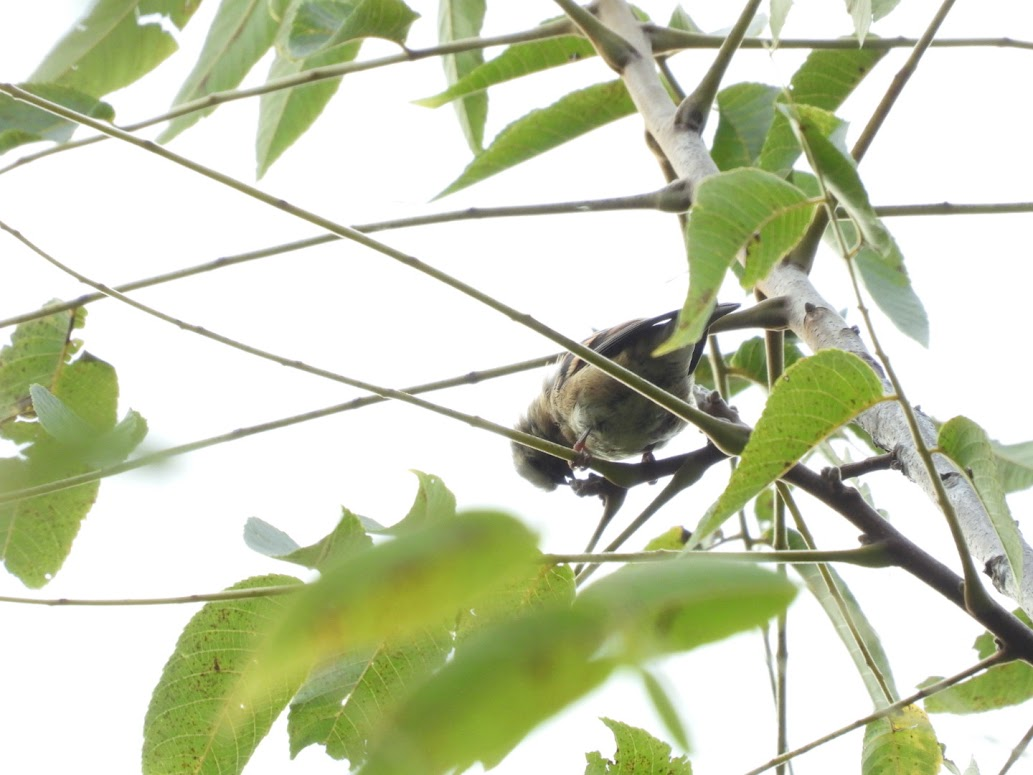 |
| ƒ/8, 1/125, ISO560, 539mm (3000mm equiv, 125X) | ƒ/7.1, 1/250, ISO400, 432mm (2400mm equiv, 100X) |
Gray Catbird
With observations every month from May through September, the Gray Catbird has been one of the summer staples of my new hobby. Like the American Robin, I saw the Gray Catbird almost daily during the summer months. During August and September, sightings began to slow down, but I have still heard them fairly often - even on days when I haven't seen them. And so has Merlin. The call is easy to recognize because it sounds like a cat's meow, which is how the bird got its name.
They are a partially migratory species, and my part of Pennsylvania is right on the northern tip of their year-round range, so it remains to be seen if they'll be hanging around during the winter months.
Like the Northern Cardinal, these guys like to hang around inside the tangled branches of ground bushes/vines like Honeysuckle, so even when I can see them it's often challenging to get an unobstructed photograph. They can also be difficult to photograph because they tend to flit between locations quite frequently. They often fly away again before I get time to adjust zoom, exposure, and focus.
The first September 15th photo shows a nice view of the rusty-red mark near the base of their tail. This is a field mark for the bird, but I had never noticed it before that day.
| September 15 | September 15 |
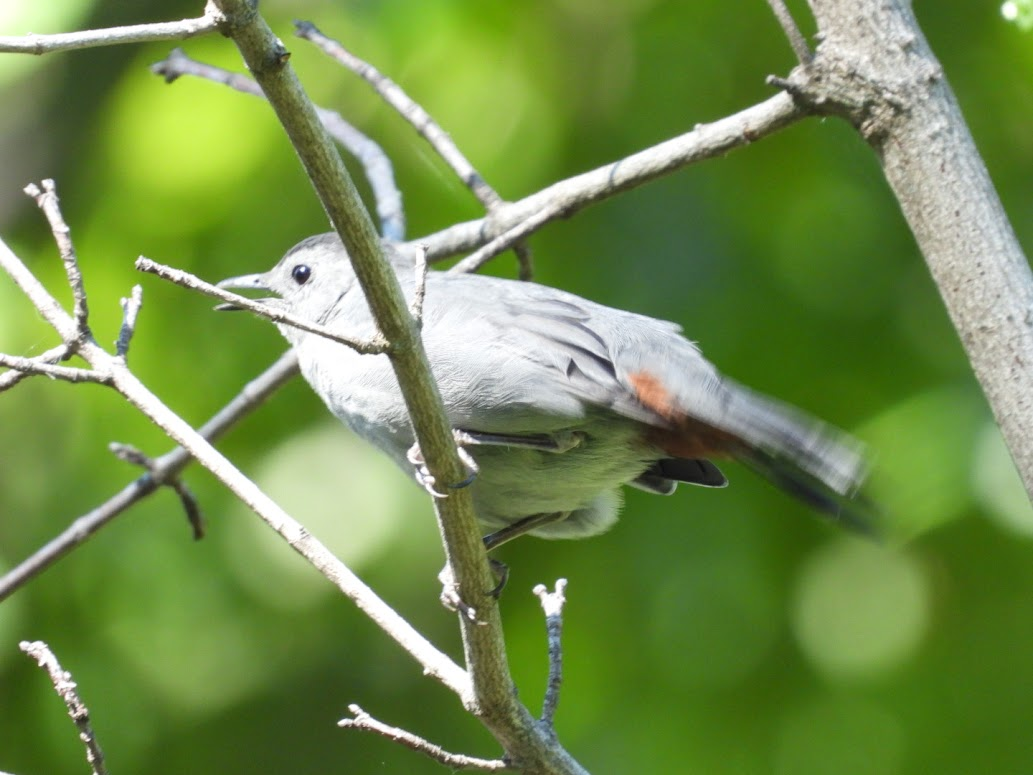 | 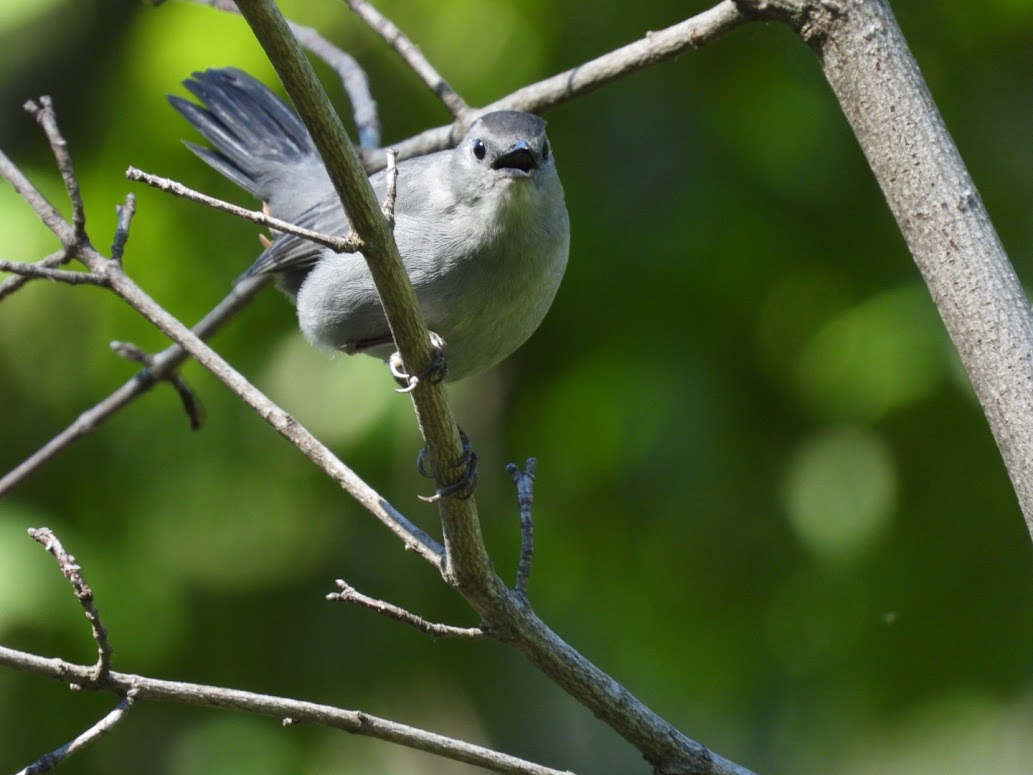 |
| ƒ/7.1, 1/125, ISO560, 432mm (2400mm equiv, 100X) | ƒ/7.1, 1/160, ISO400, 395mm (2200mm equiv, 92X) |
| September 19 | |
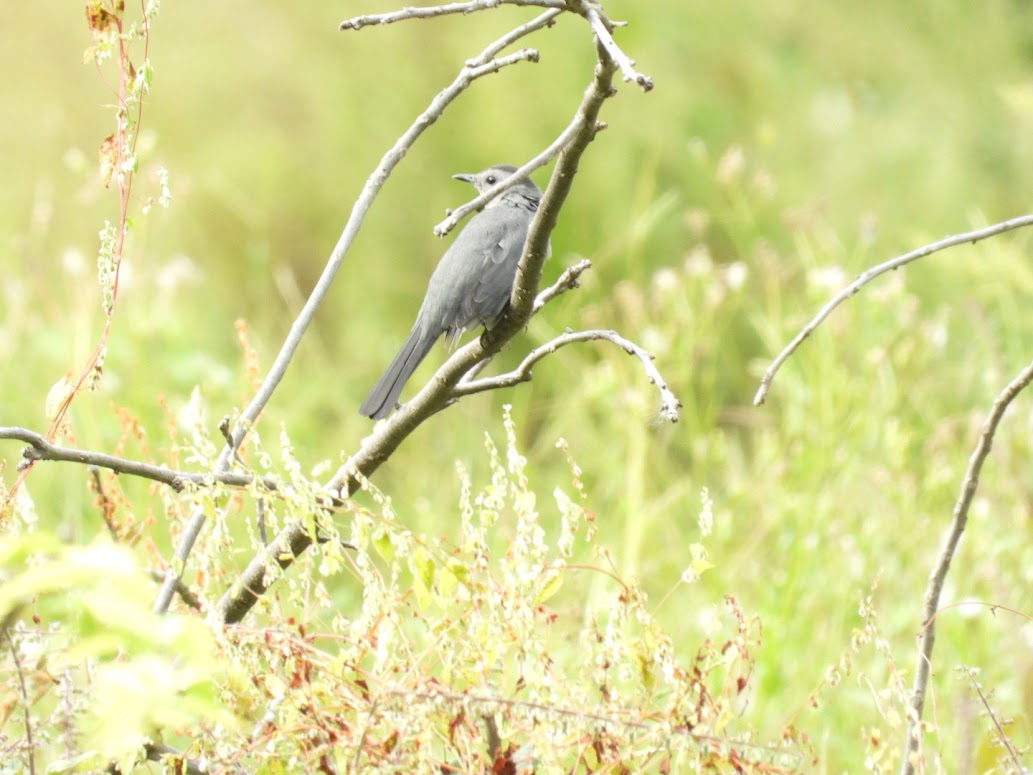 | |
| ƒ/8, 1/125, ISO500, 539mm (3000mm equiv, 125X) | |
House Finch
While not as common as the Gray Catbird or the American Robin, the House Finch has been another staple of the summer. I've logged iNaturalist observations of this species every month from April through June, along with August and September.
They're not native to the area. Originally, they were range-limited to the western US by the Rocky Mountains. However, they were introduced through New York City in the 1940s and have subsequently spread to establish a year-round presence across most of the United States.
Distance and lighting conditions made these photographs challenging. Even at 125X zoom, the birds are still very small in the frame. But I believe we can tell by the light red coloring that the bird in the September 18th photo is a male. The bird in the two photos on the 25th with the fully brown coloring is a female.
| September 18 | September 25 |
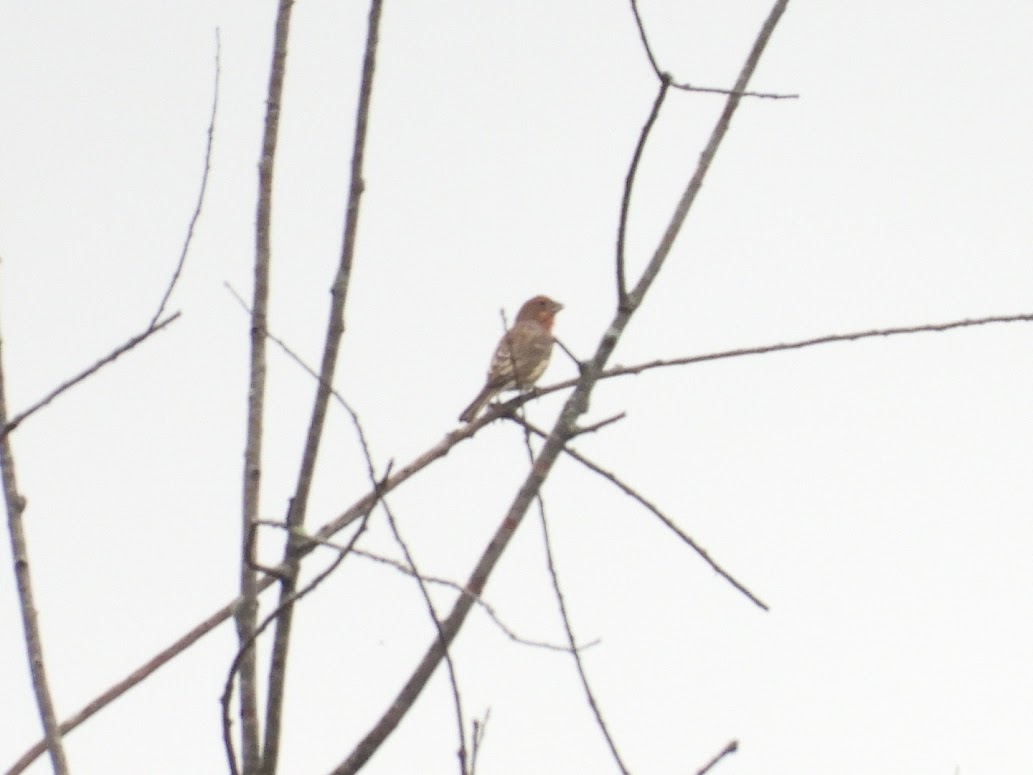 | 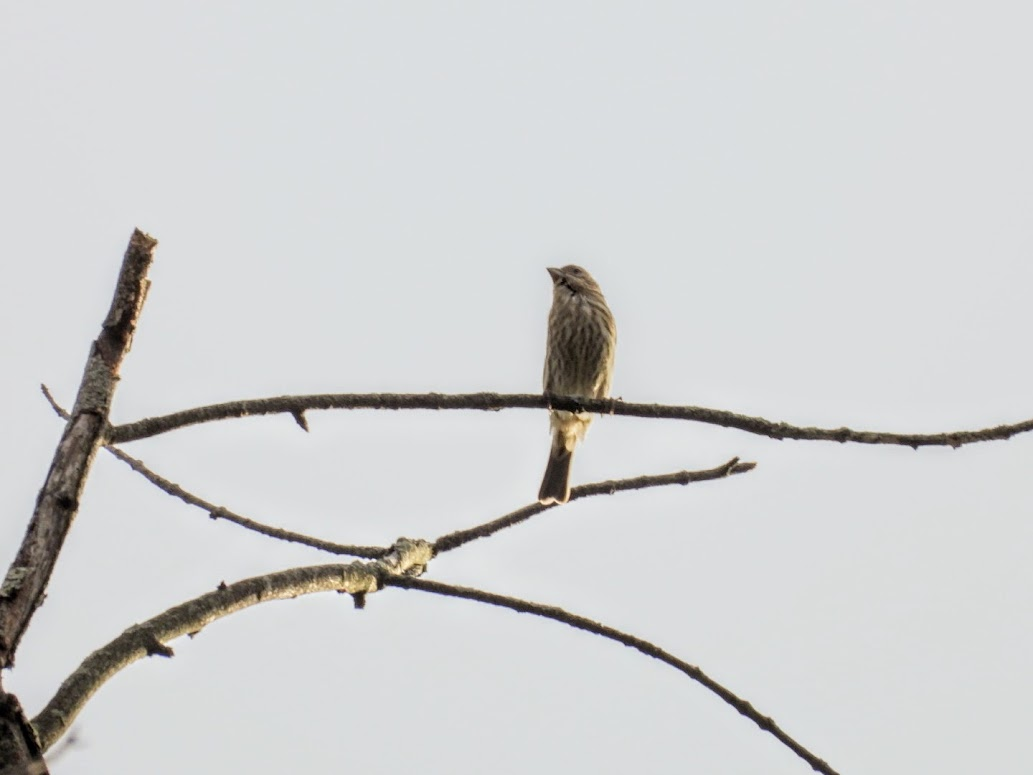 |
| ƒ/8, 1/125, ISO560, 539mm (3000mm equiv × 2.0 digital, 250X) | ƒ/8, 1/400, ISO400, 503mm (2795mm equiv, 117X). Lighting adjusted in Google Photos |
| September 25 | |
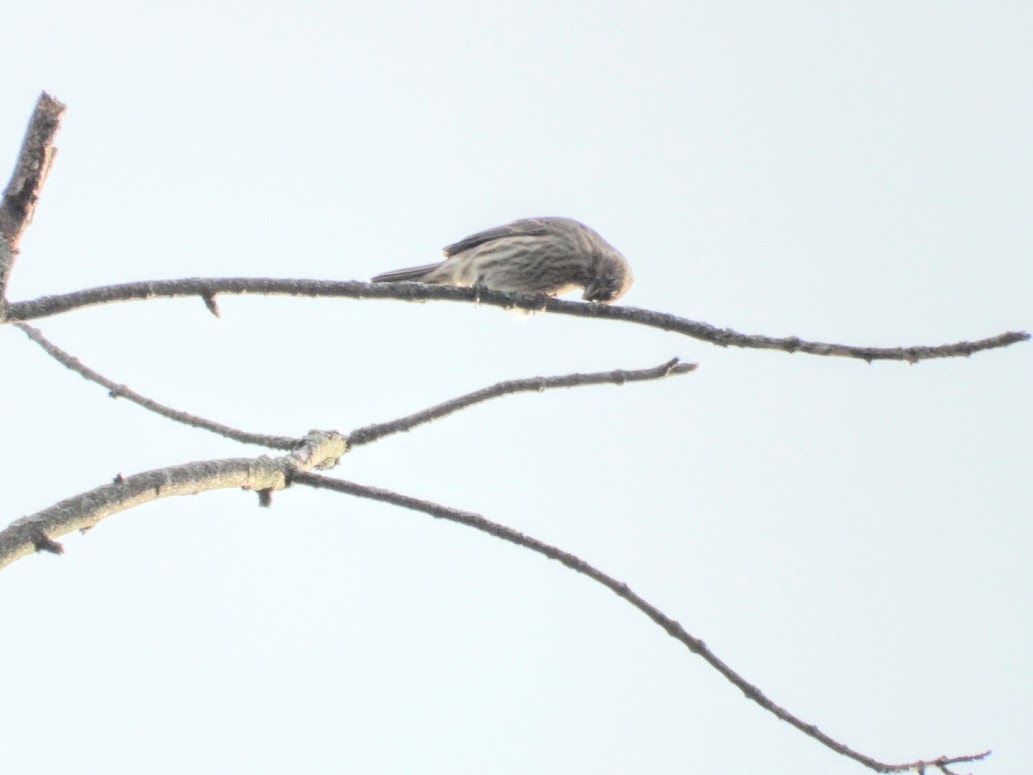 | |
| ƒ/8, 1/500, ISO400, 539mm (3000mm equiv, 125X). Lighting adjusted in Google Photos | |
Northern Flicker
The Northern Flicker is another repeat customer, with observations every month since I started this activity in March.
There's an Eastern and Western variety, but any Northern Flicker I see in Pennsylvania will be the eastern type. These are recognized by their tan face, gray cap, and red nape (back of the neck). They can also be recognized by the black barred pattern on their brown backs and the black and white spots on their bellies.
As mentioned in a post last month, the males can be recognized by the black "mustache" pattern on their heads next to their beaks. That mustache is visible in the September 12th photo on the left, and possibly in the September 28th photo, although I'm not sure of that one. In the right-hand photo on the 10th and the second one on the 12th, no mustache appears visible.
| September 10 | September 10 |
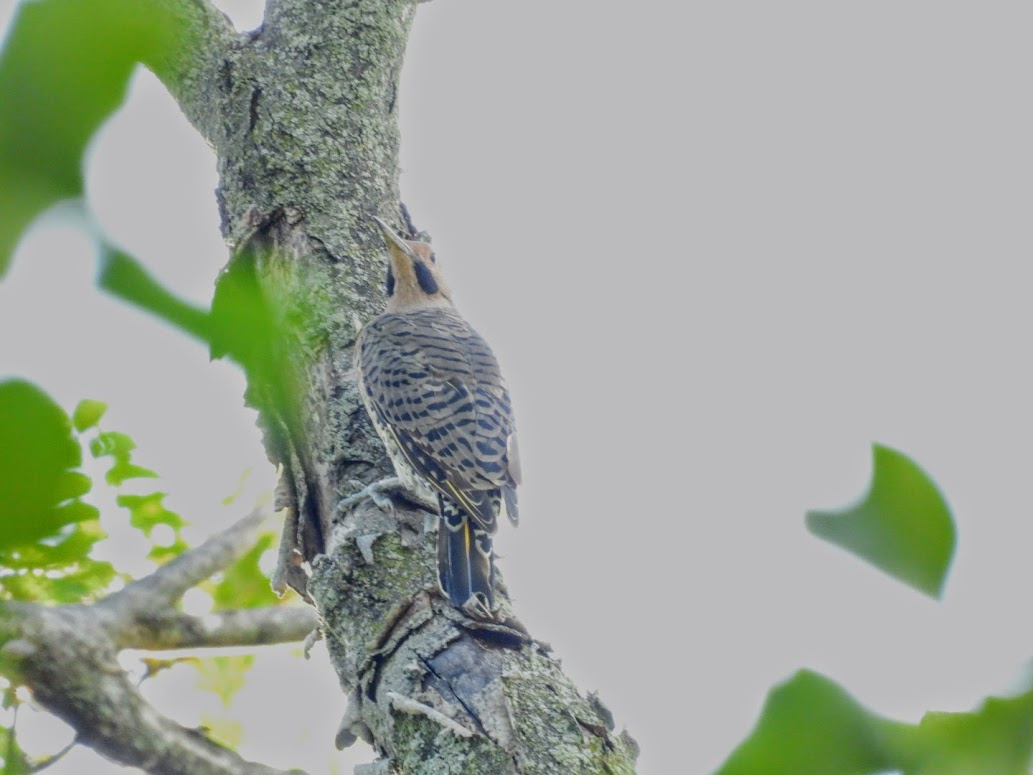 | 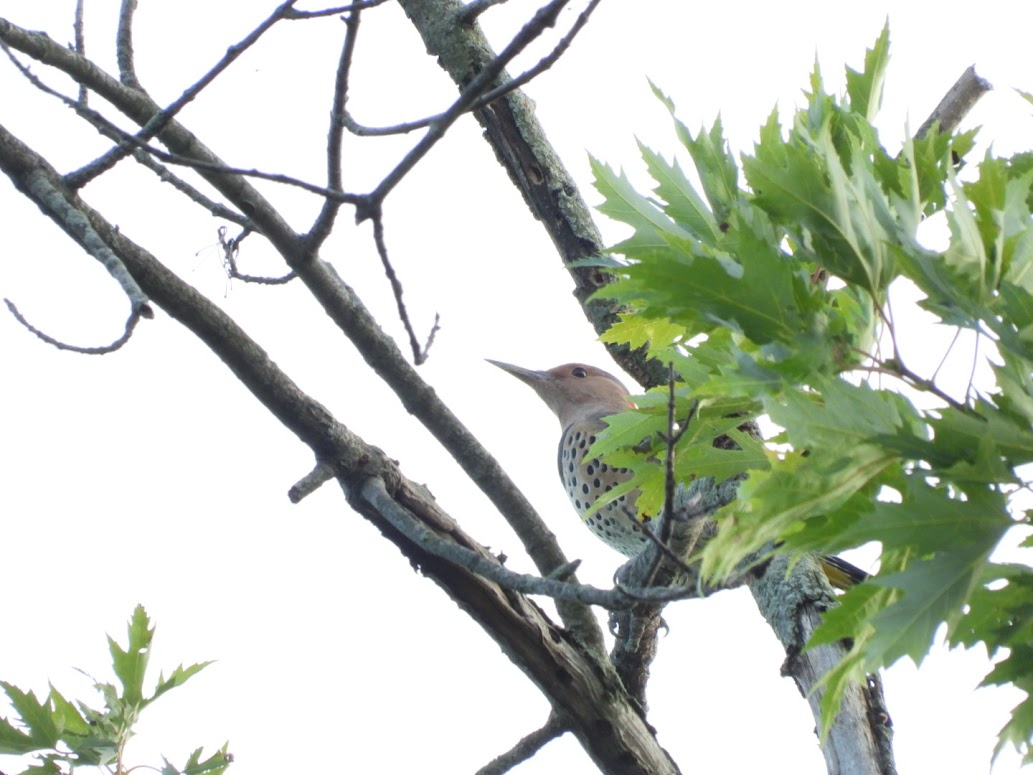 |
| ƒ/7.1, 1/125, ISO800, 395mm (2200mm equiv, 92X). Lighting adjusted in Google Photos | ƒ/8, 1/125, ISO400, 539mm (3000mm equiv, 125X) |
| September 12 | September 12 |
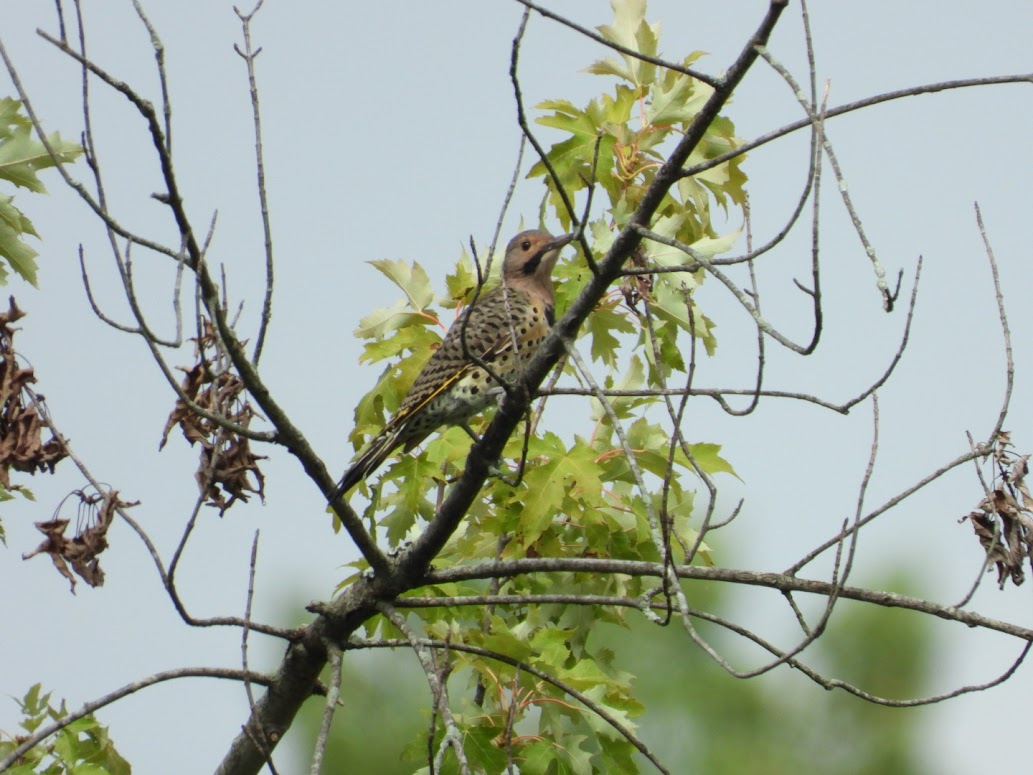 | 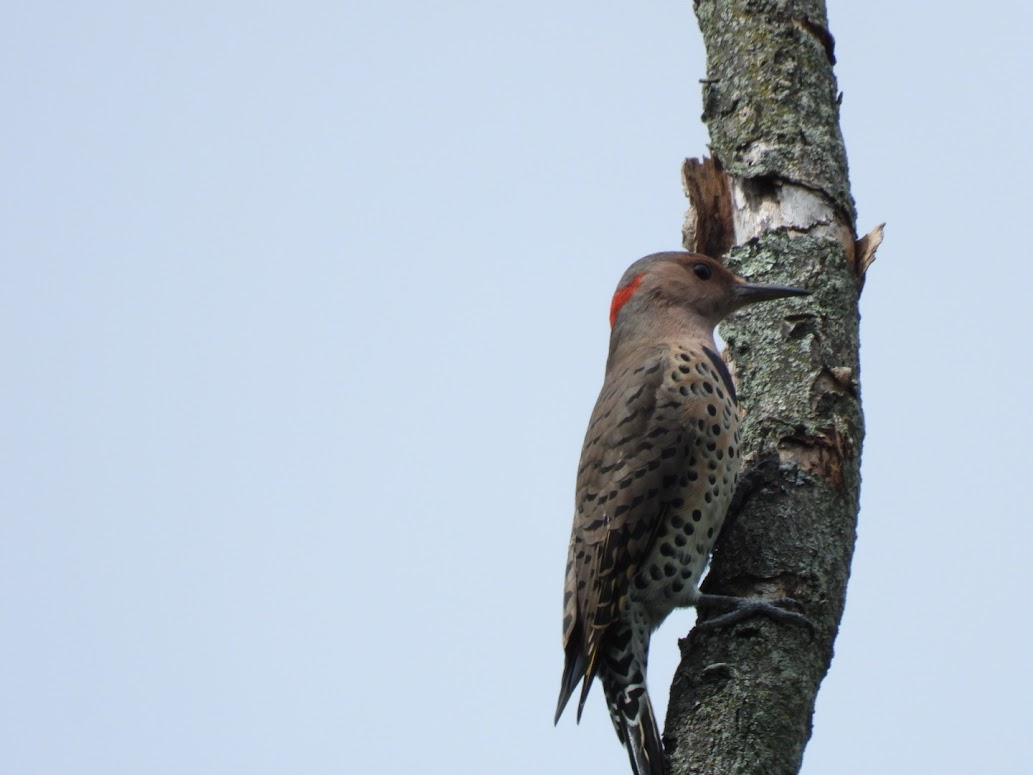 |
| ƒ/8, 1/500, ISO250, 539mm (3000mm equiv, 125X) | ƒ/8, 1/500, ISO180, 539mm (3000mm equiv, 125X) |
| September 28 | |
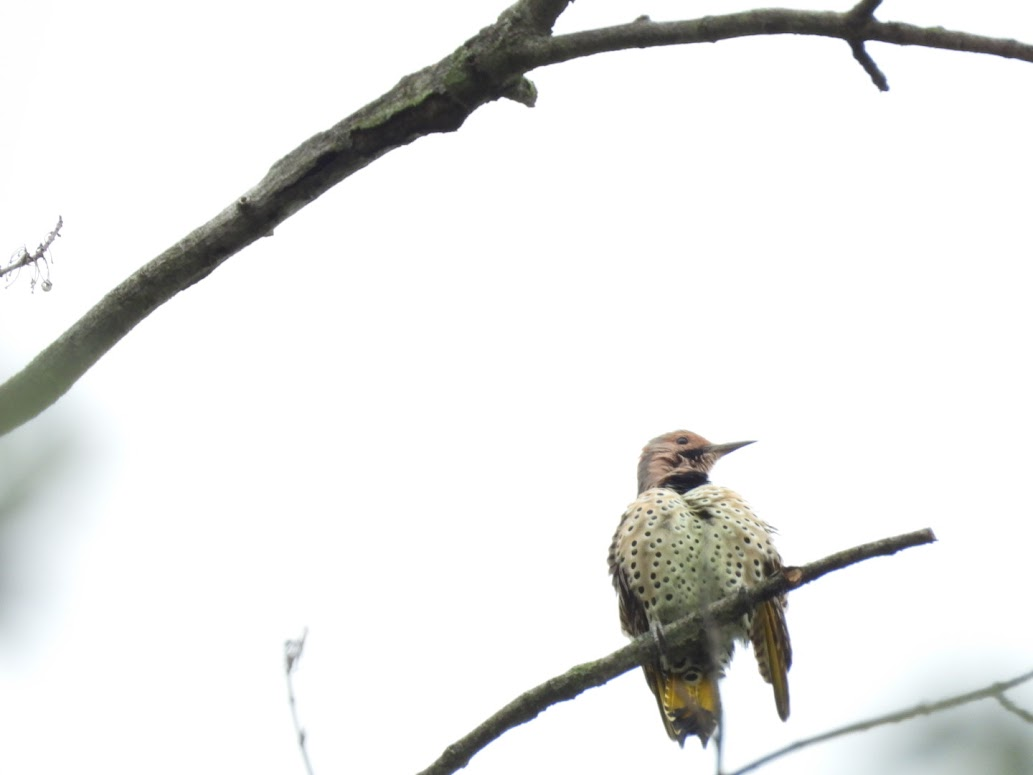 | |
| ƒ/6.3, 1/400, ISO400, 359mm (2000mm equiv, 83X) | |
Red-bellied Woodpecker
With observations logged every month, except June, from March until September, the Red-bellied Woodpecker is another common bird in the neighborhood. Based on the range map, this species is mostly year-round in the eastern United States from (roughly) Connecticut to Nebraska to Texas to Florida, and back to Connecticut, and it doesn't seem to migrate much (if at all).
I'm pretty sure this was the first woodpecker that I saw in March after starting this activity. I remember being excited at finding a woodpecker in one of my trees for the first time since I've lived here. Of course, I had no idea at the time of how common that really is.
In September, I photographed them three times, on the 18th, 25th, and 28th. As with many birds in September, unfortunately, lighting and distance made photography challenging all three times, though.
Field marks for this bird include the black and white zigzags on the back, a pale or grayish white face, and a red head. On males, the nape and the cap are red. On the female, the nape is red and the cap is pale or gray. The solid white belly makes them easy to distinguish from the Northern Flicker, even if their backs look somewhat similar.
Unfortunately, all of these shots are from below, so I don't think we can see the caps to tell whether any of these birds are male or female.
| September 18 | September 18 |
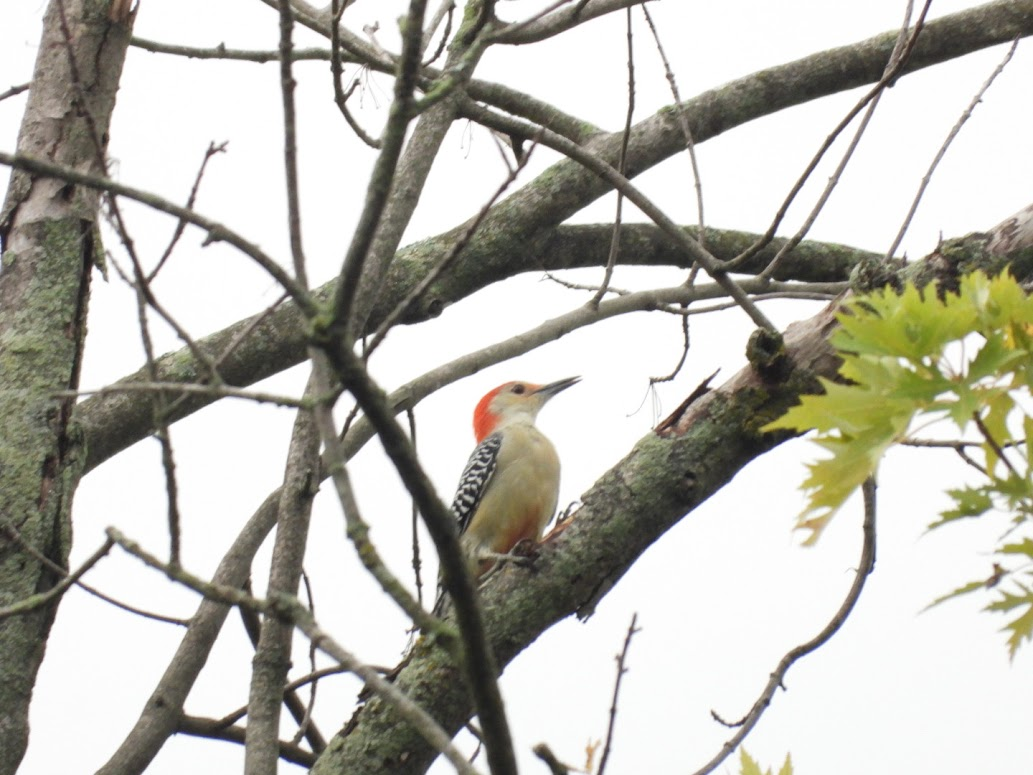 | 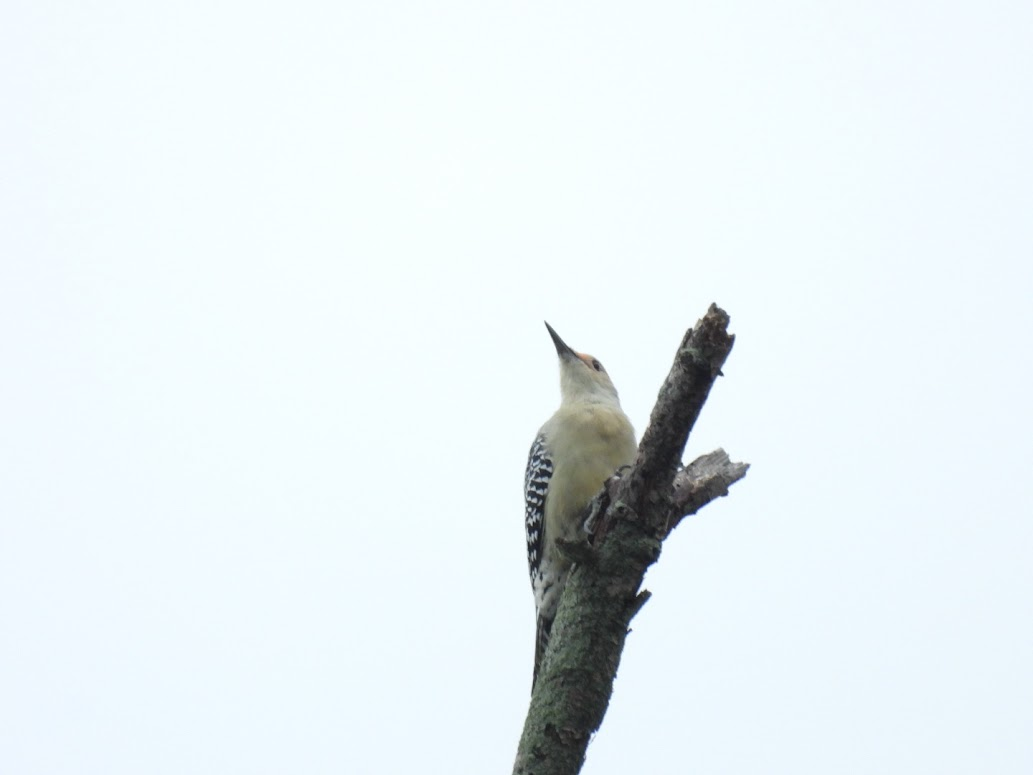 |
| ƒ/8, 1/125, ISO720, 539mm (3000mm equiv, 125X) | ƒ/8, 1/125, ISO500, 539mm (3000mm equiv, 125X) |
| September 25 | September 28 |
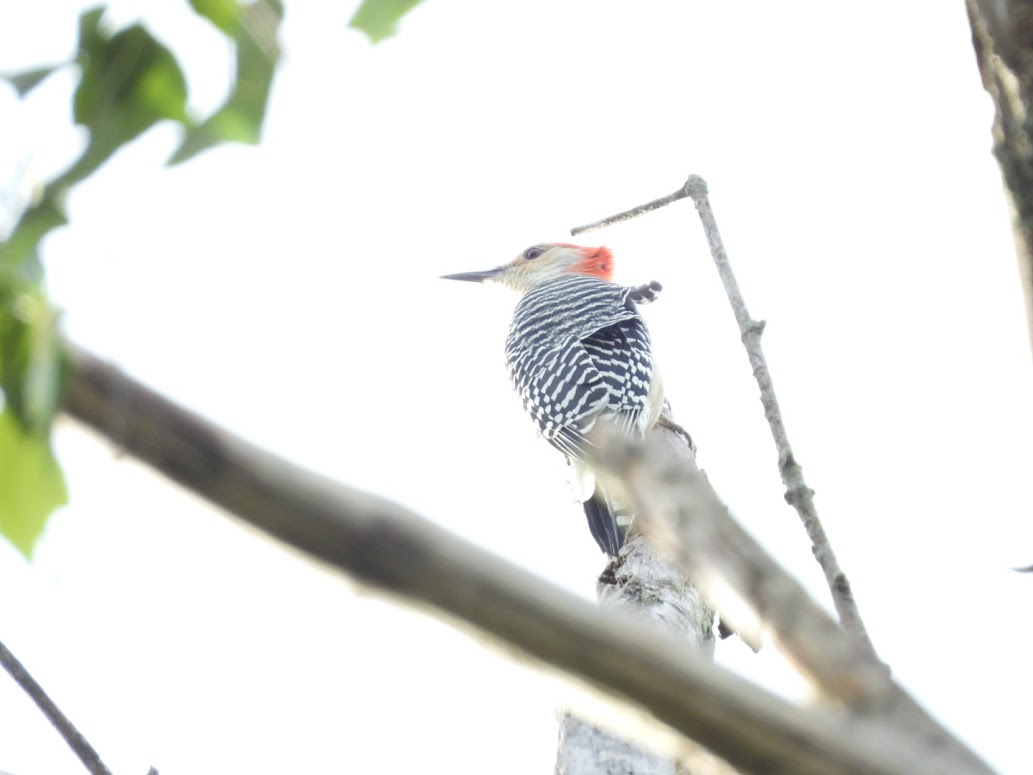 | 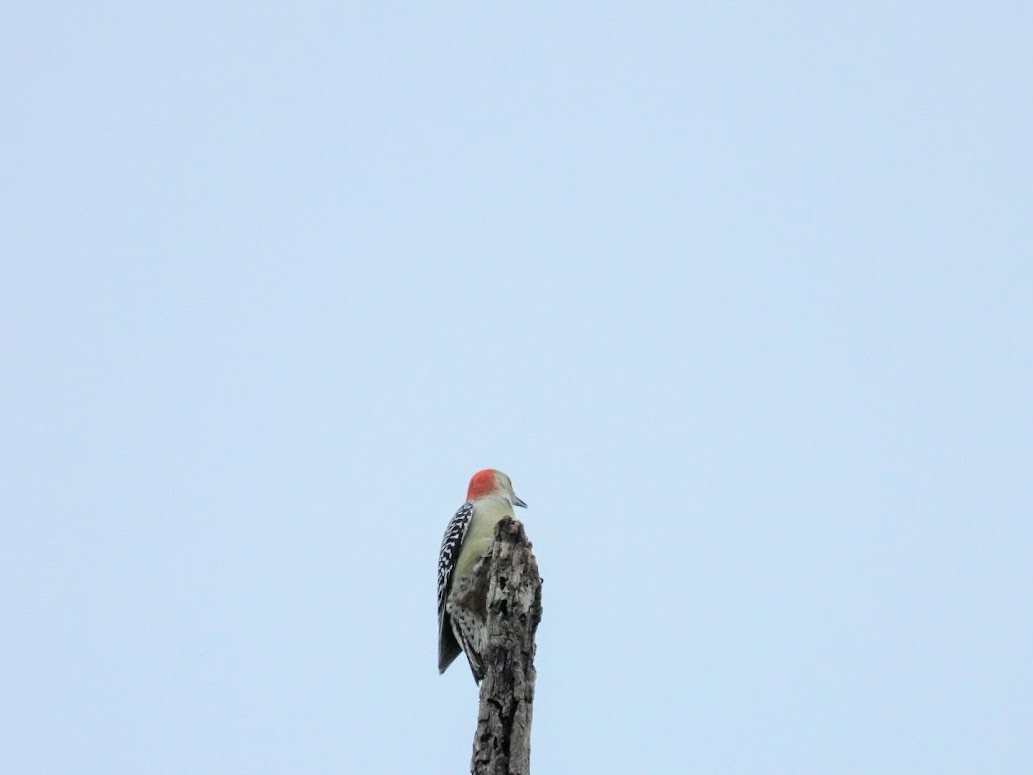 |
| ƒ/6.3, 1/160, ISO400, 324mm (1800mm equiv, 75X) | ƒ/7.1, 1/500, ISO180, 432mm (2400mm equiv, 100X). Lighting adjusted in Google Photos |
House Sparrow
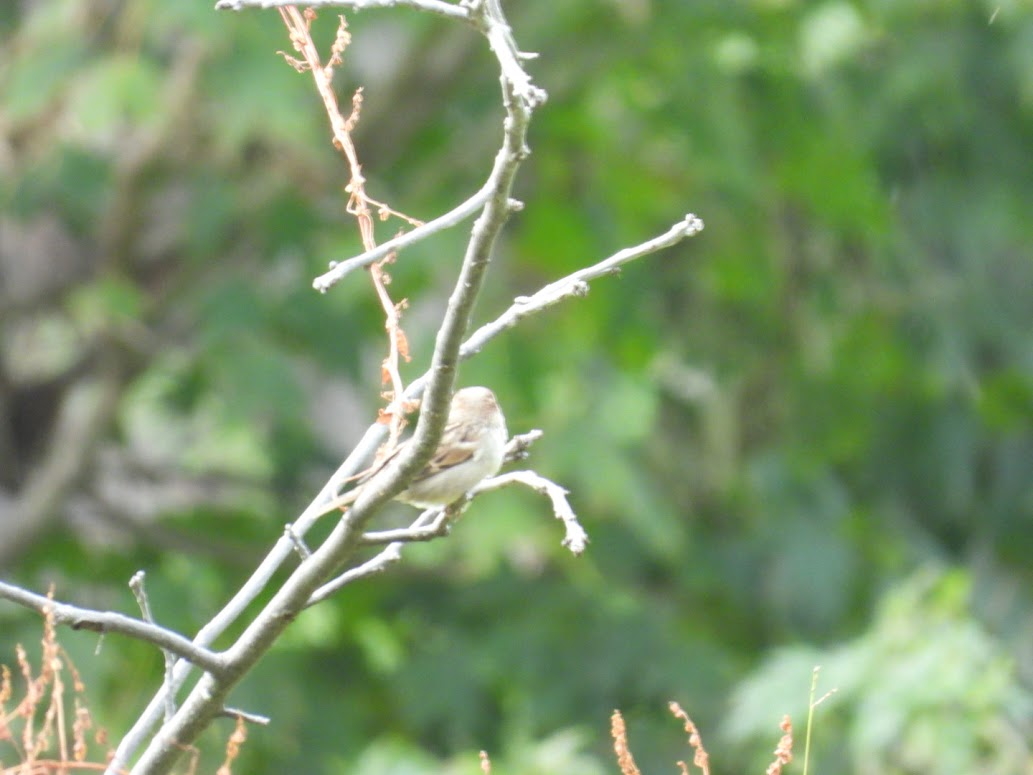
Unlike the previous birds, the House Sparrow has actually been an uncommon observation for me. I saw this one in September, and another one in June, and that's it. Skimming through screen grabs from Merlin, it seems that even Merlin doesn't hear these birds very frequently.
So, the photo quality was limited by distance, but it's worth including them just because the species has been so elusive. Given how unusual it is for me to see them, this excerpt from AllAboutBirds is interesting:
Along with two other introduced species, the European Starling and the Rock Pigeon, these are some of our most common birds.
Uncommon for me to see, but common in the region. The House Sparrow was introduced to the United States and Canada repeatedly, starting with Brooklyn, NY, in the 1850s. The species is native to Europe, Asia, and northern Africa.
These birds now have a year-round presence across most of North America and across a big chunk of South America, too.
| September 28 | September 28 |
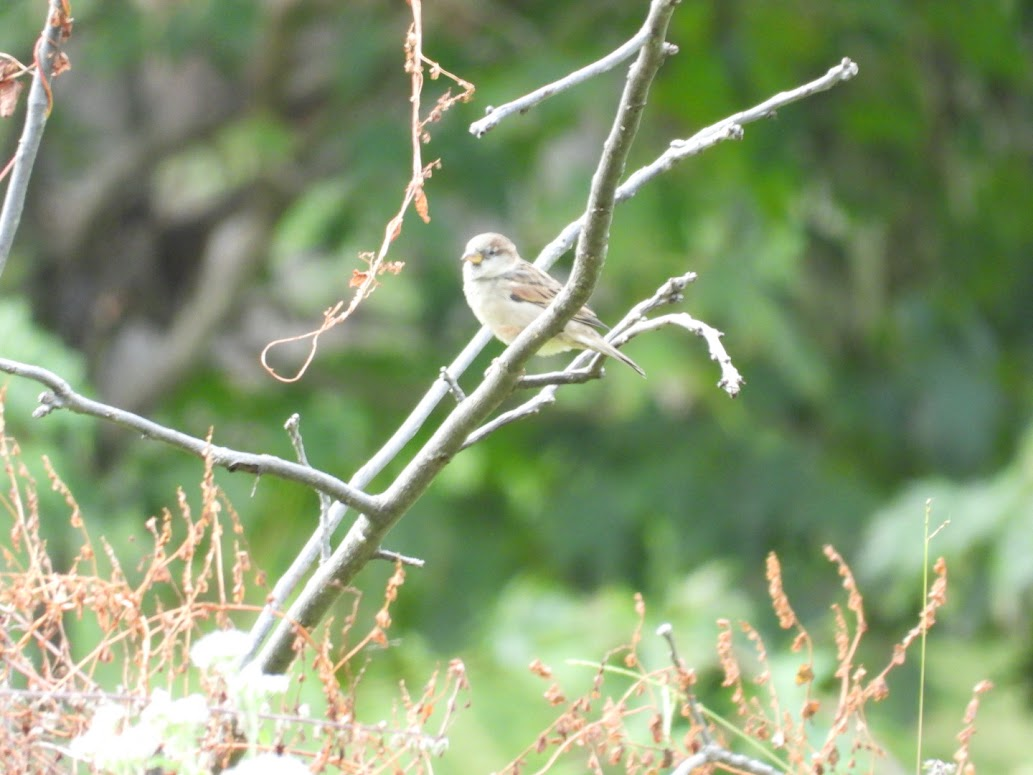 |  |
| ƒ/8, 1/50, ISO800, 539mm (3000mm equiv, 125X) | ƒ/8, 1/50, ISO800, 539mm (3000mm equiv, 125X) |
Northern Mockingbird
After I saw a Northern Mockingbird harassing a Red-tailed Hawk in July, this has become one of my favorite species.
This species has a year-round presence from middle latitudes in the continental US down to Mexico and parts of Central America. Here in Pennsylvania, it can be a permanent resident, but some of these birds also migrate northward in summer and southward in winter, though not very far in either direction.
Field marks for the Northern Mockingbird include the long tail, white wing patches that are visible when it's in flight, and white outer tail feathers that are visible when the tail is fanned. Adults have yellow eyes and juveniles have darker, grayish-brown eyes.
If you enlarge the last photo, you can get a good look at the gold eyes of the adult. In the second and third, you can enlarge for a sense of the juvenile's eyes. You can see the adult's gold eye in the first image, too, but due to lighting and camera effects it's harder to see. The juvenile can also be recognized by the spotted breast and the brownish feather colors compared to the adult's gray feathers with a plain white breast.
In addition to being well-known for harassing hawks, as we saw in July, Northern Mockingbirds are also known for their song repertoire. They sometimes sing well into the nighttime hours, and the males learn up to 200 different songs during their lifetimes.
| September 28 (Adult) | September 28 (Juvenile) |
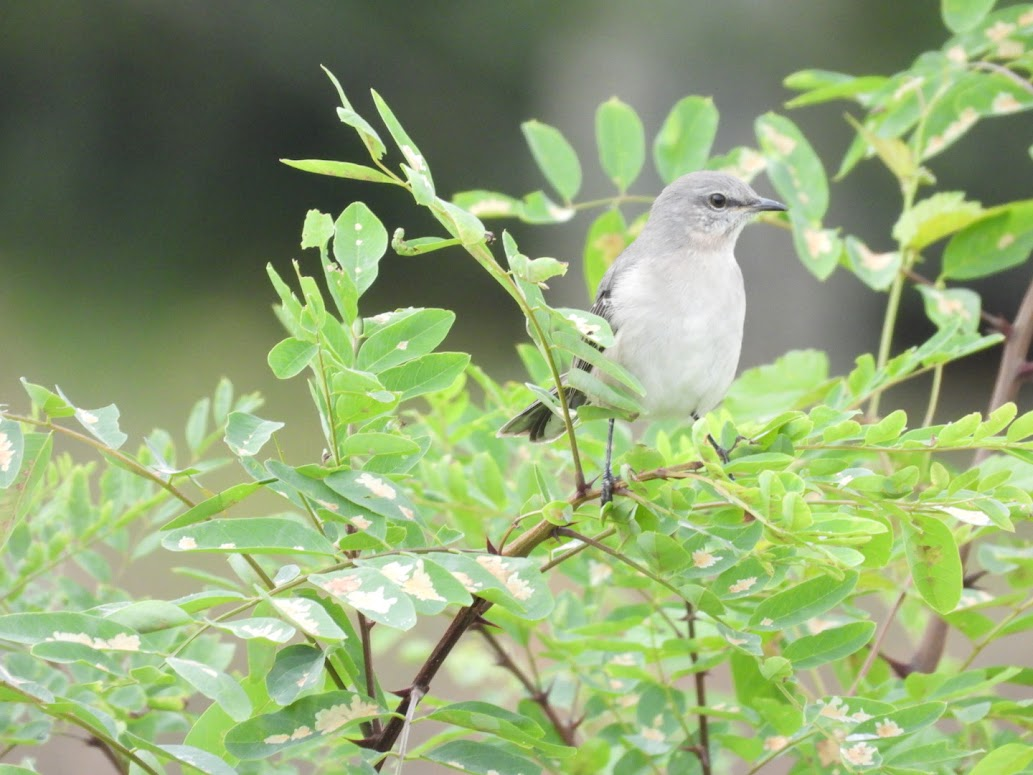 | 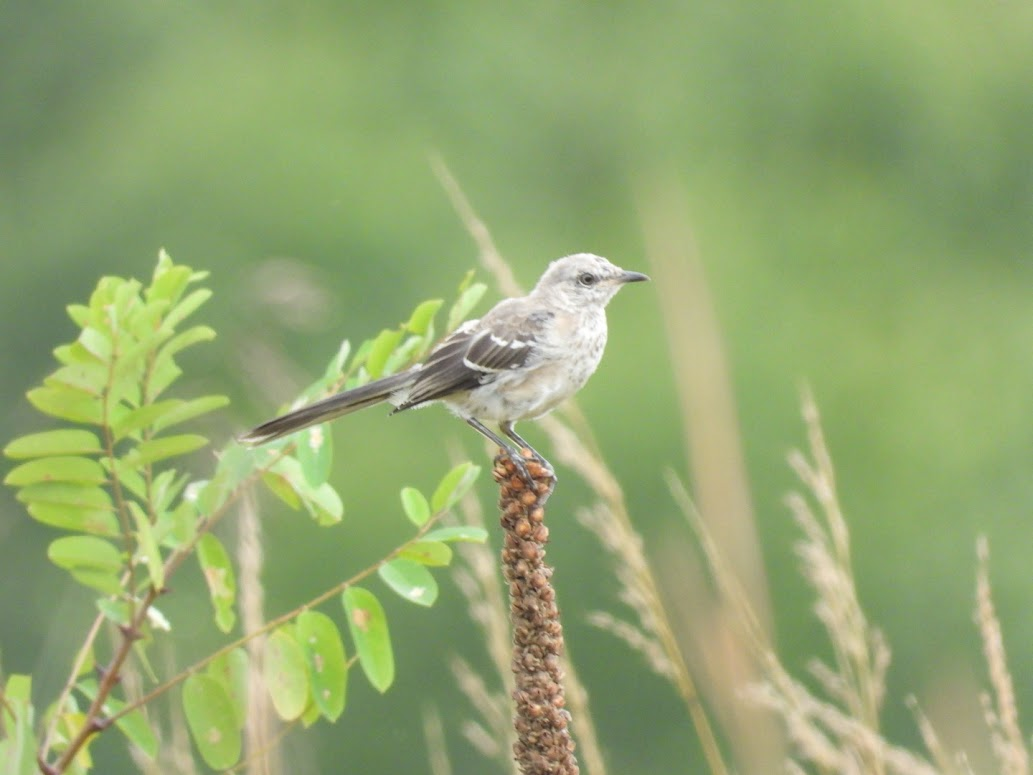 |
| ƒ/7.1, 1/125, ISO800, 395mm (2200mm equiv, 92X) | ƒ/8, 1/125, ISO800, 539mm (3000mm equiv, 125X) |
| September 28 (Juvenile) | September 28 (Adult) |
| 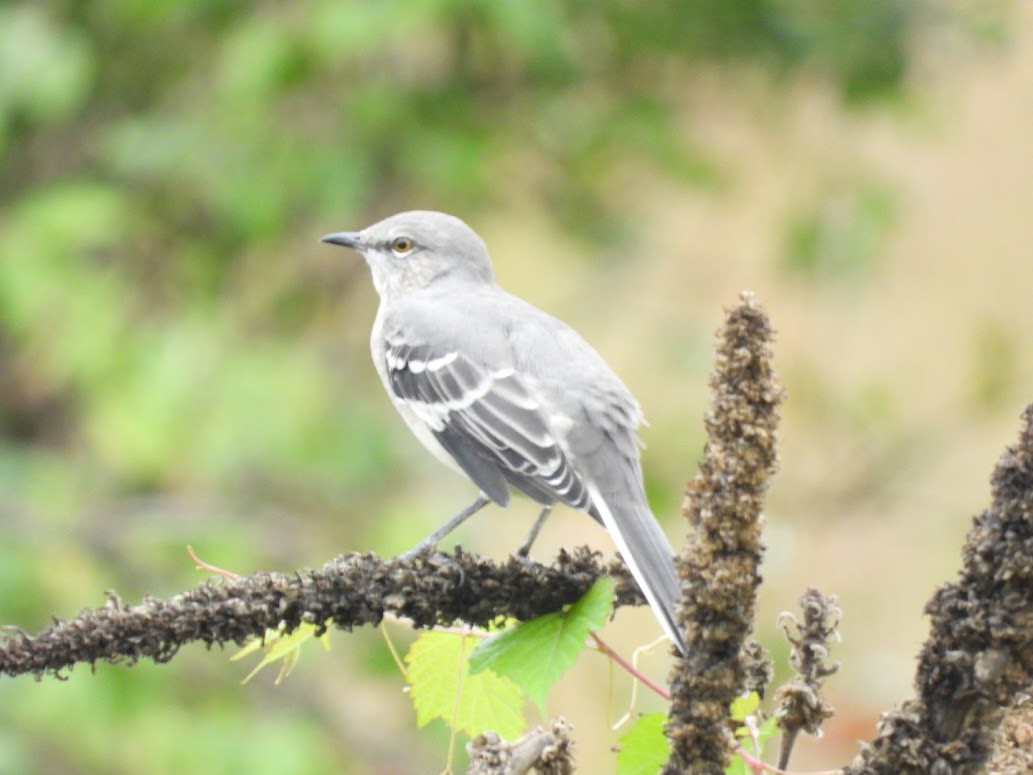 |
| ƒ/8, 1/80, ISO800, 539mm (3000mm equiv, 125X) | ƒ/8, 1/80, ISO800, 539mm (3000mm equiv, 125X) |
White-breasted Nuthatch
The White-breasted Nuthatch has been a fairly steady observation for me this year, with observations submitted to iNaturalist in March, April, and July through September. These birds don't appear to migrate much, with a year-round range that covers most of the continental US and Mexico, along with parts of Canada.
There's a small section in the middle of the US where they are only present during the winter for some reason that I can't explain.
When the birds do put in an appearance, they scoot around pretty quickly, which explains the small size of the bird in the photos. This bird did not want to stay still in one place for long enough that I could zoom in and focus.
Apparently, biological knowledge about these birds is limited because they nest in places that are hard to reach. However, it is known that they are biologically and historically more similar to the Eurasian Nuthatch than any other North American nuthatch.
| September 15 | September 15 |
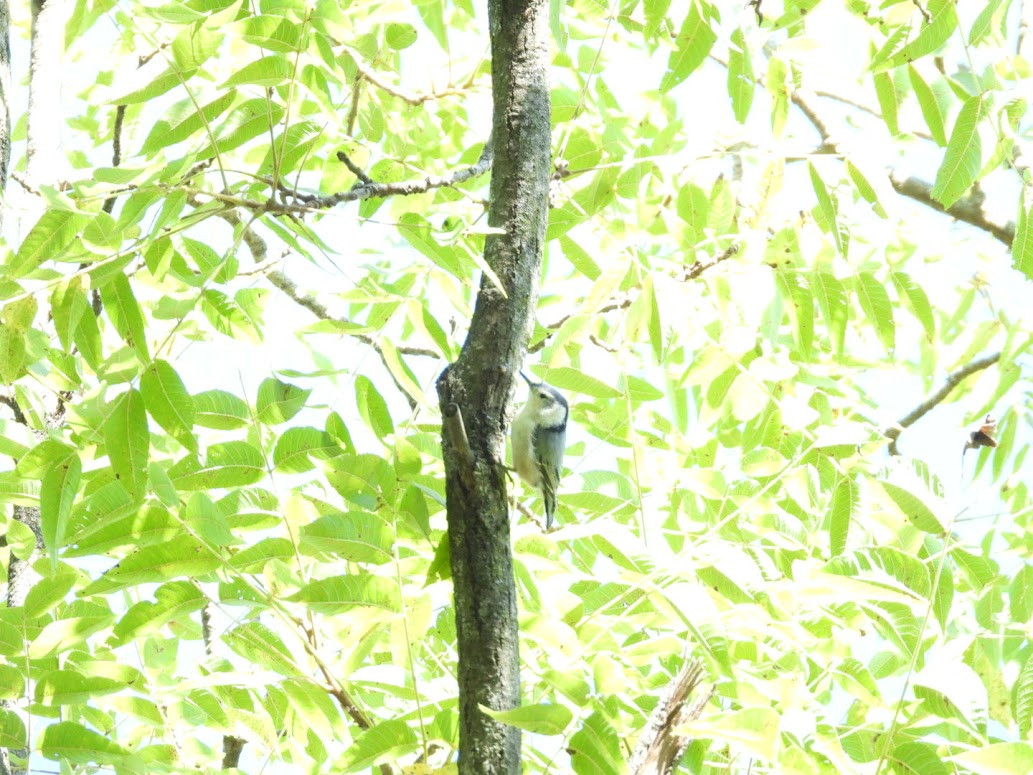 | 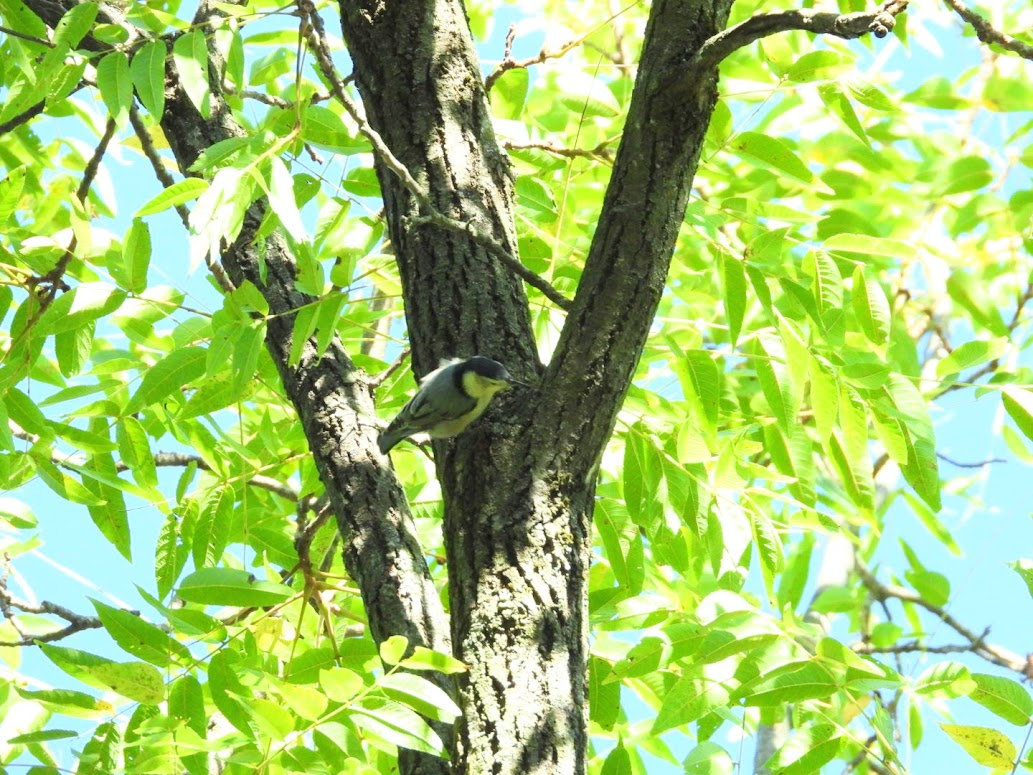 |
| ƒ/5.6, 1/125, ISO560, 144mm (800mm equiv, 33X) | ƒ/5.6, 1/250, ISO400, 144mm (800mm equiv, 33X). Lighting adjusted in Google Photos |
Wrap-up
Thank you for reading my second post about the small birds I encountered in September. In this post, we learned about the American Goldfinch's changing fall plumage and some distinguishing techniques for Northern Flickers, Red-bellied Woodpeckers, and the Northern Mockingbird. This will be the last post for the month that focuses exclusively on small birds.
September was the beginning of the fall migration season, but most of the birds in this post are potentially year round residents. The one exception, perhaps, is the Gray Catbird. Southeastern Pennsylvania is on the northern tip of its year-round range, so it remains to be seen if we'll continue seeing them in upcoming months.
The next post will include the last few small birds that I encountered along with some encounters with other animals, and the final post will have the raptors that were encountered in September. Both of these posts will include first-encounters with species that, I assume, were migrants.
Appendix
| A full index of my posts about wildlife photography and citizen science is here: WILDLIFE PHOTOGRAPHY INDEX |
|---|
Notes on the use of AI
As previously noted, I use AI for the following purposes in creating this series:
- Wildlife identification (Merlin, iNaturalist, Meta AI, Claude, Gemini)
- Formatting iNaturalist observations, photographs, dates, and camera settings into markdown tables (Claude)
- Adding SEO friendly alt-text to image markdown syntax (Claude, Meta AI)
- Proof-reading and editorial advice (Claude, Gemini, Meta AI, ChatGPT, Grok)
Thank you for your attention!
Unless otherwise specified in the text, all photos above were taken by me with a (handheld) Nikon P1000 camera. I'm sharing them under the CC BY 4.0 license (share & adapt freely with attribution to the original source).