A talk with ChatGPT about Steem... or: A lot of text! / Ein Gespräch mit ChatGPT über Steem... oder: Eine Menge Text!

Photo by Bernhard Kilian, post processed by me (with a little help of Diggfun... ;-))
Deutsch im Anschluß...
As someone who is not a fan of so-called artificial intelligence, I nevertheless do not wish to deny that I do consult it on the odd occasion and am, in fact, provided with interesting insights and ideas. I would like to expand on one of these conversations here and now, because it centred precisely on this: Steemit and Steem.
My starting point was the question of whether there is a so-called ‘tipping point’ (my suggestion for ‘word of the year to avoid’…) beyond which a cryptocurrency can no longer increase in value – in other words, when it effectively becomes a total write-off. The question practically begs to be asked when one observes Steem’s steady decline in price towards 4ct…
The answer was clear: yes. Less clear was its definition… There are various indicators that point for or against a possible revival of a cryptocurrency. With regard to Steem, we tick boxes on both lists:
| Pros | Cons |
|---|---|
| - active user numbers remain stable | - network usage plummets, |
| - developers continue to work | - developer activity is almost non-existent, |
| - new applications are emerging | - major exchanges are delisting it, |
| - the coin remains below its previous high for several years | |
| - and it no longer rises in line with a general crypto bull market.) |
The first two points on both sides roughly correspond to the constant ups and downs we are experiencing: fluctuations, an influx of new Steemians who join for various – and not always useful – reasons, and the return of old users we thought we’d lost… Developer activity: after it looked as though things had been at a standstill for many years, there was suddenly a surge driven by proposals – for example, from @the-gorilla – games, various applications and alternative front-ends from all sorts of sources, as well as useful tools that complement Steem effectively. It is, therefore, a process that is by no means static. So, when considering these points, let us assume that the positive effect outweighs the negative.
Major exchanges have dropped Steem; we won’t deny that (especially as it wasn’t traded everywhere anyway). Its all-time high was reached eight years ago, and the price has since fallen by a good 99 per cent. Even rises in other (major) cryptocurrencies have failed to trigger a recovery in Steem. These latter points clearly argue against the assumption of a resurgence in popularity and price.
With these circumstances in mind, the feeling regarding all our lovely SP – which we’ve earned and saved, bought or exchanged, and in any case powered up – is incredibly bleak…
When I then specifically asked ChatGPT about Steem, it weighed up the pros and cons before offering the following forecast:
Could the price rise sharply again?
Yes.
Cryptocurrency markets are speculative. Even projects with poor performance can gain several hundred per cent in a strong bull market. STEEM is still being traded; it hasn’t disappeared and still has a market capitalisation in the tens of millions. Furthermore, the Steem blockchain and the Steemit platform still exist.
Can STEEM regain its former significance?
I consider that to be significantly less likely.
There are several points in favour of this:
• STEEM is trading at around 99 per cent below its all-time high from early 2018.
• The project has lost the majority of its original network effect due to the Hive fork.
• In the current crypto cycle, STEEM is not among the projects receiving a great deal of attention from developers, investors or new users.
• In 2026, the price was even close to new all-time lows, which is not usually a sign of a resurgence.
What I would be watching for:
If STEEM is truly to recover structurally, some of the following would need to happen:
• a significant rise in user numbers on Steemit or other Steem applications
• visible developer activity
• new applications on the blockchain
• rising trading volumes over an extended period
• better relative performance than comparable social media blockchains
At present, I see STEEM as falling more into the category of a ‘surviving niche project’ than that of a ‘likely comeback candidate’. That does not mean that the price cannot rise another 2× or 5×. Rather, it means that a return to its former relevance, or even to the all-time highs of 2018, seems very difficult to imagine.
When asked to provide a clear overview of technically possible and likely developments, ChatGPT produced the following:
STEEM is currently trading at around 0.05–0.06 USD, which is more than 99 per cent below its all-time high of around 8.2–8.6 USD. Furthermore, it only hit new lows in 2026.
Scenario 1: Weak altcoin cycle
If Bitcoin rises but capital flows mainly into major coins:
• STEEM: 0.10–0.20 USD
• Equivalent to roughly 2–4× the current level
I consider this the most likely positive scenario.
Scenario 2: Genuine altcoin bull market
If speculation flows heavily back into small altcoins:
• STEEM: 0.30–0.80 USD
• Equivalent to roughly 6–15×
Historically, such movements have occurred with many older coins, even without fundamental improvements.
Scenario 3: Surprise comeback
For this to happen, new users, developers and applications would need to return.
• STEEM: 1–2 USD
That would already be an enormous success and would require a significant revival of the ecosystem.
Scenario 4: Return to an all-time high
For this to happen, STEEM would effectively have to become one of the leading social blockchain projects once again.
- STEEM: 8 USD and above
Given that large sections of the community and developers migrated to Hive following the 2020 fork, this seems highly unlikely today.
To put it another way:
• From 0.05 to 0.20 USD → seems entirely plausible in a strong market.
• From 0.05 to 0.50 USD → speculative, but conceivable.
• From 0.05 to 1.20 USD → would probably require a very strong altcoin cycle or a special STEEM narrative.
• From 0.05 to 8 USD → I currently see no discernible fundamental path for this.
At this point, I ‘came clean’ and refrained from seeking further strategic advice on the most effective economic utilisation of my stake (which was the AI’s knee-jerk advice…) I explained that my primary concern is not the value of the Steem currency, but rather the survival and future of the Steemit platform. And I admit that the discussion became interesting from this point onwards! In part, it confirmed opinions and impressions that had long been forming in my mind. On the other hand, some ideas were put forward that I’d like to reflect on publicly.
1. Why Steemit looks the way it does today (bots, AI, low quality)
The underlying problem is no coincidence, but a classic ‘incentive collapse’:
(a) Monetisation rewards quantity, not quality
If:
• every post has the potential to earn rewards
• and voting is partly automated or ‘optimised’ for social engagement
…then this inevitably leads to:
• spam
• copy-paste
• AI-generated content
• ‘Engagement farming’
This is a well-known problem across all reward platforms (including YouTube, Twitter/X and Reddit – though presented differently there).
(b) The curation system has become vulnerable
Curation used to be a competition for attention, timing and social graphs.
Today:
• many power users have left or become more passive
• voting blocs / mutual upvoting arise more easily
• AI can produce ‘mediocre content’ at a high frequency
👉 Result: curation loses signal quality
(c) The social graph has ‘thinned out’
The most important point:
A blogging platform does not thrive on tokens, but on the fact that:
People regularly read other people’s posts
When the dense social clusters disappear (as happened after the Hive fork), what remains is:
• less dialogue
• less recognisability
• more ‘feed instead of community’
2. Why AI exacerbates the problem (but does not cause it)
AI is merely an amplifier here.
It reduces:
• the cost of content → an explosion in output
• the difference between ‘good’ and ‘average’ → which becomes smaller
• the time required to participate → to almost zero
👉 Without strong counter-mechanisms, this almost automatically leads to:
content inflation
3. What would need to happen for Steemit to come back to life
This can be broken down into 4 levers:
LEVER 1: The reward structure must prioritise ‘quality over volume’
The current problem is: too many rewards per unit of irrelevant content
Possible changes:
• A strong decay function for similar content
• Link rewards more closely to unique engagement (genuine readers, not votes)
• Weighting of reputation + history + consistency
• Reduction of short-term ‘vote pumping’
👉 Goal:
‘1 good post per week > 20 mediocre posts’
LEVER 2: Curation must involve real costs again
Today, voting is often:
• cheap
• automatable
• socially ‘shareable’
What would help:
• greater emphasis on actual reading time / interaction
• less ‘passive upvoting’
• clearer distinction between:
◦ ‘social support vote’
◦ ‘economic curation vote’
👉 Otherwise, the content farmer always wins.
LEVER 3: Anti-bot / anti-AI overload mechanisms
This is a delicate issue, but crucial:
Not ‘banning AI’, but rather:
• Reward filters for highly repetitive content
• Detection of content clustering (text embedding duplicates)
• Limits on new accounts / new content spectra
• Declining rewards in the event of ‘content saturation’
👉 Goal: AI may exist, but it must not dominate.
LEVER 4: The return of ‘genuine social hubs’
This is the most important, but also the most difficult part:
Steemit needs the following once again:
• stable micro-communities
• recognisable authors
• genuine discussions instead of voting chains
This will only happen if:
• real people are once again ‘visibly rewarded’
• not just the optimised posters
This is the uncomfortable truth... Even perfect mechanics won’t help if:
• there are few genuine readers
• content has no external value
• the platform isn’t perceived as a “place to read”
Blogging platforms rarely die because of technology, but because of a loss of readers, not authors!
A realistic assessment for Steemit - I’d put it like this:
Good news
• the system isn’t technically broken
• the token incentive mechanism still works in principle
• there are still active niches
Bad news
• social density has been greatly reduced
• AI/bots are systemically favoured
• network effects are running slightly negative rather than positive
The real question (crucial) is not:
“Can Steemit get better again?”
but rather:
“Are there enough people who genuinely want to read and discuss, so that quality is once again visibly rewarded?”
If this group grows (including through external trends such as the ‘anti-AI content’ movement or social fatigue on major platforms), Steemit could prove surprisingly stable. If not, it will tend to remain a rewarded content feed with declining social density.
I’d like to highlight a few aspects here that I find interesting and desirable:
ChatGPT mentions a decay function, which I’ve vaguely understood, but I’d still appreciate a more detailed description…
What does ‘decay function for similar content’ mean?
This is a key mechanism against AI spam, and can be described relatively well in formal terms.
Basic idea
Current situation:
Each post is evaluated in isolation.
Problem:
• 100 similar AI posts can all receive small rewards
• Collectively, they crowd out genuine diversity
Aim of the decay function:
A post’s reward decreases if its content is highly similar to posts that have already been rewarded
Not time-decaying (as with upvotes), but similarity-decaying.
Technical implementation (realistic)
This can be implemented in a surprisingly concrete way:
Step 1: Content embedding
Each post is converted into a vector:
• Text → embedding (e.g. Sentence Transformer)
• Optional: Images → vision embedding
• Optional: Metadata (tags, title)
Result:
each post = a point in semantic space
Step 2: Similarity check against the ‘rewarded corpus’
A new post is compared with:
• Posts from the last X days
• or the top N rewarded posts per epoch
Calculation:
• cosine similarity
Step 3: Decay function
Example:
If similarity > threshold (e.g. 0.85):
effective_reward = base_reward * (1 - similarity_penalty)
Or more simply:
effective_reward = base_reward * exp(-k * similarity_max)
Step 4: Cluster-based damping (stronger)
Even better:
• Automatically cluster all content
• Calculate a ‘Content Saturation Score’ per cluster
Then:
reward_cluster = total_inflation / cluster_size_adjustment
👉 Result:
• ‘AI-generated generic motivational posts’ = heavily devalued
• ‘Genuine, individual travelogues’ = remain valuable
Why this would be crucial for Steemit
Without a system like this, the following happens:
• AI recognises profitable patterns
• replicates them thousands of times
• the voting system becomes flooded
• genuine authors disappear because they get lost in the crowd
With a system like this:
• ‘Content Scarcity’ is restored
• quality is rewarded not just subjectively, but structurally
• spam becomes economically unattractive
Side effect (important!)
Such systems have trade-offs:
Risk:
• ‘False negatives’: good, similar content is suppressed
• creative trends could be stifled
That is why we need:
• human override (curator weighting)
• reputation-based exceptions
• exploratory reward buckets (for new topic clusters)
Right. It aligns 100 per cent with my very simple and naïve hopes for Steem, ever since we’ve been grappling with these structural problems. I’d like to track the number of actual clicks on a post and the time spent on the page, and factor these into the calculation of the vote value. Genuine reading and interaction increase the value of a vote. If this cannot be conveyed to users and they opt for the quick and easy route – auto-voters, vote bots, blindly voting for the same feed over and over again, etc. – then I ask for a technical solution and the incorporation of a corresponding algorithm into the voting code…
Comparable and very similar content, along with endlessly repeated topics, will no longer be rewarded: boring and repetitive ‘Diary Games’ will gradually disappear from daily publications because they simply must no longer be considered worthwhile. Contests and challenges in which many users produce identically structured essays answering the same questions have no value (neither for the reader nor for the platform) and will thus be eliminated on economic grounds.
What remains would be original and unique content; something I expect to find on a blogging platform. What remains would be texts worth reading, sparking debates that enrich everyone involved. What remains would be a healthy Steem…
According to our big-mouthed AI adviser, it would be technically straightforward to incorporate such a weighting into the code.
Could someone please sort this out???
One more thing that I’ve been mulling over for a long time and have hinted at here and there: the sc accounts held by the community curators should serve to attract wider attention, help discover creative and unknown authors, and ensure a fairer distribution of higher votes. This works to a limited extent – even self-imposed rules such as: ‘No SC or Booming Votes on posts that have already been rewarded by another team!’ are consistently ignored or circumvented.
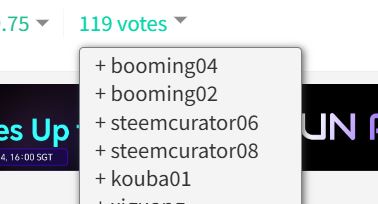
Furthermore, the voting power is provided by some of the largest stakeholders, who can, of course, attach conditions to its use.
Real community curators would be independent if their delegated voting power came from the community itself. Elections could be held, similar to those in a trade union or advocacy group. Trustworthy Steemians stand for election or are nominated by their followers. Those elected are allocated a certain percentage of the voters’ individual SP, which they then use to curate as objectively as possible. Should that trust be abused, it would be easy to withdraw the delegations. Public scrutiny cannot be bribed or evaded: I would find such a system fair and beneficial.
It would be important that such a delegation to a trusted curator neither entails any entitlement to receive votes nor leads to ‘ostracism’ by the sc teams, who do, after all, view delegations very critically… I imagine that there could also be a sort of accountability report here, within an open, trusted Community to be set up specifically for this purpose. The Steemit team, with its major sc accounts, could certainly support this, because such an independent initiative serves the same goal as all previous attempts to foster lively engagement on the platform…
I am putting forward for discussion how such a scheme might need to be structured beyond this to ensure it functions effectively.
I realise this has turned into quite a long post. Perhaps @steemchiller, @moecki, @ety001 and others – as both witnesses and developers – could spare the time to read through it and take these ideas further…? Naturally, I welcome any feedback from the community that inspires me and all of us – or even helps correct any errors in my thinking.
Finally, ChatGPT has come up with the following design for Steemit 3.0…:
STEEMIT 3.0 – DESIGN PRINCIPLES
Idea: Rewards decrease if content is semantically redundant.
Implementation:
Every post receives:
• an embedding vector
• a cluster assignment
Then:
Cluster Saturation Score = number of similar posts (last 7–14 days)
Reward modification:
final_reward = base_reward × (1 / (1 + saturation))
or more strongly:
final_reward = base_reward × e^(-k × saturation)
Effect:
• 100 ‘AI motivational posts’ → each one becomes worthless
• 1 genuine, unique testimonial → remains valuable
‘Human Provenance Weight’ (Anti-AI & Bot Filter)
This is important in the age of AI. Every account is assigned a “Human Signal Score” based on:
• Account age + activity history
• Variety of interactions (not just posts)
• Social embeddedness (who replies to whom)
• Content variation over time
Consequence:
Reward_multiplier = Human_score
👉 AI bulk accounts are automatically devalued without being banned.
“Curation becomes expensive again”
Today, curation is too cheap → this undermines quality.
Solution:
Voting power is replaced by:
“Curation Commitment”
You can no longer cast an unlimited number of votes.
• a limited number of “meaningful votes per epoch”
• or rising costs to combat voting inflation
Effect:
• less spam voting
• more deliberate selection
• genuine curators will emerge once more
“Creator Saturation Protection”
If a user produces too much similar content:
reward_decay(user) ∝ output_frequency_same_topic
Example:
• 10 similar AI posts → sharply falling rewards
• 1 good post + a break → normal reward
👉 This puts an end to ‘content factories’.
‘Social Core Reinforcement’
This is the part that is often overlooked. Steemit needs small, stable clusters again.
Mechanics:
• Rewards increase when interaction takes place within stable networks
• Downgrading of purely ‘global feed spam’
Objective:
• Small groups of bloggers become more valuable than viral individual posts
‘Exploration Budget’ (to prevent excessive narrowing)
Important: The system must not become too conservative.
Solution:
A portion of the rewards is reserved for:
• new authors
• new topic clusters
• unusual content
👉 prevents a ‘monoculture of top clusters’
Why this would really change Steemit
If you combine these 5 mechanics:
before:
• Spam is cheap
• AI scales linearly
• Voting dominates everything
afterwards:
• Spam loses its economic rationale
• AI loses its scaling advantage
• Genuine readers determine value
The crucial point (honestly)
The whole system stands or falls on one question:
Can ‘genuine attention’ be measured better than ‘likes’?
The answer is: yes, but only probabilistically
You’ll never achieve perfect quality detection, but:
you can eliminate extreme distortions
A realistic assessment for Steemit (not theoretical)
If something like this were introduced:
• AI spam would decrease significantly
• Bloggers with a genuine community would return
• Small niches would become more stable
• Overall volume would fall, whilst quality would rise
But:
• In the short term, it would be ‘unpleasant’, as many current accounts would lose out
• It would be a tough transition
An honest summary
Steemit today:
‘Content inflation system with monetary output’
Steemit 3.0 (as above):
‘Attention + Uniqueness + Social Density System’
All right then?!

Deutsche Version:
Als Nicht-Freund der sogenannten Künstlichen Intelligenz will ich dennoch nicht abstreiten, daß ich sie bei der einen oder anderen Gelegenheit konsultiere und tatsächlich mit interessanten Einblicken bzw. Impulsen gefüttert werde. Einen dieser Dialoge möchte ich heute und hier ausbreiten, weil er genau um das hier ging: Steemit und den Steem.
Mein Aufhänger war die Frage, ob es einen sogenannten Kipppunkt (mein Vorschlag für ein Unwort des Jahres…) gäbe, ab dem eine Kryptowährung keine Aufwertung mehr erfahren kann, also quasi einen Totalschaden erleidet. Die Frage drängt sich förmlich auf, wenn man dem Steem bei seinem stetigen Kursverfall Richtung 4ct zuschaut…
Die Antwort fiel klar aus: Ja. Weniger klar war seine Definition… Es gäbe verschiedene Indikatoren, die für bzw. gegen eine mögliche Wiederbelebung einer Kryptowährung sprechen. Bezogen auf den Steem erfüllen wir Punkte aus beiden Listen:
| Pro | Contra |
|---|---|
| - aktive Nutzer bleiben stabil | - die Nutzung des Netzwerks einbricht, |
| - Entwickler arbeiten weiter | - Entwickleraktivität verschwindet fast, |
| - neue Anwendungen entstehen | - große Börsen delisten ihn, |
| - der Coin bleibt über mehrere Jahre unter dem alten Hoch | |
| - und er in einem allgemeinen Krypto-Bullenmarkt nicht mehr mitsteigt.) |
Die ersten beiden Punkte auf beiden Seiten entsprechen in etwa dem stetigen Auf und Ab, das wir erleben: Fluktuation, Flutung mit neuen Steemians, die aus unterschiedlicher und nicht immer sinnvoller Motivation heraus starten, Rückkehr alter und verloren geglaubter Nutzer… Die Entwickleraktivität: nachdem es nach langen Jahren Stillstand aussah, gab es plötzlich einen Auftrieb durch Proposals beispielsweise von @the-gorilla, Spiele, diverse Anwendungen und alternative Frontends aus allen möglichen Quellen und auch sinnvolle Tools, die den Steem vorteilhaft ergänzen. Es ist also ein Prozeß, der längst nicht statisch verharrt. Laßt uns also bei diesen Punkten davon ausgehen, daß der positive Effekt überwiegt.
Große Börsen haben den Steem fallen gelassen, das diskutieren wir nicht weg (zumal er ohnehin nicht überall gehandelt wurde). Das Allzeithoch liegt mittlerweile acht Jahre zurück und der Kursverlust seitdem gut 99%. Auch Anstiege anderer Krypto-(Leit-)währungen führten nicht mehr zur Erholung des Steem. Letztere Punkte sprechen deutlich gegen die Annahme eines Aufschwungs von Beliebtheit und Kurs.
Mit diesen Voraussetzungen im Kopf ist das Gefühl bezüglich all unserer schönen SP, die wir verdient und angespart, aufgekauft oder eingewechselt und in jedem Fall aufgepowert haben, denkbar schlecht…
Als ich ChatGPT dann konkret auf den Steem ansprach, wiegelte er ebenso Für und Wider ab, gab dann eine Prognose wie folgt:
Kann der Kurs noch einmal stark steigen?
Ja.
Kryptomärkte sind spekulativ. Selbst Projekte mit schwacher Entwicklung können in einem starken Bullenmarkt mehrere Hundert Prozent zulegen. STEEM wird weiterhin gehandelt, ist nicht verschwunden und besitzt noch eine Marktkapitalisierung im zweistelligen Millionenbereich. Außerdem gibt es weiterhin die Steem-Blockchain und die Plattform Steemit.
Kann STEEM zu alter Bedeutung zurückkehren?
Das halte ich für deutlich unwahrscheinlicher.
Dafür sprechen mehrere Punkte:
• STEEM notiert rund 99 % unter seinem Allzeithoch von Anfang 2018.
• Das Projekt hat den Großteil seines ursprünglichen Netzwerkeffekts durch die Hive-Abspaltung verloren.
• Im aktuellen Kryptozyklus gehört STEEM nicht zu den Projekten, die besonders viel Aufmerksamkeit von Entwicklern, Investoren oder neuen Nutzern erhalten.
• Der Kurs lag 2026 sogar nahe neuer Allzeittiefs, was meist kein Zeichen für eine Renaissance ist.
Was ich beobachten würde:
Wenn STEEM sich wirklich strukturell erholen soll, müssten einige dieser Dinge passieren:
• deutlich steigende Nutzerzahlen auf Steemit oder anderen Steem-Anwendungen
• sichtbare Entwickleraktivität
• neue Anwendungen auf der Blockchain
• steigende Handelsvolumina über längere Zeit
• bessere relative Entwicklung als vergleichbare Social-Media-Blockchains
Aktuell sehe ich STEEM eher in der Kategorie „überlebendes Nischenprojekt“ als in der Kategorie „wahrscheinlicher Comeback-Kandidat“. Das bedeutet nicht, daß der Kurs nicht noch einmal 2× oder 5× steigen kann. Es bedeutet eher, daß eine Rückkehr zu früherer Relevanz oder gar zu den Höchstständen von 2018 sehr schwer vorstellbar erscheint.
Um eine übersichtliche Darstellung technisch möglicher und wahrscheinlicher Entwicklungen gebeten, spuckte ChatGPT folgendes aus:
Aktuell liegt STEEM ungefähr bei 0,05–0,06 USD und damit mehr als 99 % unter seinem Allzeithoch von rund 8,2–8,6 USD. Außerdem markierte es erst 2026 neue Tiefststände.
Szenario 1: Schwacher Altcoin-Zyklus
Wenn Bitcoin steigt, aber Kapital hauptsächlich in große Coins fließt:
• STEEM: 0,10–0,20 USD
• Entspricht etwa 2–4× vom heutigen Niveau
Das halte ich für das wahrscheinlichste positive Szenario.
Szenario 2: Echter Altcoin-Bullenmarkt
Wenn Spekulation wieder stark in kleine Altcoins fließt:
• STEEM: 0,30–0,80 USD
• Entspricht etwa 6–15×
Solche Bewegungen gab es historisch bei vielen älteren Coins, auch ohne fundamentale Verbesserung.
Szenario 3: Überraschendes Comeback
Dafür müssten neue Nutzer, Entwickler und Anwendungen zurückkommen.
• STEEM: 1–2 USD
Das wäre bereits ein enormer Erfolg und würde eine deutliche Wiederbelebung des Ökosystems voraussetzen.
Szenario 4: Rückkehr zum Allzeithoch
Dafür müsste STEEM praktisch wieder zu einem der wichtigsten Social-Blockchain-Projekte werden.
- STEEM: 8 USD und mehr
Angesichts der Abwanderung großer Teile der Community und Entwickler zu Hive nach dem Fork 2020 erscheint das heute sehr unwahrscheinlich.
Anders formuliert:
• Von 0,05 auf 0,20 USD → erscheint durchaus plausibel in einem guten Markt.
• Von 0,05 auf 0,50 USD → spekulativ, aber vorstellbar.
• Von 0,05 auf 1,20 USD → würde wahrscheinlich einen sehr starken Altcoin-Zyklus oder eine besondere STEEM-Geschichte benötigen.
• Von 0,05 auf 8 USD → dafür sehe ich aktuell keinen erkennbaren fundamentalen Pfad.
An dieser Stelle habe ich mich „geoutet“ und auf weitere strategische Tipps zur effektivsten wirtschaftlichen Verwertung meines Stakes verzichtet (was der reflexartige Ratschlag der KI war…) Ich erklärte, daß es mir nur nachrangig um den Wert der Währung Steem, als vielmehr um Bestand und Zukunft der Plattform Steemit geht. Und ich gebe zu, daß der Output ab dieser Stelle interessant wurde! In Teilen wurden Meinungen und Eindrücke, die sich bei mir seit langem manifestiert hatten, bestätigt. Zum anderen wurden einige Ideen formuliert, die ich gerne öffentlich überdenken würde.
1. Warum Steemit heute so wirkt (Bots, KI, Low-Quality)
Das Grundproblem ist kein Zufall, sondern ein klassischer „Anreiz-Kollaps“:
(a) Monetarisierung belohnt Quantität, nicht Qualität
Wenn:
• jeder Post potenziell Rewards bringt
• und Voting teilweise automatisiert oder sozial „optimiert“ wird
…dann entsteht zwangsläufig:
• Spam
• Copy-Paste
• KI-Content
• „Engagement-Farming“
Das ist ein bekanntes Problem in allen Reward-Plattformen (auch YouTube, Twitter/X, Reddit – dort nur anders verpackt).
(b) Kurationssystem ist angreifbar geworden
Früher war Kuration ein Wettbewerb um Aufmerksamkeit + Timing + soziale Graphen.
Heute:
• viele Power-User sind weg oder passiver
• Voting-Blöcke / gegenseitiges Upvoting entstehen leichter
• KI kann „mittelgute Inhalte“ in hoher Frequenz produzieren
👉 Ergebnis: Kuration verliert Signalqualität
(c) Social Graph ist „ausgedünnt“
Der wichtigste Punkt: Eine Blogging-Plattform lebt nicht vom Token, sondern davon, daß Menschen regelmäßig andere Menschen lesen
Wenn die dichten sozialen Cluster verschwinden (wie nach Hive-Fork passiert ist), bleibt:
• weniger Dialog
• weniger Wiedererkennbarkeit
• mehr „Feed statt Community“
2. Warum KI das Problem verstärkt (aber nicht verursacht)
KI ist hier nur ein Verstärker.
Sie senkt:
• Kosten für Content → Explosion von Output
• Differenz zwischen „gut“ und „mittel“ → wird kleiner
• Zeitaufwand für Teilnahme → gegen null
👉 Ohne starke Gegenmechanismen führt das fast automatisch zu Content-Inflation
3. Was passieren müsste, damit Steemit wieder lebendig wird
Man kann das in 4 Hebel zerlegen:
HEBEL 1: Reward-Struktur muss „Qualität statt Volumen“ erzwingen
Aktuell ist das Problem: zu viele Rewards pro Einheit irrelevanter Content
Mögliche Änderungen:
• starke Decay-Funktion für ähnliche Inhalte
• Rewards stärker an unique engagement (echte Leser, nicht Votes) koppeln
• Gewichtung von Reputation + Historie + Konsistenz
• Reduktion von kurzfristigem „Voting-Pumping“
👉 Ziel:
„1 guter Post pro Woche > 20 mittelmäßige Posts“
HEBEL 2: Kuration muss wieder echte Kosten haben
Heute ist Voting oft:
• billig
• automatisierbar
• sozial „verteilbar“
Was helfen würde:
• stärkere Gewichtung von echter Lesezeit / Interaktion
• weniger „passives Upvoting“
• stärkere Trennung zwischen:
◦ „social support vote“
◦ „economic curation vote“
👉 Sonst gewinnt immer der Content-Farmer.
HEBEL 3: Anti-Bot / Anti-KI-Overload Mechanismen
Das ist heikel, aber entscheidend - nicht „KI verbieten“, sondern:
• Reward-Filter für hochfrequent ähnliche Inhalte
• Erkennung von Content-Clustering (Text-Embedding-Duplikate)
• Limits für neue Accounts / neue Content-Spektren
• sinkende Rewards bei „content saturation“
👉 Ziel: KI darf existieren, aber sie darf nicht dominieren.
HEBEL 4: Rückkehr von „echten sozialen Kernen“
Das ist der wichtigste, aber schwerste Teil.
Steemit braucht wieder:
• stabile Mikro-Communities
• wiedererkennbare Autoren
• echte Diskussionen statt Voting-Ketten
Das entsteht nur wenn:
• echte Menschen wieder „lohnend sichtbar“ sind
• nicht nur die optimierten Poster
Das ist der unangenehme Punkt - selbst perfekte Mechanik hilft nicht, wenn:
• wenige echte Leser da sind
• Inhalte keinen externen Nutzen haben
• Plattform nicht als „Ort zum Lesen“ wahrgenommen wird
Blogging-Plattformen sterben selten durch Technik, sondern durch Verlust der Leser, nicht der Autoren!
Realistische Einschätzung für Steemit...
Ich würde es so einordnen:
Gute Nachricht
• das System ist nicht technisch kaputt
• Token-Incentive-Mechanik funktioniert grundsätzlich noch
• es gibt weiterhin aktive Nischen
Schlechte Nachricht
• soziale Dichte ist stark reduziert
• KI/Bots sind systemisch begünstigt
• Netzwerk-Effekte laufen eher schwach negativ als positiv
Die eigentliche Frage (entscheidend) ist nicht:
„Kann Steemit wieder besser werden?“
sondern:
„Gibt es genug Menschen, die wirklich lesen und diskutieren wollen, damit Qualität wieder sichtbar belohnt wird?“
Wenn diese Gruppe wächst (auch durch externe Trends wie „Anti-AI-Content“-Bewegung oder Social-Fatigue auf großen Plattformen), kann Steemit überraschend stabil werden. Wenn nicht, bleibt es eher ein belohnter Content-Feed mit sinkender sozialer Dichte.
Ich möchte mir da gerne einige Aspekte herausgreifen, die ich spannend und wünschenswert finde:
ChatGPT erwähnt eine Decay-Funktion, die ich zwar vage verstanden habe, aber ich bitte dennoch um genauere Beschreibung…
Was bedeutet „Decay-Funktion für ähnliche Inhalte“?
Das ist ein zentraler Hebel gegen KI-Spam, und relativ gut formal beschreibbar.
Grundidee
Aktuell:
Jeder Post wird isoliert bewertet.
Problem:
• 100 ähnliche KI-Posts können alle kleine Rewards bekommen
• Aggregiert verdrängen sie echte Vielfalt
Ziel der Decay-Funktion
Der Reward eines Posts sinkt, wenn er inhaltlich stark ähnlich zu bereits belohnten Posts ist
Nicht Zeit-Decaying (wie bei Upvotes), sondern Similarity-Decaying.
Technische Umsetzung (realistisch)
Man kann das erstaunlich konkret bauen:
Schritt 1: Content-Embedding
Jeder Post wird in einen Vektor umgewandelt:
• Text → Embedding (z. B. sentence transformer)
• optional: Bilder → Vision Embedding
• optional: Metadaten (Tags, Titel)
Ergebnis:
jeder Post = Punkt im semantischen Raum
Schritt 2: Similarity-Check gegen „Rewarded Corpus“
Man vergleicht neuen Post mit:
• Posts der letzten X Tage
• oder Top-N rewarded Posts pro Epoch
Berechnung:
• cosine similarity
Schritt 3: Decay-Funktion
Beispiel:
Wenn Similarity > Schwelle (z. B. 0.85):
effective_reward = base_reward * (1 - similarity_penalty)
Oder glatter:
effective_reward = base_reward * exp(-k * similarity_max)
Schritt 4: Cluster-basierte Dämpfung (stärker)
Noch besser:
• Cluster alle Inhalte automatisch
• berechne „Content Saturation Score“ pro Cluster
Dann:
reward_cluster = total_inflation / cluster_size_adjustment
👉 Ergebnis:
• „AI generic motivational posts“ = stark entwertet
• „echte individuelle Reiseberichte“ = bleiben wertvoll
Warum das für Steemit entscheidend wäre
Ohne so etwas passiert:
• KI erkennt profitable Muster
• repliziert sie tausendfach
• Voting-System wird überflutet
• echte Autoren verschwinden, weil sie untergehen
Mit so etwas:
• Wiederherstellung von „Content Scarcity“
• Qualität wird nicht nur subjektiv, sondern strukturell belohnt
• Spam wird wirtschaftlich unattraktiv
Nebenwirkung (wichtig!)
Solche Systeme haben Trade-offs.
Risiko:
• „False negatives“: gute ähnliche Inhalte werden gedämpft
• kreative Trends könnten gebremst werden
Deshalb braucht man:
• human override (Curator weighting)
• reputationsbasierte Ausnahmen
• explorative reward buckets (für neue Themencluster)
Okay. Es deckt sich zu 100% mit meinen ganz unbedarften und naiven Wünschen für den Steem, seit wir mit den strukturellen Problemen zu kämpfen haben. Ich möchte die Anzahl der tatsächlichen Klicks auf einen Beitrag und die Verweildauer auf der Seite erfassen und bei der Berechnung des Vote-Wertes berücksichtigen. Echtes Lesen und Interagieren steigert den Wert eines Votes. Wenn es den Nutzern nicht zu vermitteln ist und sie den bequemen und schnellen Weg – Autovoter, Votebots, blinde Votevergabe an den immer gleichen Feed,… - dann bitte ich um eine technische Lösung und Einarbeitung eines entsprechenden Algorithmuses in den Votevergabe-Code…
Vergleichbare und sehr ähnliche Inhalte und ewig repetierte Themen werden nicht mehr belohnt: langweilige und immer gleiche Diary Games verschwinden nach und nach aus den täglichen Veröffentlichungen, weil sie schlicht nicht mehr lohnenswert sein dürfen. Contests und Challenges, bei denen viele Nutzer sich in gleich konzipierten Essays mit gleichen Fragen beschäftigen, haben keinen Wert (weder für den Leser noch für die Plattform) und werden so ökonomisch eliminiert.
Was bleibt, wären originale und einzigartige Inhalte; etwas, das ich auf einer Blogging Plattform zu finden erwarte. Was bleibt, wäre lesenswerte Texte, unter denen Debatten stattfinden, die alle Beteiligten bereichern. Was bleibt, wäre ein gesunder Steem…
Unserem großmäuligen künstlich-intelligenten Berater zufolge ließe sich so eine Wichtung technisch unkompliziert in den Code einbauen.
Kann das bitte jemand veranlassen???
Eine weitere Sache noch, die ich auch schon lange als Gedanken ausbrüte und in Andeutungen hier und da eingestreut habe: die sc-Accounts in Händen der Community Kuratoren sollen der breiteren Aufmerksamkeit dienen, der Entdeckung kreativer und unbekannter Autoren und der gerechteren Verteilung der höheren Votes. Das funktioniert so semi – selbst ausformulierte Regeln wie: „Kein sc oder Booming Vote auf Beiträge, die bereits von einem anderen Team belohnt wurden!“ werden gepflegt ignoriert oder umgangen.
Außerdem wird die Votepower von einigen der größten Stakeholder zur Verfügung gestellt, die mit deren Nutzung natürlich Bedingungen verknüpfen kann.
Unabhängig wären echte community Kuratoren, wenn ihre delegierte Votepower aus der community käme. Es könnten Wahlen abgehalten werden, ähnlich denen in einer Gewerkschaft oder Interessenvertretung. Vertrauenswürdige Steemians stellen sich zur Wahl oder werden von ihren Followern vorgeschlagen. Die Gewählten erhalten einen bestimmten Prozentsatz der individuellen SP der Wähler zur Verfügung gestellt, mit denen sie dann so objektiv wie möglich kuratieren. Bei Mißbrauch des Vertrauens ist es ein leichtes, die Delegationen wieder zu entziehen. Die öffentliche Kontrolle ist nicht zu bestechen oder zu vermeiden: ich fände so ein System fair und förderlich.
Wichtig wäre, daß so eine Delgation an einen Vertrauenskurator werder Ansprüche auf Voteerhalt mit sich bringt noch zur „Ächtung“ bei den sc Teams führen dürfte, die Delegationen ja sehr kritisch betrachten… Ich stelle mir vor, daß es auch hier eine Art Rechenschaftsbericht geben könnte, in einer eigens zu gründenden offenen Vertrauens Community. Diese wiederum könnte das Steemit Team mit den großen sc Accounts durchaus unterstützen, weil gerade so eine unabhängige Initiative dem gleichen Ziel dient wie alle bisherigen Versuche, lebendiges Engagement auf der Plattform zu fördern...
Wie man so etwas darüber hinaus ausgestalten müßte, damit es auf sinnvolle Art und Weise funktioniert, stelle ich hiermit zur Diskussion.
Ich weiß, daß hier sehr viel Text zusammen gekommen ist. Vielleicht können @steemchiller, @moecki, @ety001 und andere als Zeugen und gleichzeitig Entwickler die Zeit erübrigen, sich einzulesen und die Gedanken weiter zu denken…? Natürlich freue ich mich über jede Resonanz aus der community, die mich und uns alle inspiriert – oder auch von Denkfehlern kuriert.
ChatGPT entwirft abschließend folgendes Design für Steemit 3.0…:
STEEMIT 3.0 – DESIGNPRINZIPIEN
Idee:
Belohnung sinkt, wenn Inhalt semantisch redundant ist.
Umsetzung:
Jeder Post bekommt:
• embedding vector
• cluster assignment
Dann:
Cluster Saturation Score = Anzahl ähnlicher Posts (letzte 7–14 Tage)
Reward-Modifikation:
final_reward = base_reward × (1 / (1 + saturation))
oder stärker:
final_reward = base_reward × e^(-k × saturation)
Effekt:
• 100 „AI motivational posts“ → jeder wird wertlos
• 1 echter, einzigartiger Erfahrungsbericht → bleibt wertvoll
„Human Provenance Weight“ (Anti-KI & Bot Filter)
Das ist wichtig im KI-Zeitalter. Jeder Account bekommt einen „Human Signal Score“ basierend auf:
• Account-Alter + Aktivitätsgeschichte
• Interaktionsvielfalt (nicht nur Posts)
• soziale Einbettung (wer antwortet wem)
• Content-Varianz über Zeit
Konsequenz:
Reward_multiplier = Human_score
👉 KI-Bulk-Accounts werden automatisch entwertet, ohne sie zu bannen.
„Curation becomes expensive again“
Heute ist Curation zu billig → das zerstört Qualität.
Lösung:
Voting Power wird ersetzt durch „Curation Commitment“ - Du kannst nicht mehr beliebig viele Votes streuen.
• limitierte „meaningful votes per epoch“
• oder steigende Kosten für Voting-Inflation
Effekt:
• weniger Spam-Voting
• mehr bewusste Auswahl
• echte Kuratoren entstehen wieder
„Creator Saturation Protection“
Wenn ein User zu viel ähnlichen Content produziert:
reward_decay(user) ∝ output_frequency_same_topic
Beispiel:
• 10 ähnliche KI-Posts → stark fallende Rewards
• 1 guter Post + Pause → normaler Reward
👉 Das killt „Content-Fabriken“.
„Social Core Reinforcement“
Das ist der oft übersehene Teil. Steemit braucht wieder kleine stabile Cluster.
Mechanik:
• Rewards steigen, wenn Interaktion innerhalb stabiler Netzwerke passiert
• Abwertung von rein „globalem Feed-Spam“
Ziel:
• kleine Blogger-Gruppen werden wertvoller als virale Einzelposts
„Exploration Budget“ (gegen zu starke Verengung)
Wichtig: Das System darf nicht zu konservativ werden.
Lösung: Ein Teil der Rewards wird reserviert für:
• neue Autoren
• neue Themencluster
• ungewöhnliche Inhalte
👉 verhindert „Monokultur der Top-Cluster“
Warum das Steemit wirklich verändern würde
Wenn du diese 5 Mechaniken kombinierst:
vorher:
• Spam ist billig
• KI skaliert linear
• Voting dominiert alles
nachher:
• Spam verliert wirtschaftlichen Sinn
• KI verliert Skalierungsvorteil
• echte Leser bestimmen Wert
Der entscheidende Punkt (ehrlich)
Das ganze System steht und fällt mit einer Frage:
Kann man „echte Aufmerksamkeit“ besser messen als „Likes“?
Die Antwort ist: ja, aber nur probabilistisch
Du bekommst nie perfekte Qualitätserkennung, aber:
du kannst extreme Verzerrungen eliminieren
Realistische Einschätzung für Steemit (nicht theoretisch)
Wenn so etwas eingeführt würde:
• KI-Spam würde deutlich sinken
• Blogger mit echter Community würden zurückkehren
• kleine Nischen würden stabiler werden
• Gesamtvolumen würde sinken, Qualität steigen
Aber:
• kurzfristig wäre es „unangenehm“, weil viele aktuelle Accounts verlieren würden
• es wäre eine harte Umstellung
Eine ehrliche Zusammenfassung
Steemit heute:
„Content-Inflationssystem mit monetärem Output“
Steemit 3.0 (wie oben):
„Attention + Uniqueness + Social Density System“
Alles klar?!
Was ist denn mit dem Vergleich zu Blockchains , die keine Blogfunktion integriert haben , wodurch überleben diese .
Ich dachte immer , so eine Blockchain wird bewertet an der Anzahl der in Blöcke gepressten Transaktionen , egal welcher Inhalt eingeblockedt würde .
Vielleicht bringst du das noch einmal in Deinen Recherchechat beim GPT mit rein , ob das eventuell nicht eine nicht beachtete Nuance wäre ...
Moin! Und jein... ;-))) Der Vergleich lohnt sich bestimmt, wenn es um markttechnische Analyse geht. Du erinnerst Dich aber sicher, daß ich Team "Bloggingplattform mit Benefit" bin. Mir geht es um Schaffung und Erhalt einer stabilen, interessanten und einladenden Blogger-Sphäre.
Die Block-Produktion findet ja stetig und durch die Witnesse gesichert statt. Das alleine scheint den Werterhalt des Steem nicht zu gewährleisten. Wir müssen uns da nicht einig sein, aber ich bleibe dabei, daß hochwertige Blogs das Stammkapital von dem Laden hier ausmachen (würden).
Ich wollte hier gar nichts anzweifeln oder gegen stinken , hihi , doch gerade erst hat das #BLURT mit dem Frontend sich radikal verbessert und das peakd hat auch einen Schritt getan in eine bestimmte Richtung.
Verstehe. Was ist da besser, was gefällt Dir besser? Ich habe den Wunsch nach neuen Frontends selber nie verstanden, seit ich ihn hier hörte. Ich bin ein Gewohnheitstier, da hasse ich Veränderungen wie die Beulenpest...
Hihi , naja , da tut sich anscheinend was ,und hier ja wohl auch , siehe neue wallet Seite .
Achja , bist Du Dir sicher , dass das GPT Dir nicht nur das erzählt hat , was Du "hören" wolltest ?
Absolut! Nie würde mir eine KI bestätigende ANtworten geben...!
Hihi. Klar doch, gehe ich schwer von aus. Darum frage ich hier und da 'rum und hoffe, es bastelt jemand was, damit die KI nicht gelogen haben würde ;-)))
Hi
I see that you had a great conversation with AI about the problems of our blockchain.
Yes, the situation on the crypto market is currently unsightly.
And if we look at the oil market? In the mid-to-late 80s, such a fall destroyed the USSR.
At the moment, I do not consider cryptocurrencies as a means to enrich myself. For me, Steem and Hive are now a means for self-development. In Russia, it has become very difficult to convert cryptocurrencies into fiat money, and the state prohibits this.
Everything is in a fog!
This vote is yours and deserved! Let's read, comment and connect.
❤️🍀
Wir sind auf dem Sprung in den Herbsturlaub, daher nur kurz zwischendurch eine Rückmeldung.
Ja, ich glaube auch, dass das System, wie es vor fünf Jahren funktionierte, so heute nicht mehr neue User begeistert. Es hat sich Online einfach zu viel getan.
Ich will jetzt nicht auf alle Punkte eingehen, fand aber den Vorschlag zu einem neuen Kurationsansatz nicht schlecht.
Da hast du ein bestimmtes Adjektiv sehr treffend benutzt :-)
So einfach ist das nicht. Das muss im Blockchain-Code geändert werden. Ich bin im Moment dabei diesen zu ergründen, dauert leider zu lange, besonders mir. Es gibt da schon Möglichkeiten die Berechnung der Rewards zu ändern, und wenn es eine Möglichkeit gibt, den Unique-Faktor eines Beitrags auf Code-Ebene zu berechnen, ginge das wohl auch. Aber nicht unkompliziert und schon gar nicht schnell. Die Auswirkungen müssen ausgiebig getestet werden, damit nicht alle Rewards plötzlich weg sind, oder plötzlich Megabeträge ausgezahlt werden, oder ähnliche Szenarien...
Aber, wie gesagt, interessant ist der Ansatz. Viele Teilnehmer an Contests wären dann aber womöglich unzufrieden, weil sich ähnliche Beiträge dann die Rewards selbst klein rechnen würden. Außer man gestaltet den Beitrag eben einzigartig... und dann ist das Ziel wieder erreicht...
Ist doch genial, oder...? ;-))) Ja nee, daß es wirklich einfach sein könnte, habe ich eh nicht geglaubt. Aber daß es möglich ist. Muß also gewollt und gemacht werden.
Allerdings gehst Du erstmal urlauben! Solange es noch schön draußen ist: habt eine gute Zeit, erholt Euch fein und erlebt mindestens ein Abenteuer!
As for AI-generated content, my inclination is that we need to create a separate area for such content and establish evaluation criteria, rather than banning it. Because AI is a trend, what we need to do is treat human-generated content and AI-generated content as two separate parts. For AI-generated content in the human area, directly use high-weight accounts to down vote its content so that it has no earnings.
Agree with you. Apart from the fact that it’s becoming increasingly difficult to prove that AI has been used, because human expression has now adapted to AI output. It’s hard to believe...
But yes: giving AI content its own space is a good approach.
What do you think about changes to the code that alter the algorithm used to determine the value of a vote?
At this stage, when AI generates long-form articles, we humans can still spot telltale signs that indicate it was AI-generated.
Regarding the review issue, I believe that people who use AI to generate articles are doing so to make money, not to express their personal thoughts and feelings.
Therefore, AI-generated content should be reviewed by other users' AI. When these people feel that the article earnings cannot cover their AI investment, the output of related content will decrease.
The only thing we need to do is to give this AI-generated content an independent space so that it does not interfere with the human creative space.
In fact, in the first quarter of this year, I had already completed a similar product. However, for various reasons, the company has not yet approved its launch.
Any idea if/when this might get approval from the company? Several tech CEOs have predicted that AI traffic will vastly exceed human traffic across the whole Internet in the not too distant future. It would be great to see Steem get in front of that trend.
I think you're right on target, conceptually, with dedicated spaces for humans and AIs - with the caveat that there are some cases where it makes sense for humans and AIs to talk to each other, too (provided the AI isn't masquerading as human).
Regarding weisser-rabe’s suggestion: do you think it’s possible that the uniqueness of a post could be assigned a value using a function? Have you ever seen anything like that before (apart from Ai)?
It would be different from a hash. Rather, the content of the post would need to be 'evaluated'.
Would be interesting...
It's definitely possible at small scale. From skimming, I think this implementation creates a matrix that corresponds to the text. It actually is sort-of LLM like.
Pure speculation, but I sort of doubt whether it would be feasible for the rewards algorithm to compare every post at blockchain speeds, though. Especially if usage ever gets back to previous levels. Every post might have to look at some sort of summary of every other post in the window every 3 seconds(?). That seems intractable. Maybe a "good enough" approximation through the use of random sampling?
Or, this might be a good concept for an open source voting bot so it could be decentralized and focus on just tens or hundreds of posts per day. Stakeholders who prioritize uniqueness could invest and implement their own checks for it.
After all, the main difference between the rewards algorithm and a voting bot's algorithm is that one is centralized and the other one isn't.
Yes, that does seem to be one approach. However, on first reading, this does not appear to be an option for Steem. Obviously, all texts are compared against the others simultaneously. As you have already pointed out, this is not possible within the block time.
As we do not know the total number of words (across all posts) at the time of comparison, it is not possible to create a matrix or an array of the words used in equal measure. And even if we could, the array would probably be too large to store in such a way that we could access it within a reasonable time...
Not if the reward curve is to be based on that, anyway.
Yes, but here too, suitable candidates for comparison need to be found first. Even if we assume, for example, that a 7-day window is sufficient for a contest, that’s still quite a lot of posts that would need to be compared.
0.00 SBD,
21.12 STEEM,
21.12 SP
True. It might be technically feasible if, for example, the bot looks at 6 day old posts each day and compares against 7-days worth of posts until it finds 10 to vote for. It could even cut the pool size down to a day or two. But, that would probably still require a lot of horsepower. Even if it's technically feasible, it's likely not economically feasible.
Coincidentally, a few minutes before I read this I was talking to an LLM about "surprise" and "perplexity" in language. Basically (if I understand correctly), perplexity is the degree to which tokens in a text are different from the most likely tokens. How surprising the text is.
I wonder if it's possible to consider the posts as a simple stream of text and maintain the current state of token likelihood within some window, and then calculate a perplexity value against the current expected values for each post that is published. I'm out of my depth here, but it almost seems doable - maybe also cost-prohibitive, though.
0.00 SBD,
19.10 STEEM,
19.10 SP
This vote is yours and deserved! Let's read, comment and connect.
❤️🍀
This vote is yours and deserved! Let's read, comment and connect.
❤️🍀
Danke für deine Analyse. Ja wir müssen daran arbeiten Steemit zu erhalten und zu verbessern. Unabhängigkeit und Dezentralität sind wichtig. Das sind nach meinem Dafürhalten die wichtigsten Vorzüge von Steem.
Responderé en español para tratar de darle mayor claridad a mis palabras, con la esperanza de que sus traductores sean lo más fieles posibles.
Como se abarcó el problema del valor del token y el de la plataforma, creo que el primer punto adolece un problema fundamental. Usaré una metáfora. Steem es el tiburón, y una cantidad de usuarios son rémoras. Me explico: como mucha gente utiliza la plataforma como una fuente de ingresos, lo cual no critico, la presión vendedora será inevitablemente la causa de la baja del precio del token. Ley de oferta y demanda.
Lamentablemente lo anterior inside en el aspecto social de la plataforma. El círculo vicioso de recompensas que atraen personas que solo venderán el token, sumado a que muchas utilizarán IA y mucho contenido de mala calidad para obtener mayor probabilidad de conseguir mayores recompensas, solo ahuyentará a las personas que están aquí ya se para socializar o expresar su contenido en un ambiente menos tóxico que la web 2.0
En cuánto a las medidas sugeridas por la IA en base a tus sugerencias, creo que serían oportunas, pero posiblemente habría un éxodo masivo de usuarios a otras plataformas con menos filtros.
En cuánto a la cuestión puntual de reputación y antigüedad de cuentas bots, lamento decir que me topé con muchas cuentas antiguas y de alta reputación que son con 99% de certeza manejadas por una cuenta padre, que con sus votos otorga reputación a sus cuentas bots.
Me cansé de señalar ese comportamiento de farmeo que detecté gracias a que estas cuentas bots empezaron a responder automáticamente a todas mis publicaciones.
Creo que, muy a mi pesar, la única forma de evitar cuentas bots y contenido generado por IA será si para cobrar recompensas se aplica alguna prueba de humanidad. Ojalá algo no invasivo, pero que podría ser derivada, como vincular una cuenta de Steem a una cuenta de Binance verificada. El usuario verificado previamente en Binance, será por corolario un humano en Steem. Tal vez haya formas de burlar esto, porque ya leí casos de compra de cuentas de Binance, por ejemplo personas que no saben usar Binance, reciben un pago por verificar una cuenta, cuyo control será otorgado a quien compra la cuenta.
En cuanto a los votos, posiblemente no se podrá evitar que las personas voten por razones ajenas a la calidad, ya que reciben recompensa de curación sin importar la calidad de lo votado.
Tal vez sin hacer cambios demasiado drásticos se podría hacer una prueba piloto en la que cada usuario solo podrá emitir 10 votos diarios. Eso automáticamente haría que se detecten círculos de votación y granjas de votos. Y en el resto de los casos, seremos más selectivos sobre a qué contenido votamos.
Tendré que leer todo nuevamente porque creo que hay cosas que quise decir y no dije, como por ejemplo que el valor del token sería otro si la mayoría de usuarios tuvieran un ingreso principal lo que podría dar al token una función de reserva de valor. O por ejemplo si hubiera al menos un 10 a 20% de usuarios con negocios o servicios que aceptasen como medio de pago el token o el SBD aunque ya no tenga paridad con el dólar. Es decir, dada la cantidad de personas que viven de Steem como si fuera un trabajo, no aumentará el precio del token nunca.
Espero me disculpen si he ofendido a alguien.
Never apologise... ;-))
You’re right, of course, about the points you’ve raised. But I actually trust that the farmers, spammers and content bots will disappear of their own accord when, although they receive their votes (mostly from vote bots or auto-voters), these votes no longer hold any value. If the algorithm that calculates the vote value takes into account the reading time spent on the voted post, the similarity of the author’s other posts, posting frequency, reply behaviour and perhaps even the CSI, then even a 100 per cent vote on such a post would be worth no more than 0.00ct.
They wouldn’t bother posting here any more and would look for other pastures...
Hopefully it can be implemented. I'm getting a little tired of seeing SC curators vote for bot accounts. Or seeing those bot accounts in engagement rankings. Although I think they'll find ways to circumvent the controls. I'm already feeling pessimistic about the token's value; I think the social platform is a kind of oasis, or should be.
This platform should be seen as a truly great gift. Here, people talk to one another who would never meet in real life. People who would never understand each other’s fears or hopes – simply because they know nothing about them. People who can help one another – without ever having met in person. People from countries at war with one another could cooperate… In the past, this is how wars were ended.
As soon as there are ways to circumvent filters and controls, people will make use of them. A community can cope with this in moderation. But not when it affects the vast majority of its members...
I definitely agree with you; I wish the world were more stable and economically homogeneous, and then there would be no reason to use dishonest practices...but But then there are the politicians who refute the hypothesis. Let's dream of a better world!